
We are so proud of our members and what amazing work they bring to the [crazy/unbelievable/who wrote THIS?] world.
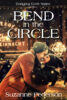 Suzanne Pederson released Bend in the Circle in October 2020. A women’s fiction/contemporary romance about an American military couple in Germany who navigate the aftermath of rape in the 1980s.
Jennifer Griffith launched her podcast, About Your Mother, that explores the influence our mothers have on the trajectory of our lives.
https://www.byjennifergriffith.com/about-your-mother-podcast/
Vanessa MacLaren-Wray, author of All That Was Asked, discussed “Who Will Own Space?” in a panel at the November 7th BayCon miniCon.
Jill Bronfman’s poetry and photography is featured in a new book, The Very Edge, https://www.amazon.com/Very-Edge-Polly-Alice-McCann/dp/1970151234.
On November 30, Sheryl Bize-Boutte reads her story, “The Last Collard Green” for Colossus: Home Anthology; benefit for Oakland’s MOMS4Housing
Her debut novel, Betrayal on the Bayou was reviewed by Story Circle Network as
“This is a book to read, to re-read, to take into your heart, and to always remember…”
November 19 is the official launch date for Marylee MacDonald’s SURRENDER, a memoir of nature, nurture, and love. For fans of Philomena and The Girls Who Went Away.
 WNBA-SF past president Kate Farrell is teaching a virtual two-part storytelling workshop at the Mechanics Institute, February 27 and March 6, 10:30 am – Noon. Registration limited.
https://www.milibrary.org/events/stories-pandemic-storytelling-workshop-two-parts-feb-27-2021
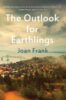 Joan Frank’s new novel, The Outlook for Earthlings, has just been published by Regal House Publishing. Watch her recent Zoom launch: https://www.youtube.com/watch?v=hCBxmAnHIpQ
R. Read released a new book titled How to Save a Life: Answer the Call. Available on Amazon here: https://www.amazon.com/How-Save-Life-Answer-Call/dp/B08H6RWCCJ.
With members achieving so much, don’t forget to support your fellow WNBA-SF peers and purchase one of their books. Connect with the author via social media and review their work.
While this time of year can be a period of reading, reflection, and promoting your work, it is also a great time to plan for the New Year. What events will you be attending? What writing goals do you have? Will you be starting a new manuscript?
As you begin to plan for a strong finish to the year, keep in mind the WNBA-SF can help you to achieve your goals.
Enjoy the fall and best of luck to you in the New Year!
 As a consultant and professor of strategic management,

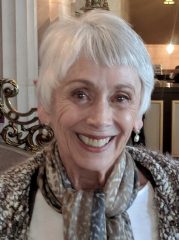 Kate Farrell is our host and facilitator. Kate is a storyteller, author, librarian, founded the Word Weaving Storytelling Project and published numerous educational materials on storytelling. She has contributed to and edited award-winning anthologies of personal narrative. Farrell’s new book, a timely how-to guide on the art of storytelling for adults, Story Power: Secrets to Creating, Crafting, and Telling Memorable Stories, was released in June 2020. Farrell has presented workshops for adults on the art of storytelling at the San Francisco Public Library, Mechanics Institute, and the San Francisco Writers Conference. She is now offering virtual workshops for libraries and writing groups, as well as performing virtually as a storyteller.
 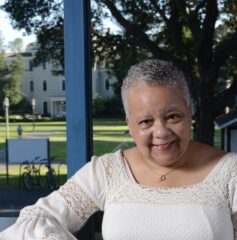 Sheryl J. Bize-Boutte is a Pushcart Prize nominated author who has been described as a “Talented multidisciplinary writer whose works artfully succeed in getting across deeper meanings about life and the politics of race and economics without breaking out of the narrative.” Based in Oakland, California, the diverse bay-side city often serves as the backdrop for her always touching and frequently hilarious works. Reviewers praised her first book, A Dollar Five-Stories from A Baby Boomer’s Ongoing Journey calling it “rich in vivid imagery”, and “incredible.” Her second book, All That and More’s Wedding, is a collection of fictional mystery/crime short stories. Running for the 2:10, a follow-on to A Dollar Five delved deeper into her coming of age in Oakland and the embedded issues of race and skin color. She is a contributor to award-winning author Kate Farrell’s book Story Power. Betrayal on the Bayou, published June 2020, is her first novel. Website:
 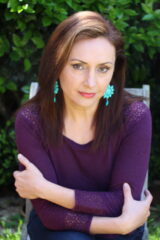 Humaira Ghilzai is a writer, speaker and Afghanistan Cultural Consultant. Humaira opens the world to Afghan culture and cuisine through her wildly popular blog,
  Mary Mackey is an award-winning novelist and poet with fourteen novels including The Village of Bones, which won a 2018 CIIS Women’s Spirituality Book Award from the Department of Diversity and Inclusion; The Year The Horses Came; and A Grand Passion, that was translated into 12 foreign languages and made the New York Times and San Francisco Chronicle’s best seller lists. Mackey is the author of eight collections of poetry including Sugar Zone, which won the 2012 PEN Oakland Josephine Miles Award, and The Jaguars That Prowl Our Dreams, which won the 2019 Eric Hoffer Award for the Best Book Published by a Small Press. Mary became a writer by running high fevers, tramping through tropical jungles, dodging machine gun fire, being swarmed by army ants, making catastrophic decisions about men, and reading. Website:
  Saturday, December 12
 MK:
MK:


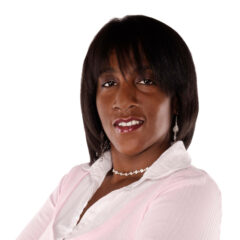 Sharifah Hardie is a business consultant, talk show host and influencer. Sharifah was a Long Beach City Council Candidate in the 2020 March 3rd Primary Election and is a Diversity, Equity and Inclusion Expert. With over twenty five years of business experience, Sharifah Hardie has positioned herself to become one of the top executives in entertainment, business, politics and a person on the rise. Sharifah is the author of Signs You Might Be An Entrepreneur – How to Discover the Entrepreneur in You
 Lyzette Wanzer’s work appears in over twenty-five literary journals. She is a contributor to The Chalk Circle: Intercultural Prizewinning Essays (Wyatt-MacKenzie), The Naked Truth, Essay Daily, and San Francisco University High School Journal. A three-time San Francisco Arts Commission and Center for Cultural Innovation grant recipient, Lyzette serves as Judge for the Soul-making Keats Literary Competition Intercultural Essay category. She is currently helming an anthology entitled Trauma, Tresses, & Truth: Untangling Our Hair Through Personal Narrative.
 Sumbul Ali-Karamali, a former corporate attorney with an additional degree in Islamic law, is an award-winning writer and speaker. She grew up in California, answering questions about her religion, which is why her books engagingly introduce readers to Muslim beliefs and practices and include The Muslim Next Door: The Qur’an, the Media, and that Veil Thing and her just-released Demystifying Shariah: What It Is, How It Works, and Why It’s Not Taking Over Our Country.
 Pushcart Prize nominee Sheryl J. Bize-Boutte is an Oakland multidisciplinary writer. Her autobiographical and fictional short story collections, along with her lyrical and stunning poetry have been described as “rich in vivid imagery,” “incredible,” and “great contributions to literature.” Her first novel, Betrayal on the Bayou, was published in June 2020. She is also a popular literary reader, presenter, storyteller, curator and emcee for local events.
 Fourth-generation native San Franciscan, Kathleen Archambeau, is an award-winning writer and LGBTQ activist. She is author of four nonfiction works, Climbing the Corporate Ladder in High Heels (2006), “Seized,” an essay in The Other Woman (2007), edited by Victoria Zackheim, Pride & Joy (2017), and We Make It Better (2019), with gay dad, Eric Rosswood. Academy Award-winning screenwriter, Dustin Lance Black wrote the Foreword to Pride & Joy and endorsed We Make It Better. Archambeau’s work has been favorably reviewed in global and national literary publications and she has been a featured speaker at national and global Pride literary events. Her book was included as part of the Oakland Museum of California store’s Queer California Exhibit and she is a founding member of the James Hormel LGBT wing of the SF Public Library.
 Michael Larsen co-founded Larsen-Pomada Literary Agents in 1972. Over four decades, the agency sold hundreds of books to more than 100 publishers and imprints. The agency has stopped accepting new writers, but Mike loves helping all writers. He gives talks about writing and publishing, and does author coaching. He wrote How to Write a Book Proposal and How to Get a Literary Agent, and co-authored Guerrilla Marketing for Writers. Mike is co-director of the San Francisco Writers Conference and the San Francisco Writing for Change Conference.
 Rose Castillo Guilbault is the author of the highly acclaimed memoir Farmworker’s Daughter: Growing Up Mexican In America. Her essays have been published in dozens of textbooks and anthologies. She also wrote the book The Latina’s Guide to Success In the Workplace. Rose was the first Hispanic columnist for the San Francisco Chronicle; her column “Hispanic USA” was honored by a number of journalistic and community organizations. A longtime television journalist, she was awarded an EMMY for her work. Ms. Castillo Guilbault was featured in the award-winning book Latinas and Their Muses. Her community activities include Chair of the Commonwealth Club of California’s board of directors and serving as a judge on the Book Awards Committee for several years.
 NS: You have taught writing for decades. How did you begin teaching and can you share some outstanding moments from that part of your life?
 Barbara Rose Brooker, MA, is an age activist, teacher, painter, poet, and author. She has published 13 books, won a National Library Award for her poetry, and has appeared often on “The Today Show,” “The Talk,” “ET” and Andy Cohen’s, “Watch What Happens Live.” Also a columnist, she has published “Boomer in the City” for the

 Aya de León teaches creative writing at UC Berkeley. Kensington Books publishes her award-winning Justice Hustlers feminist heist series, including SIDE CHICK NATION the first novel published about Hurricane Maria. In December, Kensington will publish her first spy novel, A SPY IN THE STRUGGLE about FBI infiltration of an African American eco-racial justice organization. Aya blogs for Daily Dose: Feminist Voices for the Green New Deal and working on a Black/Latina spy girl series, GOING DARK. Visit her at