Women's National Book Association, San Francisco Chapter

WNBA-SF Chapter

  • Home
  • About
    • WNBA SF Chapter Emphasizes Diversity in Bylaws
      • San Francisco Chapter Bylaws
    • Women’s National Book Association
    • WNBA Award 2023 Interview
  • Join or Renew
  • Benefits of Membership
    • WNBA SF Chapter Board Members
  • 2025 Calendar
  • Contact Us
You are here: Home / Archives for WNBA-Writers

November 30 – Five Poets Read in Celebration of Native American Heritage Month

By Admin

Tuesday, November 30th, 2021
Five Poets Read in Celebration of Native American Heritage Month
5:00 – 6:30 pm/ PT
FREE Virtual Event!

Five contributors to Red Indian Road West: Native American Poetry from California (Scarlet Tanager Books) will read in celebration of Native American Heritage Month. California has the largest Native American population of any state, and possibly the most diverse, representing Native Nations from across the U.S. as well as those indigenous to California.


Poets Reading:


Lucille Lang Day (Wampanoag) is the author of eleven poetry collections and chapbooks, most recently Birds of San Pancho and Other Poems of Place, and coeditor of Red Indian Road West: Native American Poetry from California and Fire and Rain: Ecopoetry of California.


Jennifer Elise Foerster (Mvskoke) has two poetry collections from the University of Arizona Press: Leaving Tulsa and Bright Raft in the Afterweather. She coedited When the Light of the World Was Subdued, Our Songs Came Through: A Norton Anthology of Native Nations Poetry with Joy Harjo and Leanne Howe.


Dave Holt (Ojibwe), originally from Canada, is a musician and songwriter in addition to being a poet whose book Voyages to Ancestral Islands received an Artists Embassy International Literary / Cultural Arts Award.


Linda Noel (Koyoonk’auwi), former Poet Laureate of Ukiah, has worked in When the Light of the World was Subdued, Our Songs Came Through, The Dirt is Red Here, and many other anthologies.


Stephen Meadows (Ohlone) is a Californian of pioneer and Ohlone descent. His first poetry collection, Releasing the Days, was published by Heyday. His new collection, Winter Work, will be out soon.


Join us for WNBA-SF’s Native American Heritage Month poetry event!
Register below to receive the Zoom link:

How to Write About Grief and Loss | Emily Thiroux Threatt

By Admin

How to Write About Grief and Loss
by Emily Thiroux Threatt
Author of “Living and Loving Your Way Through Grief”
https://lovingandlivingyourwaythroughgrief.com/

Books and articles are being written at a faster rate than ever before. I am sure this is in part because of the pandemic. This increase also comes from more people seeking help to deal with their grief. Grief used to be something we experienced silently, not sharing thoughts or feelings with others, but now with many people seeking comfort, they are wanting to know if other people are having the same feelings they do, and they want to know what can help them feel better to help them emerge from their pain.

By working with people who are dealing with grief, I have found some common issues to consider when you want to write something about grief.

  1. Grievers want to know that who is writing about grief has experienced or is experiencing grief. The readers who are seeking something to read about grief want to know that the writer relates to grief in a way they can relate to. You can do this by writing from the perspective of someone speaking to directly to the one person who is reading what you say at that moment.
  2. As self-publishing has become easier to do and having a traditional publisher isn’t as essential as it used to be, lots of memoirs about the death of a loved one or grieving a loved one are showing up. If you are choosing to write a memoire in this area, be sure to have a great hook. What makes your story different and appealing? Why would someone choose to read your story as opposed to all the other memoirs out there?
  3. I have found the people who are grieving are wanting guidance. Instead of just reading a story, they want suggestions on what they can actively do to deal with their grief. They want to know that there are people they can share their experiences with. Grief can be a lonely place.
  4. Find a way to include the stories of other people who are grieving so that if the reader can’t relate specifically to you, they can relate to the experience of someone you include in the book. For instance, if you are writing about your experience of having a daughter who died, you may want to include the experience of a daughter who had a mother who died.
  5. Another approach is to write about is a specific kind of grief. I have been hearing from many people who are dealing with suicide, especially the suicide of a child.  This is a niche that could be filled if someone actually has a way to comfort people who are dealing with this kind of loss. The intensity of this kind of loss seems to last a long time, so things that could help over time would be much appreciated.
  6. Grief has surged with the surges of the pandemic. This is a different kind of grief than we are used to. People are tending to look for someone or something to blame from the people who won’t wear masks, to the people who don’t get vaccinated, to the hospitals that are over filled, to the politicians who they feel didn’t do enough or don’t things fast enough.  While blame seems inevitable, when you write about grief and the pandemic, it is better to focus on the people who are grieving than on the people who may be causing the grief. Give them the same love and solace as any other person grieving, and look at their situation independently instead of lumping together all the people affected by the pandemic. Their individual loss is what they are focusing on and they will appreciate you focusing on them, too.

Grief can be a tricky subject to write on. What I have seen in the reactions to all the writing I have been doing shows me that when I focus on providing support, comfort, and love in what I write as well as showing my readers how they can find happiness while they are dealing with grief, they are grateful that you care enough to lighten their burdens some and give them something positive to think about. Just show them that you care.

***

Emily Thiroux Threatt is the author of Loving and Living Your Way Through Grief: A Comprehensive Guide to Reclaiming and Cultivating Joy and Carrying on in the Face of Loss, winner of the Bookauthority Best New Grief Book and the Silver Medal for the Living Now Book Awards.

Emily has much experience in the grieving process and has learned to face life with love, optimism, and joy. Her mission is to comfort and support those dealing with grief and loss focusing on happiness.

Featured Member Interview—Concha Delgado Gaitan

By Nita Sweeney

Scholarly Writing to General Nonfiction:
Author Drawn to Power of Community

Interview of Concha Delgado Gaitan, Ph. D. by Nita Sweeney

Nita Sweeney (NS): Before we dive into questions specific to writing, tell our members, with the world beginning to open but many still being cautious, how have you been taking care of yourself?

Concha Delgado Gaitan (CDG): From the beginning of the pandemic, I felt the need to stay as healthy as possible to work with my publisher and complete the last phase of publishing my 10th book. I couldn’t visit friends, museums, theaters, bookstores, or music venues. Protecting my physical as well as my mind and spirit became part of my daily routine.

Following a morning meditation, I did Yoga or QiGong. A healthy breakfast held me till early afternoon.  Walking the hills around our house gave me stamina.  I wore out two pairs of shoes during that period. Although we missed going out to eat at our favorite restaurants, cooking dinner every evening became a playful and creative discipline that both my husband and I looked forward to enjoying. When restaurants opened for take-out, we supported them frequently.

Additionally, the two most important ways that helped me keep my focus during this past year included daily talking or texting with a family member and friend.  And I also played more than ever before with my four cats. They create amusing distractions effortlessly. Their playfulness felt especially healing during part of my 2020 year as I recovered from (non-covid related) pneumonia.

NS: You’ve been a university professor in Anthropology & Education for much of your career. How does that interplay with your writing?

CDG: At Stanford University, I studied Anthropology and Education, emphasizing ethnographic research of culturally diverse communities in the US. My research expertise earned me invitations to research Latino, Hmong, Native Alaskan Athabaskan, Russian Refugee, and Laotian communities as a Professor at the University of California, Davis. Through face-to-face interaction, observations, and interviews, I understood the people’s lives and language and wrote books that represented their stories of empowerment in these underrepresented communities.

In an academic style, I began shaping my underlying premise, highlighting the importance of social justice in our educational system, our public policies, and the resources of the communities that I studied. I wrote over 70 scholarly essays. My first book, Literacy for Empowerment, described a community I researched. The book received great reviews and became very popular within the Anthropology and Education field. It was the first such story written about the importance and uses of literacy in a Latino community. 

My need for writing the book was to have a book for one of my research seminars. Although it was an academic book, it read like a story of a community finding its voice, which students and colleagues applauded. It seemed that I had found a voice. Other books followed as among some of the scholarly books I wrote during this period included, Protean Literacy, The Power of Community, and Crossing Cultural Borders. These books became the stories that led me to write stories applicable lessons for practicing educators.

After conducting ethnographic research in numerous communities, I felt it was essential to take the academic stories to a practical level. These different books reached a broader educational audience that works directly with students, families, and communities. Those titles include Involving Latino Parents in the Schools and Building Culturally Responsive Classrooms and Creating a College Culture for Latino Students. I felt that it was especially important to write the book about getting students to college when I learned that only 16% of Latino students who enter a 4-year college complete and graduate.

NS: What led you to the writing life?

CDG: I was a reader from the early years. Reading was something my mother always insisted on—that we have a book in hand. The only writing I did during those years was in English classes.

Teaching has been my mission throughout my life. After teaching elementary school, I became a school principal at the age of 26. I was the first woman principal in an Eastside San Jose school district. I was always interested in books throughout those years, and my writing effort consisted of daily journals and notebooks filled with my thoughts, disappointments, and successes. I wrote short magazine-length critiques and commentaries about children’s literature for culturally diverse students and the shortage of books that depicted these cultures in authentic ways.

My studies at Stanford pushed me into formal writing that professors evaluated. Reading opened many doors for me in my life. I’ve believed that writing about topics that inspired me would also reach those interested in the same issues. I treasure that connection with people—many of whom I know and even more that I meet through my writing.

NS: Tell us about your work in social justice and any role that played in your writing.

CDG: Social justice themes thread through many of my writings.  Discrimination has silenced the voices of many communities of color.  Through the people’s lives that I observed, I recognize my responsibility to make their stories known. 

When I wrote books about a community, I discussed it with them in a language they understood. It was part of my relationship with the communities I studied. They trusted me to write about them because they had a voice in the story about them.

In my books, I tell people’s stories of building community despite the discrimination and economic challenges.  Their stories depict the inequalities that people experience in culturally diverse communities.  I describe how people find justice by organizing themselves to change their living conditions and empower themselves. They break barriers and participate fully in the educational, social, and political institutions where they reside.  Parents work to ensure that their children obtain greater access to resources to improve their lives.

NS: You suffered a health crisis and subsequently wrote a memoir. Would you like to share something about that with us? What helped you with that writing process?

CDG: After years as a senior professor at the University of California Davis, my health took an unexpected downward turn. What I knew as my active life of being a professor and enjoying daily hour-long walks, belly dancing, salsa, and traveling around the country and overseas to lecture to work with my Anthropology and Education colleagues came to a screeching halt for a short time. One night I was awakened by severe full-body pain and high fever, the likes of which I’d never experienced. Initially, emergency rooms diagnosed me with flu-like symptoms and sent me home to rest. I spent weeks with my body weakening more each day. It would take weeks of additional visits to the specialist to diagnose me with Systemic Lupus.

Throughout the ten years that followed I continued my professorship while keeping copious notes that filled books of my health story as it unfolded. After I became stronger, I needed to change my profession and my life in general. In rethinking my career, I committed to putting my health first. I left the University and began my independent subcontract business doing community consulting, research, and writing, which I managed from my home office. Another commitment I made to myself was to end my relationship—not only with the man I was with but also with every other workaholic man that encouraged my workaholic pace.

As my new healthier life took shape, I wrote my memoir Prickly Cactus. The book took a few years to leave my desk because it was the first time writing such a personal account of my life. It was therapeutic since my life was unfolding as I wrote about the transformation that were occurring. Writing a memoir pushed me to write quite differently than my past professional books. One way I thought I could break some of my pattern of writing was to take fiction writing classes to stretch me out of my familiar writing format. In the process, I became good friends with my writing teacher. Since then, she has been a great coach; she influenced my style as I competed Prickly Cactus.  Writing my memoir taught me how to write to a general audience about a personal matter–my health.

By the time I completed Prickly Cactus, I had decided to try marriage for the second time. I married my dear partner, Dudley whom I met before I began writing Prickly Cactus. 

NS: You are a prolific writer. Can you share some tips with the WNBA-SF members as to how you produce such a large number and variety of works?

CDG: My enthusiasm for writing satisfies my appetite for learning about the topics that I write.  I also learn new techniques. My love for the people and their stories of resilience has been my joy and driving force in writing.

Where my work routine is concerned, I’m very disciplined.  However, in recent years, I find myself writing in spurts according to my inspiration rather than in defined blocks of time. It’s been productive and more satisfying at this point. I suppose it’s a form of discipline.

NS: Are you ever surprised in the writing process?  If so, how and when?

CDG: My surprises became major lessons. I’ll mention a couple of them. Moving from academic to professional books for practicing educators required me to write in a language that was accessible to educators without using the academic jargon commonly found in scholarly books.

Another new twist occurred when I wrote, Prickly Cactus called for still a different style of language used to tell a story. I wanted to describe my experience so that my younger family members would be able to read without oversimplifying the story. I fought the impulse to cite every date and new concept. And writing about my life included family members. I wanted to make sure that they felt comfortable with their names in the book. I maintained my writer’s integrity and ensured that I would not slight my story while remaining on speaking terms with family members.

NS: Is there something you wish you had been told or not told, earlier about writing?

CDG: Well into my doctoral studies, a professor at Stanford told me that I shouldn’t continue my doctoral studies because I didn’t know how to write and that I would never learn how to write academically well enough to earn a degree.  Her comments rattled me because I took it personally; I lost time and self-confidence, which took time to heal. I could have used that time more productively to work on my studies. After talking with a few professors whose teaching, I respected, I felt ready to continue my Stanford studies.

One-and-a-half years later, I graduated with a Ph.D., and I had published two scholarly articles. I am grateful that I did not devalue my work or stop writing because it was only the beginning of my rich and meaningful storytelling career in four different writing categories: academic for researchers, a memoir on health and healing, educational books for practicing educators, and aging for a general audience.

NS: In a conversation we had before this interview, we discussed aging. How has that impacted your writing?

CDG: Generally, I feel that age does not define who I am or what I do. I don’t typically relate to people according to age. I feel comfortable in intergenerational groups. This might be because we have a large family representing three age levels. We’re a close family and relate to each other comfortably across age groups. However, more recent years, I have become more aware of being a senior baby boomer as my closest friends and colleagues talk about being at this stage of our lives. The prominent issues on people’s minds include discussions on health, work, traveling, caring for parents, and losing spouses. Our conversations piqued my interest enough to research and write my recent book, Wings of a Firebird—The Power of Relationships in our Later Years. I feel strongly that aging in this society needs to be discussed and written from as many perspectives as can lead us to more humanistic policies for this age group.

NS: What is next for you, writing-wise?

CDG: My book Wings of a Firebird gives us a window into the diversity of experiences of aging in our country and the need for policies and resources to support the largest growing demographic. The storytellers in my book spoke of their meaningful relationships. However, there was one type of relationship that did not appear in this book, which I feel merits attention as it plays out in the lives of older adults. The Pandemic exposed more areas for us to explore about seniors in our society. I’m vague about the specifics of my next topic because I read a great deal and interview many people to shape and clarify my topic. I’ve begun doing that type of research to see what story unfolds. Stay tuned. 

Concha Delgado Gaitan has written extensively in the field of Anthropology and Education. Her works emphasize social justice issues of unrepresented communities. The National American Anthropological Association/Council of Anthropology named the presidential Fellowship in her honor. She also received the Anthropology and Education Award from that organization for her lifetime contribution to the field. In her capacity as a professor and researcher, she has worked with communities including Latino, Russian Refugees, Alaskans Native students, Hmong, and transnational populations in Mexico and Spain, where she has also lectured on her books.

Delgado Gaitan’s wealth of experience as an elementary teacher, school principal, and university professor enriches her family-community-school research.

Her book Involving Latino Families in the Schools was a best seller in Corwin Press, and Prickly Cactus was a best seller in the category of “Women’s Health” when it was released by Cypress House Press on Amazon.

Other titles of Delgado Gaitan’s books include Literacy for Empowerment; Crossing Cultural Borders; The Power of Community; Protean Literacy; Crossing Cultural Borders; and School and Society; Building A College Culture for Latino Students.

Her recent book is Wings of a Firebird; the Power of Relationships in our Later Years. It marks the beginning of a new direction in her writing, a focus on issues of older adults in our society.

For more information, visit her website. 

Interview by Nita Sweeney, author of the running and mental health memoir, Depression Hates a Moving Target: How Running with My Dog Brought Me Back from the Brink and co-creator of You Should Be Writing: A Journal of Inspiration & Instruction to Keep Your Pen Moving

November 18 – Holiday Storytelling Fest

By Elise Collins

Thursday, November 18, 2021
H
oliday Storytelling Fest 
5:00 – 6:00 pm/ PT
FREE Virtual Event!

Join WNBA-SF Chapter in our virtual storytelling fest to celebrate the holidays as only book women writers can! Five brilliant, talented writers will share their personal stories of gratitude to bring us cheer during this wonderful season of thanksgiving and joy.

After our five presenters tell their stories of thankfulness, we’ll open it up to our virtual audience—that’s you! We want to encourage the sharing of stories during the holidays with friends and family in the spirit of deep gratitude this year.

Storytellers

Co-chair of this event and Pushcart Prize nominee Sheryl J. Bize-Boutte (she/her) is an Oakland multidisciplinary writer whose autobiographical and fictional short story collections, along with her lyrical and stunning poetry, artfully succeed in getting across deeper meanings about the politics of race and economics without breaking out of the narrative. Her writing has been variously described as “rich in vivid imagery,” “incredible,” and “great contributions to literature.” Her first novel, Betrayal on the Bayou, was published June 2020 and a poetry collection she has written with her daughter Dr. Angela M. Boutte, No Poetry No Peace, was published August 2020.  She is also a popular literary reader, presenter, storyteller, curator, and emcee. Website: www.sheryljbize-boutte.com

Co-chair and emcee of this event, Kate Farrell (she/her), storyteller, author, librarian, founded the Word Weaving Storytelling Project and published numerous educational materials on storytelling. She has contributed to and edited award-winning anthologies of personal narrative, Times They Were A-Changing: Women Remember the 60s & 70s, and Cry of the Nightbird: Writers Against Domestic Violence. Farrell’s award-winning new book, is a timely, how-to guide on the art of storytelling for adults, Story Power: Secrets to Creating, Crafting, and Telling Memorable Stories. Kate offers virtual workshops for libraries and writing groups, as well as performing virtually as a storyteller. Website: https://katefarrell.net/ Blog: https://storytellingforeveryone.net/

Gini Grossenbacher (she/her), novelist, poet, certified editor, educator, publisher, founded Elk Grove Writers and Artists and JGKS Press in Sacramento County. She has thirty-six years of experience teaching English/language arts to adolescents and adults. Her debut American Madams series novel, Madam of My Heart, was a silver medalist for historical fiction in the 2018 Independent Publisher awards; Madam in Silk was runner up for historical fiction in the 2020 National Indie Excellence Awards. Her next novel, Madam in Lace, will release October 2021, and Glimpses, her first poetry collection in March 2022. As well as offering virtual fiction workshops for aspiring writers, Gini provides developmental, copyediting, and assisted publishing services to novelists and poets. Website: http://ginigrossenbacher.com/  https://www.facebook.com/ginigrossenbacherauthor

Diane LeBow (she/her) has worked for women’s rights in Afghanistan, ridden a camel through locust swarms on the Libyan Sahara, and searched for Amazon women’s descendants among Mongolian horsewomen. Her work has appeared in anthologies and publications: Salon, Via, Image, Cleis, Seal, Schocken, Travelers’ Tales, and has won many awards, including thirteen Solas Awards and a Lifetime Achievement Award from Douglass College—Rutgers University for her writing, photojournalism, women’s rights work all over the world. She earned a Ph. D, one of the first in Women’s Studies, at the University of California. Her new travel memoir has just launched, Dancing on the Wine Dark Sea: Memoir of a trailblazing woman’s travels, adventures, and romance. Website: www.dianelebow.com Book launch 2021:  https://www.facebook.com/diane.lebow.9/videos/562680831567057

On July 17, 1955, Richelle Lee Slota (she/they) was one of 200 third graders selected to open Disneyland by running across the drawbridge into Fantasyland. She’s been running into Fantasyland ever since. She performs her one-transwoman show, Kind of a Drag under the drag name, Drama Queen. The Royal Academy of Dramatic Art in London produced her short play, We All Walk in Shoes Too Small. Her one-act play, Famous Michael was staged by Solano Repertory Company. She has published much poetry, a novel, Stray Son, and, with co-author, Yaw Boateng, the non-fiction book, Captive Market: Commercial Kidnapping Stories from Nigeria. https://www.facebook.com/richard.slota


Join us for our WNBA November Holiday Storytelling Fest!
Register here to receive the Zoom link:

October 29 – Ready, Set, NANO! National Novel Writing Month Prep Session

By Admin

WNBA-SF Lunch n’ Learn
Ready, Set, NANO! National Novel Writing Month Prep Session with Award-winning author and fifteen-time NaNoWriMo winner Nita Sweeney
Friday, October 29, 2021 at Noon PT

Congratulations on signing up for National Novel Writing Month (NaNoWriMo)! No, you can’t write yet, but you can PREPARE! In this fun lunch n’ learn, Nita Sweeney, award-winning author, writing and meditation coach, and fifteen-time NaNoWriMo winner will help you prepare NaNoWriMo success.

Bring paper and pen or your trusty laptop. We’ll brainstorm and chat. Whether you’re a plotter, a pantser, or a plantser, every bit of preparation will help carry you across the NaNoWriMo finish line. No matter if it’s your first Nano or your fifteenth, this session will help you start strong.

Nita’s first book, the running and mental health memoir, Depression Hates a Moving Target: How Running with My Dog Brought Me Back from the Brink was a multi-year NaNoWriMo project. Her second book, You Should Be Writing: A Journal of Inspiration & Instruction to Keep Your Pen Moving, coauthored with Brenda Knight, offers author wisdom to help you on your NaNoWriMo journey.

In this workshop Nita will discuss:

  • How to choose a NaNoWriMo project
  • What to do now (before you start writing in November)
  • Plot, characters, theme, oh my!
  • Build community to help (or hinder) your November progress
  • What “fuel” to stock up
  • How to prepare your writing “machine”
  • And much more!

About Nita:

Nita Sweeney is the award-winning wellness author of the running and mental health memoir, Depression Hates a Moving Target: How Running with My Dog Brought Me Back from the Brink and co-creator with Brenda Knight of the writing journal, You Should Be Writing: A Journal of Inspiration & Instruction to Keep Your Pen Moving. A certified meditation leader, mental health advocate, ultramarathoner, and former assistant to writing practice originator Natalie Goldberg, Nita founded the groups Mind, Mood, and Movement to support well-being through meditation, exercise, and writing practice, and The Writer’s Mind, to share using writing practice to produce publishable work. Nita also publishes the writing resource newsletter, Write Now Columbus. Nita lives in central Ohio with her husband, Ed, and their yellow Labrador retriever, Scarlet. Download your free copy of Nita’s eBook Three Ways to Heal Your Mind.

Register here to receive the Zoom link:

October 14th – Afrosurrealism and Afrofuturism

By Admin

Thursday, October 14
6-7:20 pm/PDT
FREE Virtual Event!

Afrosurrealism and Afrofuturism:
Reimagining Our Past and Dreaming Our Future
Join WNBA-SF Chapter for a panel of readings and discussion of speculative literature of the African diaspora. 
How does the genre contribute to healing and to hope?

Moderated by Ellen McBarnette

Ellen McBarnette, moderator, writes in the Afrosurrealist and Afrofuturist tradition of Octavia Butler, in which the Black experience is the basis for reimagining the past and dreaming the future. Her novella, Negrita, is coming out in the Midnight and Indigo, Speculative Edition Volume II, in February 2022. She is committed to peer supportive communities of writers as a necessary part of the writer’s experience and is active in the San Francisco literary community. She runs the Afrosurrealist Writers Workshop of Oakland and the Beta Writers and Readers Group in Hayward. She is active in the WNBA-SF chapter and lives in Hayward, California with her partner, Ben and their cat, Java.

Panelists

WNBA-SF Chapter is honored to host the incomparable Sheree Renee Thomas and Bay Area Afrofuturism and Afrosurrealists and others for an evening of readings and discussion about the modern era of speculative literature of the African diaspora. Questions welcome, such as how are the two genres connected and how does speculative fiction contribute to healing and to hope?

Sheree Renée Thomas is an award-winning speculative fiction writer, poet, and editor. She edited the two-time World Fantasy-winning Dark Matter anthologies and has tales in The Future of Black: Afrofuturism, Black Comics, and Superhero Poetry (Blair, November 2021), The Big Book of Modern Fantasy (1945-2010), Marvel’s Black Panther: Tales of Wakanda, Slay, and Year’s Best Dark Fantasy & Horror, Vol. 2. and in the Year’s Best African Speculative Fiction (Djembefola 2021). Thomas was honored as a 2020 World Fantasy Award Finalist for contributions to the genre. She is the editor of The Magazine of Fantasy & Science Fiction, founded in 1949 and associate editor of Obsidian, founded in 1975, and a member of Carnegie Hall’s Curatorial Counsel for the special 2022 NYC-citywide Afrofuturism festival. Visit www.shereereneethomas.com or follow her on Twitter @blackpotmojo, IG: @shereereneethomas       


A member of the Afrosurrealist Writers Workshop of Oakland, Gabriel Akata is an Afrofuturist Fantasy writer who loves to imagine how the world could be. Born in Brooklyn in ’89, a lifelong lover of books, in the written word Gabriel found a window into the often baffling actions and motivations of others, as well as a way to make himself understood. He began writing stories and journal entries early. A Forum-Based Role Playing Games built on the childhood series, Animorphs was pivotal in his development as an author. Empowered by academics, he writes speculative fiction but also nonfiction in the areas of History, Social Theory, Politics, and Race.  Click here for more: Link

Glenn Parris writes sci-fi, fantasy, and medical mystery. Originally from New York City, Glenn Parris is an alumnus of The Bronx High School for Science, Fordham University, and SUNY Buffalo School of Medicine. The Renaissance of Aspirin, his debut novel, which garnered rave reviews, and paranormal fantasy, Unbitten: A Vampire Dream, have been adapted to screenplays. Over the past 30 years, Glenn Parris has taught at Emory School of Medicine and Morehouse School of Medicine, and Philadelphia School of Osteopathic Medicine. He is also Medical Director of a large rheumatology practice in the northeast Atlanta suburbs. You can find out more about Glenn Parris at www.glennparris.com.

Audrey T. Williams is the former organizer of the Afrosurrealist Writers Workshop of Oakland, and a leader in the speculative fiction writing community of the Bay. She earned her MFA from California College of the Arts in San Francisco. Her poetry can be found in Space & Time Magazine, FUNGI, and is forthcoming in Conjuring Worlds, the first-ever Afrofuturist homeschool textbook for middle grades. Audrey is a nonfiction contributor to Lightspeed Magazine and is Founder of the nonprofit Ancestral Futures, where she co-facilitates a mentorship for BIPOC speculative writers that matches them with professional authors in their genre of choice. AncestralFutures.org

Register here to receive the Zoom link:

Featured Member Interview – Gail Newman

By Nita Sweeney

Poet’s latest book captures stories of the Holocaust, is a tribute to the living and the dead.

by Nita Sweeney, author of the running and mental health memoir, Depression Hates a Moving Target: How Running with My Dog Brought Me Back from the Brink and co-creator of You Should Be Writing: A Journal of Inspiration & Instruction to Keep Your Pen Moving


Nita Sweeney (NS): Before we dive into questions specific to writing, tell our members, with the world beginning to open ever-so-slightly, but still somewhat suspended, how are you taking care of yourself?

(GN): I divide my time between San Francisco and Sebastopol, and now that it’s spring I’m mostly in Sebastopol—gardening, cooking, reading, writing. The garden is blooming, the flowers raising their heads, opening buds, beaming with self-adoration. I’m with my husband, and our son is with us, so I am not alone. I don’t need a multitude, and solitude has always been my companion, but it feels wonderful to get together with friends again, unmasked, with some sense of renewed freedom.

NS: What led you to the writing life?

Gail Newman (GN): Before I was a writer, I was a reader. When I was a child, my mother often took me to the library. My ambition was to read through the shelves alphabetically. I found the world—adventure, friendship, travel, excitement—between the pages. I wanted to be a writer like Jo in Little Women, eating apples up in the attic with ink stained fingers. My grandfather was a journalist and although I never knew him, I like to think that writing is in my blood.

NS: Have you always preferred to write poetry? If so, what drew you to it and what keeps you there?

GN: I loved poetry, but I didn’t know I could write it until, in my mid 20’s, I joined a women’s workshop suggested by a friend. This was during the height of the women’s movement, a time when feminist presses began to emerge and publish women’s poetry in anthologies and collections. Once I began to write poetry, I felt a depth of perception and form of expression that absorbed me. Robert Frost said, “A poem begins as a lump in the throat, a sense of wrong, a homesickness, a lovesickness.” I think that is an apt description. 

NS: Your most recent poetry collection, Blood Memory, “traces the path of Holocaust survivors from Poland to America during and after World War II.” What brought you to write about the Holocaust at this time in your life and at this time in history?

GN: These poems have been in me all my life. I tried to write about the Holocaust and my family when I was younger, but I think I needed more experience as a writer and more distance as a child of survivors. 

When my father died, I started writing more poems about him and my mother. I decided then, in a conscious way, to write a book of poems about my parents’ lives. 

The book is a narrative that tells a story based on what my parents told me as well as my own experience and research. I think the book is a tribute to the living and the dead, and my own realization of the importance of memory and heritage. 

I didn’t know that the book would be released at this particular moment in history when antisemitism and racism-against blacks, Asian, Muslims, immigrants-has come again into our public consciousness. 

NS: If there is one key message that you want readers to get from your book, what would it be?

GN: I think of the poem, Try to Praise the Mutilated World by Adam Zagajewski. People can withstand the most horrific experiences and build meaningful and even joyful lives. We remember the Holocaust to honor the living and the dead. And we remember so that we will be vigilant and compassionate, so that we don’t stand idle when others, of any religion, culture or race, experience bigotry, hatred, or genocide. 

We remember the Holocaust in the hope that it will never happen again in any nation, to any people. We want to remember the past, those who died, our heritage and our people. We want to remember so we can live with compassion. We remember so we will not stand as silent witness to others’ suffering.

NS: You were born in Germany, raised in Los Angeles, and have lived many years in the Bay Area. What impact, if any, do these places have on your work?

GN: Though I don’t remember Germany, or the war, my parents’ lives is part of my inherited memory. The title of my book, Blood Memory, refers to what we carry with us from our parent’s past, from the places we came from and the events that brought us to the present. 

Los Angeles enters my poems in a kind of reverie of childhood and growing up. Moments flicker into my mind in the form of images, snapshots, and evoke feelings that inspire poems.

The Bay Area had a big impact on my work. It was there that I discovered poetry. I was drawn to City Lights [bookstore] in North Beach. I felt the history of the city, writers’ breath in the air and in the streets.

NS: Writers love to hear how other writers work. What is your process? Is it the same from book to book? 

GN: I would say, looking back on my life, that my writing is erratic. I don’t have a set routine. I don’t get up and go to my desk at a specific time. I love to sit by a window, gazing out, drinking coffee, daydreaming. Some nights, when I wake with the lines of a poem in my head, I get up and go to the computer. I don’t have to turn the light on, but type by the Apple’s glow. 

When I write I enter a kind of meditative state, but I think it’s just natural to my writing process and doesn’t come from training or conscious effort. I might go back later to make the details more precise. That is the editor stepping in to perfect the craft. I see images in my mind. Some are memories, some imagination. I remember once bemoaning to another writer about my poor memory and she said, “You’re a poet. Make it up.” That gave me a lot of freedom.

NS: Are you ever surprised in the writing process? If so, how and when?

GN: Writing poetry is a process of discovery, so I’m always surprised. I love poems with a turn, when a thought or images pivots into unknown territory or makes a surprising connection. It’s like walking around a corner in an unfamiliar neighborhood. 

NS: Tell us about the publishing journey of Blood Memory. 

GN: I entered a number of contests, about twenty, sponsored by small press poetry book publishers. Then I began to wait. I expected to wait a long time. I expected rejections. I thought I would continue to submit the following year. One morning I received an email from Marsh Hawk Press asking for a hard copy of my manuscript. Because I was among the finalists, my book would be read by the judge, Marge Piercy. This alone was an honor. I was surprised and thrilled to receive an email a few weeks later saying that I was the first-place winner and that Marge Piercy had chosen my book.

NS: Please share a favorite writing or publishing tip with our WNBA-SF members? Is there one thing you return to again and again, or something you wish you had known or realized much earlier?

GN: Aim high. Try and try again. If your work is rejected, don’t feel rejected. When you submit to publications — journals, magazines, contests — acceptance may be dependent on many factors. Have faith in yourself.

NS: What’s next for you writing-wise?

GN: When I finished Blood Memory, I thought, what will I write about now, without a specific idea? The answer is: everything. Small moments, the most ordinary objects can become the subject of a poem. I’m writing about time, the way it changes, slows down, speeds up, the past coming closer, the present fading away. I may remember a feeling, a sensation, and the memory grows into a poem.

I’m still writing about my parents. So maybe it’s a story that has no end. Some teachers have asked about using the book to teach Holocaust Studies, and since I’m an educator, I could help or become involved in that. I would love to share my book with readers in other countries, especially Eastern Europe, and to use it as a message of hope, resilience, and resistance.


Gail Newman was born after WW II in a displaced persons camp in Lansberg, Germany. The daughter of Polish Holocaust survivors, she was raised in a community of Jewish immigrants in Los Angeles where her mother, who recently celebrated her 100th birthday, still lives. 

Gail has worked as an educator at the San Francisco Contemporary Jewish Museum, and as a poet-teacher for California Poets in the Schools. Co-founder and editor of Room, a Women’s Literary Journal, Gail also edited Inside Out, a book of poetry lessons for teachers, and two collections of children’s poems, C is for California and Dear Earth. 

Her poems have appeared in journals including Canary, Prairie Schooner, Calyx, Nimrod International, The Bellingham Review, and in anthologies including Ghosts of the Holocaust, The Doll Collection, and Fog and Light. A book of poetry, One World, was published by Moon Tide Press. 

Blood Memory, chosen by Marge Piercy for the Marsh Hawk Press Poetry Prize was published in 2020. Piercy writes: 

Writing about the Holocaust can be difficult now, not that it was ever easy….those who know, who went through it, are dying off. Those who deny what happened multiply. To make fresh powerful poems rooted in Shoah is amazing.

www.gailnewmanpoet.com

 For signed copies of Blood Memory, please contact Gail through her website.

Facebook: Gail Newman


Featured Member Interview – Carole Bumpus

By Nita Sweeney

Curiosity and love of people, travel, and food spurs retired family therapist to pen books about European food and culture.

by Nita Sweeney, author of the running and mental health memoir, Depression Hates a Moving Target: How Running with My Dog Brought Me Back from the Brink and co-creator of You Should Be Writing: A Journal of Inspiration & Instruction to Keep Your Pen Moving


Nita Sweeney (NS): Let’s start with a question tangential to writing. How are you taking care of yourself during these “interesting” times?

Carole Bumpus (CB): When the pandemic arrived on our doorsteps, I was completing Book Two of my Savoring the Olde Ways series for publication (August 2020). The book was called Searching for Family and Traditions at the French Table. On the 13th of March 2020—exactly when the shutdown came upon all of us—I was about to panic. I desperately needed to test the French recipes (can be found at the back of the book) and was now housebound without all the necessary ingredients. I decided to enlist help from readers of my monthly newsletter. Everyone, like me, was home and looking for something productive to do. The response was celebratory! Yes, they said. We’ll help! Some had access to more ingredients than others; some had plenty of ingredients on hand. And then the merriment began. It was such a fun endeavor as I received help from all over the U.S. plus England and France. All of the fellow ‘testers,’ eighty-three in all, submitted their comments about the recipes, along with photos, and those who completed the project were listed in the Acknowledgement section of my book. It became a gratitude gathering time for me, as we were all in this pandemic together, but we were feeling so creative. 

Even before that book came out, the third book in my series, A September to Remember: Searching for Culinary Pleasures at the Italian Table was pushing into my purview. Fortunately, I was able to enlist many of the same recipe testers to ‘belly up to the stove’ once more but this time for Italian recipes. It turned out to once again be great fun—a lot of extra work—but it was a delightful way to stay connected with all these friends and to make some critical changes to the recipes I am putting forth. This book is due out April 27, 2021.

NS: After you retired, you traveled to Italy and France. Many people travel to Italy and France. They tour, eat, and go home. What made you want to write about it as well?

CB: After years of working as a family therapist, I retired but still carried with me my love and curiosity about families. What is the glue that keeps them together? Once I realized that European families gather most often around the dinner table, I began to ask questions about their favorite foods. “What favorite foods bring your people to the table?” I asked. “What were your favorite foods as a child? Your best-loved traditions? Your most-beloved family stories?” My interest exploded with the generous and thoughtful responses. Of course, everyone has a favorite recipe they want to share, so off we would head to the kitchen to check it out. So, what was not to love? It became a love affair of the heart—and stomach. A glass of homemade wine, a plate of pasta or steamed clams and mussels, and I was in heaven. But that was when the tales began to flow—along with more wine, of course—and plenty of laughter. Narratives of times past, wars fought and lost, hardship but love and tenacity that saw them through—all were woven into the stories surrounding the struggle to protect the familial bond. 

This actually led me to write an historical novel based on the life of an elderly French woman, Marcelle Zabé, who was born on the last day of WWI and died shortly after our devastating 9-11. But her life as a single young mother of eighteen living in Paris during WWII was a story I heard and was compelled to tell. In order to research her background, I began to travel with her daughter, Josiane, throughout France (and twice along with her as translator to travel with WWII Army Veterans to gather history). This additional travel led to the Savoring the Olde Ways series in Books One and Two, Searching for Family and Traditions at the French Table. 

The third book in the series, A September to Remember: Searching for Culinary Pleasures at the Italian Table, which came out April 27, 2021, came about because of my initial trip to Italy with my husband and actually took place a year before the French trips but was my initial incentive to peek inside the geopolitical aspects of ‘family’.  


NS: You began by writing a novel. How did the idea for the companion cookbooks arise?

As I mentioned above, when I did my research for the novel, I was investigating several things as I traveled throughout the regions of France. We were secretly investigating the mysterious life of Marcelle as well as capturing the stories of friends and family members of Marcelle along with their favorite recipes and traditions. With open arms they swept me into their lives and opened their homes and kitchens to all my questions. Traveling from one region to another also gave me the richness and variety of cultures and history found throughout France which led me to begin to dig deeper into the more traditional foods or ‘peasant foods’ which were more prevalent. Cuisine pauvre in French or cucina povera in Italian speaks deeply to the culture found in the hearts and souls of both countries.

NS: About you, one reviewer stated, “For Bumpus, appreciating food requires a strong sense of people and place; in fact, she regards food and culture as inseparable.” Please tell us more.

To understand who the French or the Italians are as a people is not to glibly prance through the country, eat at the Michelin-starred restaurants or laze along the touristed beaches. It is to communicate with the locals in the best way that you can. (It helps to travel with a companion translator.) You will find that each region—no, each village or town—has a specific way of preparing food and going through life; it becomes part of who they are. Their identity. This is not a small thing; it speaks to their culture, their history, their geography, their land (or sea) for gathering food. It is who they are. As was described to me in Italy by my dear friend, Lisa, in my upcoming book:

“This concept doesn’t come from what we consider as being poor or frugal, uncomfortable, undesirable, or from an inconvenient situation that people have fallen into, due to their ineptness. No, this is the idea of living in a world where gods are everywhere—where your interdependence is on the wellbeing of all of these forces, because for some reason the Mediterranean has this sense of interconnectedness.”  

Now, doesn’t that very explanation make you want to know more? Me too! It drove me to write five books so far. And, it has been lovely.

NS: What’s the best thing you’ve ever eaten?

This is a difficult question as I am definitely an aficionado of all types of foods, but what first leaps to mind is a most exquisite lemon pasta my husband and I were served in Umbria. Gubbio, I think. Having spent the morning in search of middle-Renaissance artists in an ancient cathedral, we stumbled off the street into a little trattoria well after 1 p.m. hoping for a bit of lunch. Italians don’t just ‘do’ lunch; they grace your existence with the most flavorful extensions of their simplest ingredients. In this case, the grandfather of the family stood up from his own table and went into the kitchen. Twenty minutes later he came out with a small portion of freshly made, lemon-infused pasta, piping hot and gracing a bowl. We had hoped for two portions, but he had made only one, so he immediately returned to the kitchen to prepare more. I swoon at the memory of those light, yet delectable piquant flavors which caressed each strand of linguine before us. Oh, I have attempted to create this dish many times since, but I never meet muster to that memory. In fact, I don’t even recall what our next course even was. We were in ecstasy! 

Another decadent lunch my husband and I enjoyed was when we were staying a week in Ménerbes, in Provençe, the south of France. After walking up the steep, winding road—too narrow for most cars—to the top of this medieval village, we found in an ancient castle the Maison de la Truffe et du Vin du Luberon which translates to the House of Truffles and Wine. Now, how can you possibly go wrong with delicate pillows of ricotta and spinach-filled tortellini topped with the musky flavors of summer truffles? And served with a cooling glass of Provençal rosé on a hot summer’s day, why it couldn’t get any better. Mais, oui!

 NS: Does your former career as a family therapist inform your writing in any way?

I believe it was my interest and love of people, along with a fervent curiosity to know more about their stories, that led me to interview them in a way which was not all so dissimilar from my approach with clients in my family practice.

NS: We love learning about each writer’s process. Aside from the obvious (recipes) how did writing a novel differ from the cookbook writing?

The novel, A Cup of Redemption, came out of my curiosity and interest surrounding the war-torn life of Marcelle Zabé. She and her daughter originally came into my home to teach me how to cook in a ‘French’ fashion. I was interviewing both of them about their favorite French foods, as we were sitting at my kitchen table here in California drinking coffee and eating a lemon tart I had prepared. (I was trying to impress them.) 

The stories began to flow about Marcelle’s childhood favorite foods, about the difficulty of having enough food during the war years and following, and of the traditional specialties of each region. We decided to take a trip together, all three of us, to discover more of these specialties throughout France when Marcelle suddenly died at eighty-three. So, in the novel, when I wrote about Marcelle’s life, I included all the places she lived or had visited across France. As I was writing about each place, I mentioned what we were eating. And the timeframe of that period. War time = war time rations. Lean times = stretching a few slices of bread spread with bacon grease and a slice of onion. Crêpes? A staple due to its economical ingredients – eggs, flour, and milk.

Six weeks after my novel came out, a friend of mine asked, “So, where are the recipes?” Within nine months, in the time it takes to birth a baby, my companion cookbook rolled out. It was called, Recipes for Redemption: A Companion Cookbook to A Cup of Redemption. It had never dawned on me before writing the novel that I would be writing recipes, but as I had been traveling around the country collecting these stories and recipes, it seemed an easy and happy coincidence. But little did I realize how difficult it would be to not only translate the recipes but change them from metric to our standard measurements and oven temperatures. Oh, my!

Also, I needed to come up with substitutions for ingredients that we, in the U.S. do not readily have available. But then I realized the beauty of the cuisine pauvre, the ‘poor kitchen.’ Traditional recipes come from the people and the land: they are simple, available according to the season and location, economical, and if you don’t have something on hand, make it up or change the recipe! 

NS: Has anything about the writing process surprised you? If so, what, and how?  

I started out by writing the novel, even though I had already completed over seventy-five interviews in both France and Italy. I had grown to love dear Marcelle and wanted her story and her memory to reach into the world. It took me twelve years of research. When I pulled all my notes together, I thought it would be one long book. I took my notes, interviews, and recipes and began to write. A writing teacher told me to write until I was finished. I wrote 950 pages. When I went to an editor or two with my tome, they each looked at me and said, ‘This is not one book, but maybe three or four.’ They were correct. So, I began again by using the principle of ‘How to carve an elephant.’  You simply remove what is not the elephant. In this case I removed all the stories that were not strictly about Marcelle and set them aside. After my novel was published, those ‘set-asides’ became the fodder for my next three French books. The Italian book, which should have been the first one of my Savoring the Olde Series, became my fifth book to write. Marcelle was the surprise who kicked off my writing career.


NS: What writing or publishing tips do you have for our WNBA-SF members? Is there one thing you wish someone had told you before you began?

I’m afraid if anyone had told me how difficult it could be to write a book and get published, I might have given up before starting. But ignorance is bliss, and it sent me off in so many lovely directions—researching, traveling more, taking writing classes of all kinds, learning the art and importance of a good editor, and being aware that writing and completing a book is only the beginning. 

The process of marketing and publicity which follows is essential and expensive, but if your goal is to get your best work out in the world, it takes time, money, and perseverance. Am I writing books to make money? It would be a bonus, but that’s no longer my goal. And, who knew I would be giving readings in a cooking school or have my recipes offered in a French bistro? Who knew I would be asked to give talks on World War II about France and speak to U.S. veterans groups, as well as women’s groups on writing and the art of the novel? Who knew I would be asked to be on a panel of travel writers at SFWC 2020? Who knew I would be asked to read an excerpt from my book at the WNBA-SF in cooperation with LitQuake at Book Passage in San Francisco in 2019 before the pandemic? It could happen and it did.

NS: What’s next for you? A new writing project? More travel?

I was considering taking a little time off, since I launched three books in eighteen months. But I just received a review from someone indicating he couldn’t wait until my next book. What? Already? Be still my heart. I still have many more stories to share.


NS: Is there anything else you would like to add or wish I had asked?

Thank you for the opportunity to share my writing path, and for these questions. This was quite fun, and I enjoyed walking back in time and considering the paths I’ve chosen. Thanks again.


A retired family therapist, Carole Bumpus commenced writing about food and travel after she first began traveling through Italy and France. Having been introduced to the pleasures of the palate by spending time with local families in their homes, she also was introduced to their familial stories of love and war. She completed more than seventy-five interviews of families to date for her food and travel blogs. She published an historical novel, A Cup of Redemption, in 2014, followed by her unique companion cookbook, Recipes for Redemption: A Companion Cookbook to A Cup of Redemption, in August 2015. Searching for Family and Traditions at the French Table, Books One and Two in her multi-award-winning Savoring the Olde Ways series covered the first half of Carole’s culinary adventure in France. The third book in the series is A September to Remember: Searching for Culinary Pleasures at the Italian Table, due out in April 2021. The publisher for all five volumes is She Writes Press.

Selected praise for the Savoring the Olde Ways series includes a rave from Kirkus, which said, “delights at every turn…”; Foreword Reviews, which added, “[Her] exploration as an American abroad will draw in those who hunger for travel as much as they hunger for flavor. For Bumpus, appreciating food requires a strong sense of people and place; in fact, she regards food and culture as inseparable”; and French Book Worm, on Good Life France.com, which chimed in with “Mouth-wateringly delicious, evocative, and utterly charming.”

Effie Lee Morris Writing Contest – Date Extended!

By Admin

2021 Effie Lee Morris Literary Contest – Date Extended!

We honor and celebrate women authors and diverse writers and hope to include YOU with our 2021 Effie Lee Morris WNBA-SF Literary Contest, launched October 1, 2020 and running through October 31, 2021. 

Effie Lee Morris

The Women’s National Book Association San Francisco Chapter is pleased and proud to continue the Effie Lee Morris WNBA Literary Awards in honor of our founder.

Ms. Morris was a pioneering Black librarian and the founder of this chapter of the Women’s National Book Association in 1968. She became the first female chairperson of the Library of Congress and was the president of the National Braille Association for two terms. She was dedicated to literacy for children as well as children in underserved communities, and those who learn differently.

For full information, rules, and to submit your work through October 31, 2021, please go here:


And now, meet the distinguished judges!

Sharifah Hardie is a business consultant, talk show host and influencer. Sharifah was a Long Beach City Council Candidate in the 2020 March 3rd Primary Election and is a Diversity, Equity and Inclusion Expert. With over twenty five years of business experience, Sharifah Hardie has positioned herself to become one of the top executives in entertainment, business, politics and a person on the rise. Sharifah is the author of  Signs You Might Be An Entrepreneur – How to Discover the Entrepreneur in You

Lyzette Wanzer’s work appears in over twenty-five literary journals. She is a contributor to The Chalk Circle: Intercultural Prizewinning Essays (Wyatt-MacKenzie), The Naked Truth, Essay Daily, and San Francisco University High School Journal. A three-time San Francisco Arts Commission and Center for Cultural Innovation grant recipient, Lyzette serves as Judge for the Soul-making Keats Literary Competition Intercultural Essay category. She is currently helming an anthology entitled Trauma, Tresses, & Truth: Untangling Our Hair Through Personal Narrative.

Sumbul Ali-Karamali, a former corporate attorney with an additional degree in Islamic law, is an award-winning writer and speaker. She grew up in California, answering questions about her religion, which is why her books engagingly introduce readers to Muslim beliefs and practices and include The Muslim Next Door: The Qur’an, the Media, and that Veil Thing and her just-released Demystifying Shariah: What It Is, How It Works, and Why It’s Not Taking Over Our Country.

Pushcart Prize nominee Sheryl J. Bize-Boutte is an Oakland multidisciplinary writer. Her autobiographical and fictional short story collections, along with her lyrical and stunning poetry have been described as “rich in vivid imagery,” “incredible,” and “great contributions to literature.” Her first novel, Betrayal on the Bayou, was published in June 2020. She is also a popular literary reader, presenter, storyteller, curator and emcee for local events.

Fourth-generation native San Franciscan, Kathleen Archambeau, is an award-winning writer and LGBTQ activist. She is author of four nonfiction works, Climbing the Corporate Ladder in High Heels (2006), “Seized,” an essay in The Other Woman (2007), edited by Victoria Zackheim, Pride & Joy (2017), and We Make It Better (2019), with gay dad, Eric Rosswood. Academy Award-winning screenwriter, Dustin Lance Black wrote the Foreword to Pride & Joy and endorsed We Make It Better. Archambeau’s work has been favorably reviewed in global and national literary publications and she has been a featured speaker at national and global Pride literary events. Her book was included as part of the Oakland Museum of California store’s Queer California Exhibit and she is a founding member of the James Hormel LGBT wing of the SF Public Library.

Michael Larsen co-founded  Larsen-Pomada Literary Agents in 1972. Over four decades, the agency sold hundreds of books to more than 100 publishers and imprints. The agency has stopped accepting new writers, but Mike loves helping  all writers. He gives talks about writing and publishing, and does author coaching. He wrote  How to Write a Book Proposal and  How to Get a Literary Agent, and co-authored  Guerrilla Marketing for Writers. Mike is co-director of the San Francisco Writers Conference and the San Francisco Writing for Change Conference.

Rose Castillo Guilbault is the author of the highly acclaimed memoir Farmworker’s Daughter: Growing Up Mexican In America. Her essays have been published in dozens of textbooks and anthologies. She also wrote the book The Latina’s Guide to Success In the Workplace. Rose was the first Hispanic columnist for the San Francisco Chronicle; her column “Hispanic USA” was honored by a number of journalistic and community organizations. A longtime television journalist, she was awarded an EMMY for her work. Ms. Castillo Guilbault was featured in the award-winning book Latinas and Their Muses. Her community activities include Chair of the Commonwealth Club of California’s board of directors and serving as a judge on the Book Awards Committee for several years.

Meet the Agents & Editors: Virtual Pitch-O-Rama 2021

By Admin

Saturday, April 10, 2021
8:00 am – 1:00 pm 

**** SOLD OUT ****

It’s Pitch-O-Rama Virtually! Last year’s event was very successful – come join us as we bring you the opportunity to pitch your work for publication.
Includes pre-pitch coaching.
$65 WNBA members, $75 Non-members
EVERYONE Welcome!

Meet the Agents and Editors for Pitch-O-Rama 2021!
These impressive publishing professionals bring years of experience and will provide advice, direction, and next steps for your literary project!  Pitch-O-Rama

Associate Agent Karly Caserza was born in the Phillipines and immigrated to Northern California as a child. She obtained her Business Mrketing degree and has been a Freelance Graphic Designer for over 10 years. In addition to designing a wide range of print and web promotional material for clients. Karly creates book covers for Short Fuse and promotional graphics for Fuse authors. Professionally, Karly began her career in the publishing industry as a reader for Tricia Skinner at Fuse Literary, a role that also included a spot on the production team of Short Fuse. Karly is also the Marketing Coordinator of the San Francisco Writer’s Conference. In her spare time, Karly has a deep love for characters with a strong voice and seeks out stories she can get lost in. Diversity in genre fiction is a major bonus. She specializes in middle grade and young adult genre fiction(fantasy, science fiction, and contemporary.)

Alison Knowles is the Associate Director of Acquisitions at North Atlantic Books, an independent nonprofit publisher based in Berkeley. In 2007 she started her publishing career with a brief stint in publicity at HarperOne, then moved to acquisitions at Wiley/Jossey-Bass, working on religion and spirituality titles as well as higher education titles, and in 2017 joined North Atlantic Books as a Senior Acquisitions Editor. Some recent books she’s proud of include: Love and Rage by Lama Rod Owens; Teaching Yoga Beyond the Poses by Sage Rountree and Alexandra DeSiato; and Climate–A New Story by Charles Eisenstein. She is looking for nonfiction books on health & wellness, psychology & self-help, and social justice & activism. When she’s not reading books, you can find her biking around Oakland, gardening on her back porch, or feeding her overly demanding cat.

Margot Maley Hutchison is a senior literary agent and the director of online courses for Waterside Productions, Inc. She has been in publishing since 1992 and has represented hundreds of books and generated millions dollars in revenue for her authors. She represents fiction and quality nonfiction on the following topics: health, fitness, diet, psychology, parenting, fitness, pop-culture, computers and business. Throughout her career at Waterside, Margot has worn many hats. She was a key organizer of the Waterside Publishing Conference, the leading technical publishing conference in the industry. As the head of the Waterside Foreign Rights department until 2002, she generated hundreds of licensing deals. Margot has created entirely new sales channels for authors in online instruction, corporate website assignments, training and creating apps. Some of the books she has recently represented include: Dr. Kellyann Petrucci’s Bone Broth Diet (Rodale Books) Talking to Crazy by Dr Mark Goulston (Amacom Books), Breaking the Trance: Survival Strategies for Parenting the Screen Dependent Child (Central Recovery Press), Self Esteem for Dummies by S. Renee Smith and Vivian Hart (Wiley Publishing), Grant Writing for Dummies by Bev Browning (Wiley Publishing), Teens Cook by Eimly and Lyla Allen (Ten Speed Press) and People Powered: How Communities Can Supercharge your Business, Brand, and Teams by Jono Bacon (Harper Collins), Stress into Strength by  (Harper Collins 2021)


Jane is currently an Acquisitions Editor for Mango Publishers, an innovative independent publisher that publishes some of the freshest, most distinctive voices of our time. Jane loves working with writers to help bring their ideas to life and to help give voice to a broad range of perspectives and experiences. She is actively seeking nonfiction works that combine beautiful writing with strong messages and narratives and that address current and timely topics in engaging and accessible ways.


She is looking for: Food & Lifestyle, Gift Books, History, Cultural and Social Issues, Current Affairs, Music, Nature/Ecology, Adventure,Gardening, Cookbooks, Parenting, Politics, Psychology, Anxiety, Investigative Journalism, Science, Self-Help, Travel, True Crime, Dating/Relationships, Women’s Concerns, Global Perspectives, Pop Culture


She will consider: Memoir (author must have a platform), Children’s picture books & middle grade from illustrator/artists onl


Michele Crim is the West Coast literary agent for Miller Bowers Griffin Literary Management, a boutique agency based in New York City. They represent authors such as Mark Bittman and Jean-Georges Vongerichten, Cal Peternell and Mads Refslund, co-founder of Noma, and MBG recently signed Moby to do a cookbook for his new award-winning restaurant, Little Pine. They work with chefs, food, and lifestyle writers and also represent fiction and narrative nonfiction writers, worldwide. Among others, Michele now represents Yumiko Sekine, founder of the beloved international brand Fog Linen Work; Allison Arevalo, best-selling cookbook author with a new book, The Pasta Friday Cookbook, released in September of 2019; and Charleen Badman, James Beard nominee and celebrated chef-owner of FnB Restaurant and Bar in Scottsdale.

A MacDowell and Hawthornden Castle Fellow, Leland Cheuk is an award-winning author of three books of fiction, most recently the novel NO GOOD VERY BAD ASIAN (2019). Cheuk’s work has been covered in Buzzfeed, The Paris Review, VICE, San Francisco Chronicle, and elsewhere, and has appeared or is forthcoming in publications such as NPR, The Washington Post, San Francisco Chronicle, Salon, among other outlets. He is the founder of the indie press 7.13 Books, which publishes debut book-length fiction. 7.13 books is looking for quality works of fiction and short story collections, favoring literary comedies and genre-bending submissions as well as work from the queer and/or POC writing community.


Jennifer Chen Tran is an agent at Bradford Literary, joining in September 2017. She represents both fiction and non-fiction. Originally from New York, Jennifer is a lifelong reader and experienced member of the publishing industry. Prior to joining Bradford Literary, she was an Associate Agent at Fuse Literary and served as Counsel at The New Press. She obtained her Juris Doctor from Northeastern School of Law in Boston, MA, and a Bachelors of Arts in English Literature from Washington University in St. Louis. Jennifer understands the importance of negotiation in securing rights on behalf of her authors. She counsels her clients on how to expand their platforms, improve on craft, and works collaboratively with her clients throughout the editorial and publication process. Her ultimate goal is to work in concert with authors to shape books that will have a positive social impact on the world—books that also inform and entertain.

Suzy Evans is a literary agent, attorney, and author who holds a Ph.D. in history from UC Berkeley. In the adult market, she’s looking for narrative nonfiction, history, science, big idea books on controversial social issues, riveting, elegantly-written memoir (recent favorites include Barbarian Days and When Breath Becomes Air), self-help, parenting (bonus points for humor!) and small quirky books that make her smile and think about the world in new and surprising ways. On the children’s front, she’s seeking MG nonfiction, YA fiction that tackles difficult issues in bold, daring ways, and graphic novels that bring history, literature, and fascinating historical figures (think Socrates! Machiavelli! Hamilton!) to life. She’d also love to find a thriller that has “MOVIE!” written all over it. Sandra Dijkstra Literary Agency 

Nancy Fish Nancy Fish During her long career in publishing, Nancy Fish has worked in almost every iteration of the book business. Having been publicity and marketing director for major houses including  Farrar, Straus & Giroux, HarperCollins and Pereus as welll as small indies, freelance publicist and copywriter, and bookseller at legendary shops on both coasts, Nancy now manages the Path to Publishing Program, and all the writers programs, at Marin County’s three-store treasure trove, Book Passage. Ask her about them. Nancy is open to discussing all genres.

Jan Johnson is Publisher Emeritus at Red Wheel Weiser & Conari Press acquiring select books for each imprint. Before launching Red Wheel/Weiser, Johnson worked at Tuttle Publishing, HarperOne (when it was known as HarperSanFrancisco), Winston/Seabury Press and as an independent book doctor, rewrite editor and editorial consultant for corporate and independent publishers. Johnson has worked on many bestsellers including Codependent No More, Random Act of Kindness, Oprah pick The Book of Awakening and Julia Cameron’s The Artist’s Way.

Brenda Knight began her career at HarperCollins, working with luminaries Paolo Coelho, Marianne Williamson and His Holiness the Dalai Lama. Knight was awarded IndieFab’s Publisher of the Year in 2014 at the ALA, American Library Association. Knight is the author of Wild Women and Books, The Grateful Table, Be a Good in the World, and Women of the Beat Generation, which won an American Book Award. Knight is Editorial Director at Mango Publishing and acquires for all genres in fiction and nonfiction, LGBTQ as well as children and photography books. She is the immediate past President of the Women’s National Book Association, San Francisco Chapter, and an instructor at the annual San Francisco Writers Conference.

Born in Port-au-Prince, M.J. Fievre, B.S. Ed, is a longtime educator whose publishing career began as a teenager in her native Haiti. At nineteen years old, she signed her first book contract with Hachette-Deschamps for the publication of a YA book titled La Statuette Maléfique. Since then, M.J. has released nine YA books in French that are widely read in Europe and the French Antilles, and she is the author of the award-winning Badass Black Girl book series for tweens and teens (in English). As the ReadCaribbean program coordinator for the prestigious Miami Book Fair, M.J. directs and produces the children’s cultural show Taptap Krik? Krak! In addition, M.J. serves as the managing editor of DragonFruit, which publishes high quality children’s books, which connect with readers by paving the way to lifelong learning.
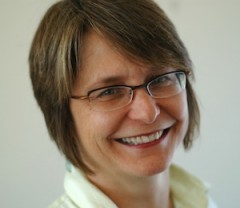
Laurie McLeanLaurie McLean,Partner, Fuse Literary, spent 20 years as the CEO of a publicity agency and 8 years as an agent and senior agent at Larsen Pomada Literary Agents in San Francisco. Following her stint as the CEO of a successful Silicon Valley public relations agency bearing her name, Laurie was able to switch gears in 2002 to immerse herself in writing. She earned a Bachelor’s Degree in Journalism from the State University of New York and a Master’s Degree at Syracuse University’s prestigious Newhouse School of Journalism. At Fuse Literary, Laurie specializes in adult genre fiction (romance, fantasy, science fiction, mystery, thrillers, suspense, horror, etc.) plus middle-grade and young adult children’s books.

Yaddyra Peralta is an acquisitions and developmental editor and acquires and edits books for Books & Books Press, FIU Business Press, and the Dragonfruit children’s imprint. Her focus is in the categories of literary fiction, narrative non-fiction, history, children’s and YA, and business, but is open to other genre suggestions, including books with a social justice bent.  A poet and essayist, her written work has appeared in Ploughshares,The Miami Herald, The Florida Review and various anthologies and she regularly partners with arts organizations to teach creative writing to writers of all ages. 

Randy Peyser sells non-fiction manuscripts in all genres and speaks nationally about how to get book deals. She also serves on faculty for CEO Space International where she teaches about writing book proposals. She is the author of The Write-a-Book Program; Crappy to Happy as featured in the movie, Eat Pray Love; and The Power of Miracle Thinking. Her clients’ books have been in Oprah and Time Magazines, the Wall Street Journal and USA Today Bestseller Lists, in airport bookstores, Office Max and FedEx/Office stores, and on Hallmark TV. Her work is featured in: Healing the Heart of the World; The Marriage of Sex and Spirit; Secrets of Shameless Self-Promoters; and the national bestsellers, Networking Magic, Guerrilla Publicity, and The Profit of Kindness. AuthorOneStop.com.

Andy Ross opened his literary agency in January 2008. Prior to that, he was the owner for 30 years of the legendary Cody’s Books in Berkeley. The agency represents books in a wide range of subjects including narrative non-fiction, science, journalism, history, religion,  children’s books, young adult, middle grade, literary and commercial fiction, and cooking. However, he is eager to represent projects in most genres as long as the subject or its treatment is smart, original, and will appeal to a wide readership. In non-fiction, he looks for writing with a strong voice and robust narrative arc by authors with the authority to write about their subject. For literary, commercial, and children’s fiction, he has only one requirement– simple, but ineffable–that the writing reveals the terrain of that vast and unexplored country, the human heart.  www.andyrossagency.com,  www.andyrossagency.wordpress.com

Roger S. Williams, founder of The Roger Williams Agency, a Division of New England Publishing Associates, Inc., has worked in publishing for over thirty years as a bookseller and sales director at Bantam Doubleday Dell, and Simon and Schuster. His background has spanned a broad range of successful positions from many publishing industry perspectives. He has been involved in sales, marketing, merchandising, editorial, and product development. He has run and owned successful bookstores (both corporate and independent),  he has sold to traditional and special sales accounts, national retail, wholesale, mass market, and independent channels. Roger handles both fiction and fiction including narrative nonfiction and memoir. 

Anne Marie O’Farrell has been a literary agent for the past 29 years. She has been invested in growing and shaping the careers of the many talented and creative people with whom she has worked. She has accomplished this through her business as a literary agent and in her capacity as co-creator and owner of two other highly successful companies: a theatrical production company and a continuing education school in New York City. In 2008 she partnered with Denise Marcil to form Marcil-O’Farrell Literary, LLC. Anne Marie specializes in the nonfiction areas of human potential, personal growth, health and fitness, business, spirituality, sports, cooking, travel, gift, and quirky books. She is interested in representing books that convey and promote innovative, practical and cutting-edge information that will help people increase their self-understanding, maximize their careers, health and relationships, and expand their creativity and fulfillment.  Anne Marie sees the books she represents as a reflection of her personal values and taste.  Anne Marie proudly represents the world-renowned, best-selling Seth books including Seth Speaks and The Nature of Personal Reality by Jane Roberts. These books have sold more than eight million copies and have been translated into over fifteen languages.

Cristina Deptula is a former science and technology reporter and also the publisher of Synchronized Chaos Magazine, which showcases art and writing from around the world. Literary publicity is a way for her to serve others while satisfying her implacable curiosity! Authors, Large and Small helps authors to find their audience where the people already gather and reach them how they already communicate. We develop individualized outreach plans for each author’s project and continue working until we land mutually agreed-on results. As a large, national team we welcome all genres of writing and work with both traditionally published and self-published authors over traditional and social media. 

Kristen Moeller, MS, is an agent at Waterside Productions, the literary home of Eckhart Tolle, Neale Donald Walsch, Jean Houston and other luminaries. Previously, she was an acquisitions editor at Morgan James Publishing and the executive publisher for Persona Publishing, a self-publishing imprint. With close to 30 years of training and experience in psychology and personal growth, she craves discovering new (mostly female) authors with real and gritty memoir or literary fiction about walking through the fires of life – exploring depths and darkness while maintaining a strong psychological base. A published author and a three time TEDx speaker, she has been featured on NPR, ABC, NBC, Fox News, the New York Times, Huffington Post and Tiny House Nation.
 

Register to pitch your book idea to agents and publishers! 

register-now 

« Previous Page
Next Page »

Get the latest blog posts and news. Sign up here.

Join or Renew


Mailing Address
WNBA-SF Chapter
4061 E. Castro Valley Blvd.
Castro Valley, Ca
94552-4840

Topics

Contact Us

Contact Us
Click Here 

Social Media

  • Facebook
  • Twitter

Copyright © 2026• WNBA-SF Chapter | AskMePc-Webdesign