Therapy is supposed to help, right?
Meditation is supposed to help, right?
Being on a spiritual path is supposed to help, right?
Then why am I still so afraid of being judged?
It’s scary to write a memoir that includes my many embarrassing failures as well as my hard-won successes. It’s even scarier to put it out there into the world.
In just the weeks since my book, Nothing Bad Between Us: A Mennonite Missionary’s Daughter Finds Healing in Her Brokenness, was released by Mango Publishing, I have received many Amazon and Goodreads reviews, as well as personal notes from readers.
Some of them are humbling:
“I just finished reading your book. It is a very compelling story that I did not want to put down- A very honest and courageous book. You have “dredged up for public consumption” your internal demons and allowed yourself to be vulnerable. That is a huge gift to all of us.”
Some are funny:
“My dog hated Marlena Fiol’s Nothing Bad Between Us. She is usually quite tolerant of my reading choices because she knows she can easily distract me, and I will put down my reading to tend to her every whim. Once I began Nothing Bad Between Us, however, I was a goner. I simply had to finish the story of Marlena’s childhood.”
As I write this, I have twenty-eight 5-star reviews on Amazon, some of them from people I know and many of them from strangers. I know the negative reviews will come.
They always do.
I’m already experiencing silence from some of my relatives. I’m afraid that they’re shaking their heads, judging me, just like both my parents and my childhood Mennonite church community judged me fifty years ago.
It’s frightening to put myself out there vulnerably with all of the shame that I used to associate with my past. And even after lots of self-help training, this kind of naked vulnerability still triggers within me powerful feelings of embarrassment and humiliation.
And then I remind myself of an important truth: People’s reactions to my book reflect more about who they are than about who I am, as I have shared openly in this published story of my life. Their responses to the book give me glimpses into who they are – just as surely as I’ve given them a glimpse into who I am.
When my readers send notes of gratitude and empathy, they reveal their own open and grateful hearts. When they respond with silence or judgment, these reactions may indeed express their very real concerns about me. At the same time, they also expose their own fears and anxieties.
In a large-scale study that appeared in the Journal of Personality and Social Psychology, researchers found significant evidence of this type of projection: A person’s tendency to describe others in positive terms was consistently an important indicator of the positivity of the person’s own personality. There were strong associations between how positively people judged their peers and how enthusiastic, happy, and emotionally stable they described themselves to be, and were described by others as being. Similarly, the level of negativity the raters used to describe others overwhelmingly reflected their own unhappy, disagreeable, or other negative personality traits.
What I found especially remarkable is that this correlation was highly stable over time. The researchers followed up to find out how the raters in their study evaluated their peers again one year later and found compelling evidence for the same patterns.
These findings point to two important lessons for me:
- I must follow Don Miguel Ruiz’s second Agreement: Don’t Take Anything Personally. The many shortcomings and failures I describe in my book serve as a testimony to my imperfections and my brokenness. But my story also shows the possibility for redemption and healing. It is my gift to the world, and I cannot take too personally how specific individuals receive that gift.
- Maybe more importantly, I must follow Don Miguel Ruiz’s fourth Agreement: Always Do Your Best. Far too often I, too, unconsciously use others as projected mirror images. When I critically judge someone, more than anything else, I am reflecting a state of dissatisfaction within myself, stemming from my own feelings of fear or inadequacy. I must do my best to see my own failings with compassion and forgiveness so as not to splatter them all over others.
We do not see the world as it is, we see the world as we are. —The Talmud
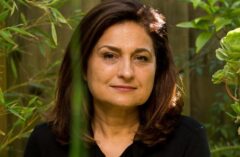
As a consultant and professor of strategic management, Marlena Fiol, PhD, guided her students and clients in coming to know themselves deeply, visualizing their dreams and identifying and removing the barriers to achieve them. Over half of her 85 published articles and books relate to identity and identity change. Her work has been cited over 20,000 times.

Today, as a blogger, essayist, novelist and memoirist, Fiol is still engaged in a similar mission. Every blog, essay, book or workshop provides an opportunity to explore who we are and what’s possible in our lives. Her new book Nothing Bad Between Us: A Mennonite Missionary’s Daughter Finds Healing in Her Brokenness (Mango Publishing, 2020) is a vulnerable and inspirational tale of personal transformation. She was raised in Paraguay on a leprosy station, and today lives with her husband in Eugene, Oregon.


You polish your writing, imagining your audience. You read it over. Out loud. Does it say exactly what you want it to say? You have a friend read it to you. Impressed, she says, “You should submit this to contests. Put yourself out there. Get some recognition for your work.”
Wooden spoon puppets can create holiday magic.
Kate Farrell, 
Kate Farrell is our host and facilitator. Kate is a storyteller, author, librarian, founded the Word Weaving Storytelling Project and published numerous educational materials on storytelling. Farrell’s new book, a timely how-to guide on the art of storytelling for adults, Story Power: Secrets to Creating, Crafting, and Telling Memorable Stories, was released in June 2020.
Sheryl J. Bize-Boutte is a Pushcart Prize nominated author. Her second book, All That and More’s Wedding, is a collection of fictional mystery/crime short stories. Running for the 2:10, a follow-on to A Dollar Five delved deeper into her coming of age in Oakland and the embedded issues of race and skin color. Betrayal on the Bayou, published June 2020, is her first novel. Website:
Humaira Ghilzai is a writer, speaker and Afghanistan Cultural Consultant. Humaira opens the world to Afghan culture and cuisine through her wildly popular blog,
Mary Mackey is an award-winning novelist and poet with fourteen novels and eight collections of poetry. Mary became a writer by running high fevers, tramping through tropical jungles, dodging machine gun fire, being swarmed by army ants, making catastrophic decisions about men, and reading. Website: 


Sharifah Hardie is a business consultant, talk show host and influencer. Sharifah was a Long Beach City Council Candidate in the 2020 March 3rd Primary Election and is a Diversity, Equity and Inclusion Expert. With over twenty five years of business experience, Sharifah Hardie has positioned herself to become one of the top executives in entertainment, business, politics and a person on the rise. Sharifah is the author of Signs You Might Be An Entrepreneur – How to Discover the Entrepreneur in You
Lyzette Wanzer’s work appears in over twenty-five literary journals. She is a contributor to The Chalk Circle: Intercultural Prizewinning Essays (Wyatt-MacKenzie), The Naked Truth, Essay Daily, and San Francisco University High School Journal. A three-time San Francisco Arts Commission and Center for Cultural Innovation grant recipient, Lyzette serves as Judge for the Soul-making Keats Literary Competition Intercultural Essay category. She is currently helming an anthology entitled Trauma, Tresses, & Truth: Untangling Our Hair Through Personal Narrative.
Sumbul Ali-Karamali, a former corporate attorney with an additional degree in Islamic law, is an award-winning writer and speaker. She grew up in California, answering questions about her religion, which is why her books engagingly introduce readers to Muslim beliefs and practices and include The Muslim Next Door: The Qur’an, the Media, and that Veil Thing and her just-released Demystifying Shariah: What It Is, How It Works, and Why It’s Not Taking Over Our Country.
Pushcart Prize nominee Sheryl J. Bize-Boutte is an Oakland multidisciplinary writer. Her autobiographical and fictional short story collections, along with her lyrical and stunning poetry have been described as “rich in vivid imagery,” “incredible,” and “great contributions to literature.” Her first novel, Betrayal on the Bayou, was published in June 2020. She is also a popular literary reader, presenter, storyteller, curator and emcee for local events.
Fourth-generation native San Franciscan, Kathleen Archambeau, is an award-winning writer and LGBTQ activist. She is author of four nonfiction works, Climbing the Corporate Ladder in High Heels (2006), “Seized,” an essay in The Other Woman (2007), edited by Victoria Zackheim, Pride & Joy (2017), and We Make It Better (2019), with gay dad, Eric Rosswood. Academy Award-winning screenwriter, Dustin Lance Black wrote the Foreword to Pride & Joy and endorsed We Make It Better. Archambeau’s work has been favorably reviewed in global and national literary publications and she has been a featured speaker at national and global Pride literary events. Her book was included as part of the Oakland Museum of California store’s Queer California Exhibit and she is a founding member of the James Hormel LGBT wing of the SF Public Library.
Michael Larsen co-founded Larsen-Pomada Literary Agents in 1972. Over four decades, the agency sold hundreds of books to more than 100 publishers and imprints. The agency has stopped accepting new writers, but Mike loves helping all writers. He gives talks about writing and publishing, and does author coaching. He wrote How to Write a Book Proposal and How to Get a Literary Agent, and co-authored Guerrilla Marketing for Writers. Mike is co-director of the San Francisco Writers Conference and the San Francisco Writing for Change Conference.
Rose Castillo Guilbault is the author of the highly acclaimed memoir Farmworker’s Daughter: Growing Up Mexican In America. Her essays have been published in dozens of textbooks and anthologies. She also wrote the book The Latina’s Guide to Success In the Workplace. Rose was the first Hispanic columnist for the San Francisco Chronicle; her column “Hispanic USA” was honored by a number of journalistic and community organizations. A longtime television journalist, she was awarded an EMMY for her work. Ms. Castillo Guilbault was featured in the award-winning book Latinas and Their Muses. Her community activities include Chair of the Commonwealth Club of California’s board of directors and serving as a judge on the Book Awards Committee for several years.
Editor “Grows” Food and Authors
Self-Proclaimed “Political Junkie” Reveals Her Writing Secrets
GS: Thanks. My interest in writing started with an awareness of news and politics. My grandmother was a Holocaust survivor in that she realized early on things were going downhill for the Jews in Poland. She left before it got really bad and tried to convince her siblings to come with her to the states. They thought she was over reacting and hence were killed by the Nazis. She taught me early on to pay attention to the government because things can get very bad and you need to be alert. My mother was a political junkie and she taught me the same lessons.
By Debra Eckerling, author of
I learned about “To Write” lists from best-selling author Natalie Goldberg, of Writing Down the Bones fame. As I sat in the classroom at Mabel Dodge Luhan House in Taos, New Mexico, I watched her pick up her writing journal, flip to the back, and show us a list of scrawled topics she’d penned on the final page. She carried a notebook everywhere and jotted ideas on the back page as they occurred to her. “If I’m stuck, I look at these,” she said.
WNBA-the National Organization 
Nita Sweeney is co-author with Brenda Knight of the writing journal, 
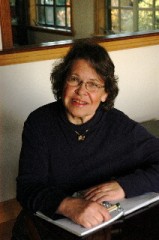
Ms. Morris was the first Coordinator of Children’s Services at the San Francisco Public Library and established the Children’s Historical and Research Collection at the Children’s Center of the San Francisco Library. She went on to become the first African American president of the Public Library Association. In 1968, Ms. Morris founded the San Francisco Chapter of the Women’s National Book Association, which began in 1917. The WNBA SF Chapter is continuing our advocacy for the voices of women and diverse authors in tribute to Ms. Morris’s important work and legacy.