You’ve polished your manuscript, now polish your pitch! Pitch-o-Rama, hosted annually by the San Francisco chapter of the Women’s National Book Association, is a great opportunity to not only practice your pitch with coaches and fellow writers, but also try that pitch on publishing professionals who can provide advice, direction, and next steps for your writing project.
Pitching your book to an agent or editor might seem like a daunting or terrifying experience. But it’s necessary if you want to publish traditionally. We’ve assembled top agents and editors from all genres for this event, who are excited to hear about what you’ve been working on. Pitch-o-Rama provides a welcoming, encouraging atmosphere to talk with them, and you’ve got six whole minutes per session. That’s twice as long as other pitch events.
Author Nisha Zenoff loves to tell her Pitch-o-Rama success story. “I walked in with a book project that had been turned down a dozen times. I was giving my book one last shot at Pitch-O-Rama. When I left, I was on cloud nine as I got excellent feedback on a new title and ideas to make my project more viable. I got an agent who sold my project to a big New York publishing house, and all because of the support I got from the Women’s National Book Association, SF Chapter at their event. Brava!”
Pre-pitch coaching
If you’re feeling those pre-pitch jitters, coaching can help you get in the zone. We have two coaches this year to give you feedback and be the sounding board you need to get your pitch down. By practicing in front of others, you can build confidence so that you don’t get stuck when you’re trying to pitch to an agent. The atmosphere is supportive and encouraging, with personal, targeted feedback that helps authors succeed at sharing what their books are about. Michelle Travis, now published author of My Mom Has Two Jobs, says, “The pleasant atmosphere that provided an initial coaching session to get into the proper frame of mind, and then the possibility of speaking for six minutes with our agents of interest, was valuable.”
And Dr. Susan Allison says, “I really liked the pre-pitch session. Hearing other people’s pitches helps me hone my own. Plus, people were so very helpful, a very supportive/non-competitive group! Thank you for putting it on!”
Meet your Pre-pitch coaches
Betsy will again be sharing her expertise in a group setting, as part of your Pitch-o-Rama experience. Or if you’d like one-on-one coaching to get your pitch down, you can sign up on the day of Pitch-o-Rama for a time-slot with Elisabeth.
Betsy Graziani Fasbinder MS, MFT, is an award-winning author, a licensed psychotherapist, and a communications trainer. She has coached the reluctant and the phobic in public speaking in Fortune 500 companies throughout the United States and abroad, helping even the most introverted to be comfortable, engaging, and inspiring to their listeners. She coaches presenters to conquer stage fears and connect to listeners. Her favorite clients are writers and artists. For the past five years she’s offered pre-pitch coaching to help nervous writers practice their pitches. And she’s watched newbie writers and seasoned authors alike walk away from these pitches with pros requesting their work.
Elisabeth Kauffman is an editor, an author, and an artist. She edits fiction and memoir for independent clients as well as for publishing companies, and coaches writers to find their voices and connect to the magic in their creative lives. Additionally, she’s been coaching writers with National Novel Writing Month for the past six years, helping them overcome writing blocks and get their stories out. Using creative writing exercises along with tarot, visualization, and more tactile forms of art, she encourages her clients to take risks and tell stories that matter. She regularly volunteers for and speaks at the San Francisco Writers Conference, and with local writers’ groups. She is currently represented by Bradford Literary Agency and hopes to publish her first book (a tarot deck and guide for writers) in the near future.
Saturday, March 21, 2020
8:00 am – 1:30 pm
It’s Pitch-O-Rama PLUS – now Virtual!
Includes pre-pitch coaching.
Registration:
$65 WNBA members, $75 Non-members, Men Welcome!
Limited to the first 70 ticketed attendees.
Come join the fun – register here!


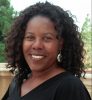
 Sheryl J. Bize-Boutte is an Oakland multidisciplinary writer whose works artfully succeed in getting across deeper meanings about life and the politics of race and economics without breaking out of the narrative, with Oakland often serving as the backdrop for her touching and often hilarious works. Her first book, A Dollar Five-Stories From A Baby Boomer’s Ongoing Journey (2014) has been described as “ rich in vivid imagery”, and “incredible.” Her second book, All That and More’s Wedding (2016), a collection of fictional mystery/crime short stories, is praised as “imaginative with colorful and likeable characters that draw you in to each story and leave you wanting more.” Her latest book, Running for the 2:10 (2017), a follow-on to A Dollar Five, delves deeper into her coming of age in Oakland and the embedded issues of race and skin color with one reviewer calling it “… a great contribution to literature.” Her fictional story, “Uncle Martin” was published by Medusa’s Laugh Press Summer 2019. She currently has a novel in progress titled “Betrayal on the Bayou,” slated for publication in early 2020. She is also a contributor to award winning author Kate Farrell’s upcoming book “Story Power,” an anthology on how writers build and create their stories.
 Brenda Knight began her career at HarperCollins, working with luminaries Marianne Williamson, Mark Nepo, Melody Beattie, Huston Smith and Paolo Coelho. Knight served for 8 years as publisher of Cleis Press & Viva Edition, winner of the IndieFab’s Publisher of the Year Award in 2014. Knight is the author of Wild Women and Books, The Grateful Table, Be a Good in the World, and Women of the Beat Generation, which won an American Book Award. Knight is Associate Publisher at Mango Publishing and acquires for all genres in fiction and nonfiction as well as children and photography books. She also serves as President of the Women’s’ National Book Association, San Francisco Chapter and is an instructor at the annual San Francisco Writers Conference.
 My website is hosted by WIX and I have to be honest…if asked, I would happily do a promotional spot for WIX’s stellar customer service. Beyond great customer service, they have a marketing tool that allows users to create beautiful quote graphics that can be posted on all social media platforms. The picture is an example of one of my favorites that was made through my website.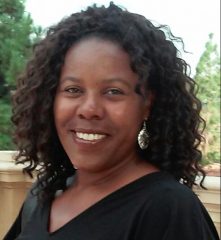






 SJBB: The two things my work experience did for my writing career were 1) to provide a nice retirement with freedom to write and 2) to let me know that I could write in many different forms. In those ways the career off-ramp was totally worth it. Although I wrote a bit now and then throughout my government career, my work-related writing was often lauded and I became the “writer” in the office. I once wrote a section of congressional testimony for a cabinet level secretary that was delivered to the House without one word being changed. That sealed it for me. I knew what I would be doing in my retirement!

 WNBA-the National Organization