
By Nita Sweeney
Five of my books have been published. They are all memoirs. Two are easily recognizable as such while the other three are shaped like self-help or how-to.
After my fifth book and second “true” memoir launched in early June, more than one person asked, “How do you write more than one memoir?” They don’t say it, but what I hear is: You’re not famous. Is your life that interesting?
To answer those unspoken questions, let’s turn to the definition of “memoir.”
Merriam-Webster says:
- a narrative composed from personal experience
- an account of something noteworthy
A memoir is a story worth telling that is based on someone’s experience.
“I’m going to write my memoirs when I’m old.” Nope. A memoir is not your entire life story. It’s a slice of your life or an angle on your life. But it is not your whole life. Memoir is not autobiography.
Memoir is also not biography. For many years, I referred to what became my fifth book as “The book about my dad.” His life may interest some people, especially our family but, (sorry, Dad) there was not much noteworthy about him. Only when I began to weave in my mental health crisis that occurred during the same time period as his illness, did I feel I had a story worth telling.
And, memoir does not have to be one and done.
Two of my five books follow a narrative much like a novel. “Here. Sit down with me. Let me tell you what happened in my life.”
That first memoir, Depression Hates a Moving Target, begins in March of 2010 and ends in October of 2012. It follows the start of my running adventure when, at 48, I decided to begin jogging after a tough few years in which my mental health was, once again, at risk. But I do flash back a few times to give context to what’s going on during those years. It’s a tale with a story arc and “character” development as one would craft when writing a novel. The difference is that all the things actually happened. But that was only a slice of time. An important (to me) change occurred, one worthy of explaining. Lots of other things happened during the time period covered in the book, but they didn’t serve the story.
My fifth book and second “true” memoir, Memorial: The Year my Dad and I Stopped Keeping Score, begins in January of 1995 and ends in January of 1996, so literally a “year in the life” book. The book begins when I learn that something was wrong with my father. And, I was still recovering from a bout of near-fatal suicidal ideation when he was diagnosed with terminal cancer. I was getting better. He might not. And, all he wanted to do was play golf. This braid of cancer, mental illness, and love, set on golf courses in central Ohio, made it a story worth telling.
Does the book include everything that occurred that year? Absolutely not. Again, other things happened to me and my family during that time. But unless these events related to my relationship with my father, his illness, or my mental health, they wound up on the cutting room floor.
My other three “memoirs” are thinly-veiled as self-help or how-to. These qualify as memoir because I use my experience as the examples. I structured Make Every Move a Meditation as a classic how-to by answering these questions: Why might a reader want this thing I’m suggesting? What is it? How do you do it? What might block the reader from doing it? How can they overcome those blocks?
While the book follows that how-to formula and shows how anyone can meditate while doing any movement form, it does this using events from my life, primarily me meditating while I run.
The same is true of A Daily Dose of Now. That 365-page daily reader is structured like a classic “meditation book” with a quote, a micro-essay, and an exercise. In this case, all of the micro-essays are my reflections on the quote and how I use mindfulness in my daily life. Again, that’s memoir!
Even You Should Be Writing, the writing journal I coauthored with Brenda Knight, could be classified as memoir because I share my personal experience at the beginning of each chapter.
So, how do you write more than one memoir? I begin with a few questions:
What is an interesting aspect of my life?
If I can explain why I find it interesting, chances are, it will interest someone else.
Where does the story start?
Is there a concrete “story” to tell, something with a narrative arc: this happened which made this happen which led to this and so on. When I think about where a story starts, there is usually a moment when “everything changed.” In Memorial, the moment Dad said, “It’s in my bones” set the story in motion.
Where does the story end?
I need to know the ending before I begin. Since it’s nonfiction, the ending already happened, but I need to know what event, what “ending” I will choose. I need to find where the resolution happened for me. It’s a bit of a book end. In Memorial, the ending came several years after my father died when something shifted inside me. That leads to the next question.
What am I thinking, feeling, questioning (or not) throughout?
In memoir, the interior story happening to the memoirist is as or more important than what happened outside their heart and mind. Memoir readers want cause and effect. They want a story, not a report.
Am I willing to dive as deep as it takes to tell the story?
While most people’s lives are interesting enough that they could write more than one memoir, not everyone is self-reflective enough to do that. You must be curious about yourself, willing to tackle hard questions, and able to craft answers that satisfy the reader.
Ultimately, memoir (a story worth telling that is based on your experience) is infinitely shapeable, like tofu. It takes on the flavor of whatever sauce you float it in. It’s up to you to decide which taste to share.
About the Author
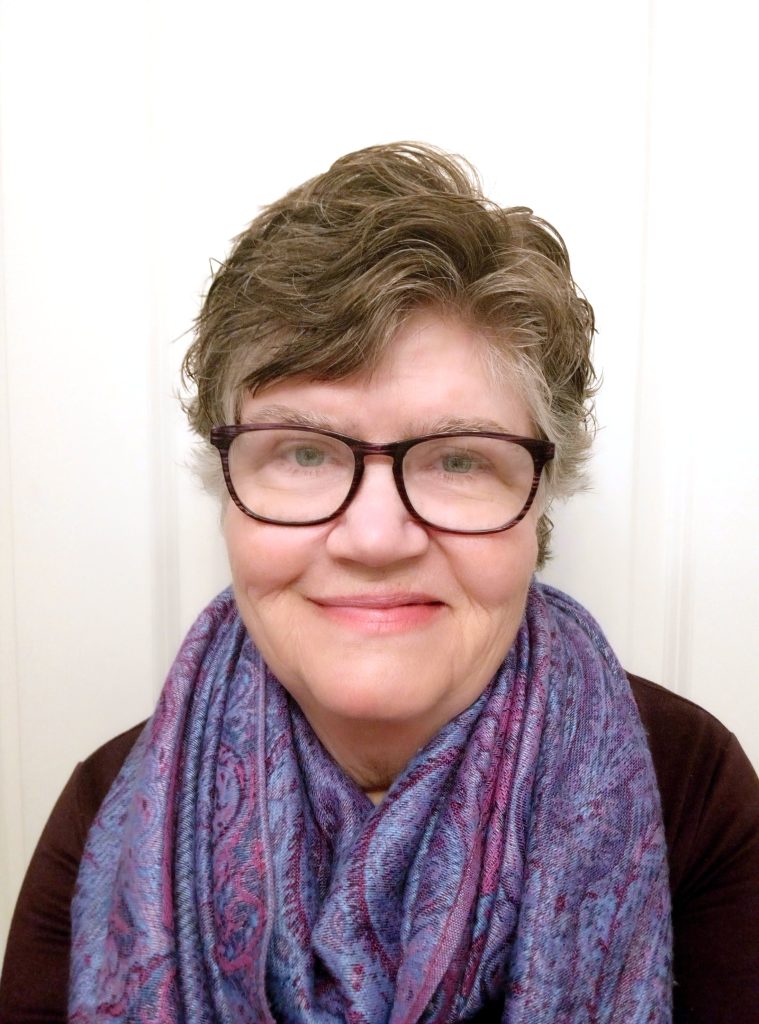 Nita Sweeney is the best-selling author of five books including the award-winning running and mental health memoir, Depression Hates a Moving Target. She runs ridiculously long distances for fun, enjoys chatting about the Enneagram, and sits in silence daily. When Sweeney’s not doing those things, she helps people find their way in writing, life, business, and sport. She lives in central Ohio with her husband, Ed, and their yellow Labrador retriever, Scarlet.
Leave a Reply