Women's National Book Association, San Francisco Chapter

WNBA-SF Chapter

  • Home
  • About
    • WNBA SF Chapter Emphasizes Diversity in Bylaws
      • San Francisco Chapter Bylaws
    • Women’s National Book Association
    • WNBA Award 2023 Interview
  • Join or Renew
  • Benefits of Membership
    • WNBA SF Chapter Board Members
  • 2025 Calendar
  • Contact Us
You are here: Home / Archives for Past Events

October 30 – Making AI & Publishing Less Scary: Discussion + Halloween Mixer

By Admin

Making AI & Publishing Less Scary: Discussion + Halloween Mixer

Thursday, October 30 at 12 – 1pm PDT

A FREE Virtual Event

Unable to attend? No worries. Register anyway and receive the replay!

Artificial Intelligence (“AI”) is casting a long shadow over the creative world. But when modern technology meets outdated federal (copyright and trademark) and state (right of publicity and defamation) law, things can get a little… frightening.

Join WNBA-SF for a spine-tingling discussion with Paul Levine, a literary agent and seasoned entertainment lawyer with 43 years of practice and Adjunct Professor of Entertainment Law at USC Gould School of Law. 

Discover the tricks and treats of how AI is haunting the world of book publishing—and what authors and creatives need to know to protect their work.

Stick around for WNBA-SF’s annual Halloween Mixer, where you can share your scary publishing stories around the virtual campfire.

It’s a mixer, so invite a literary friend or two. Bring your own s’mores. Costumes optional.

About the Speaker

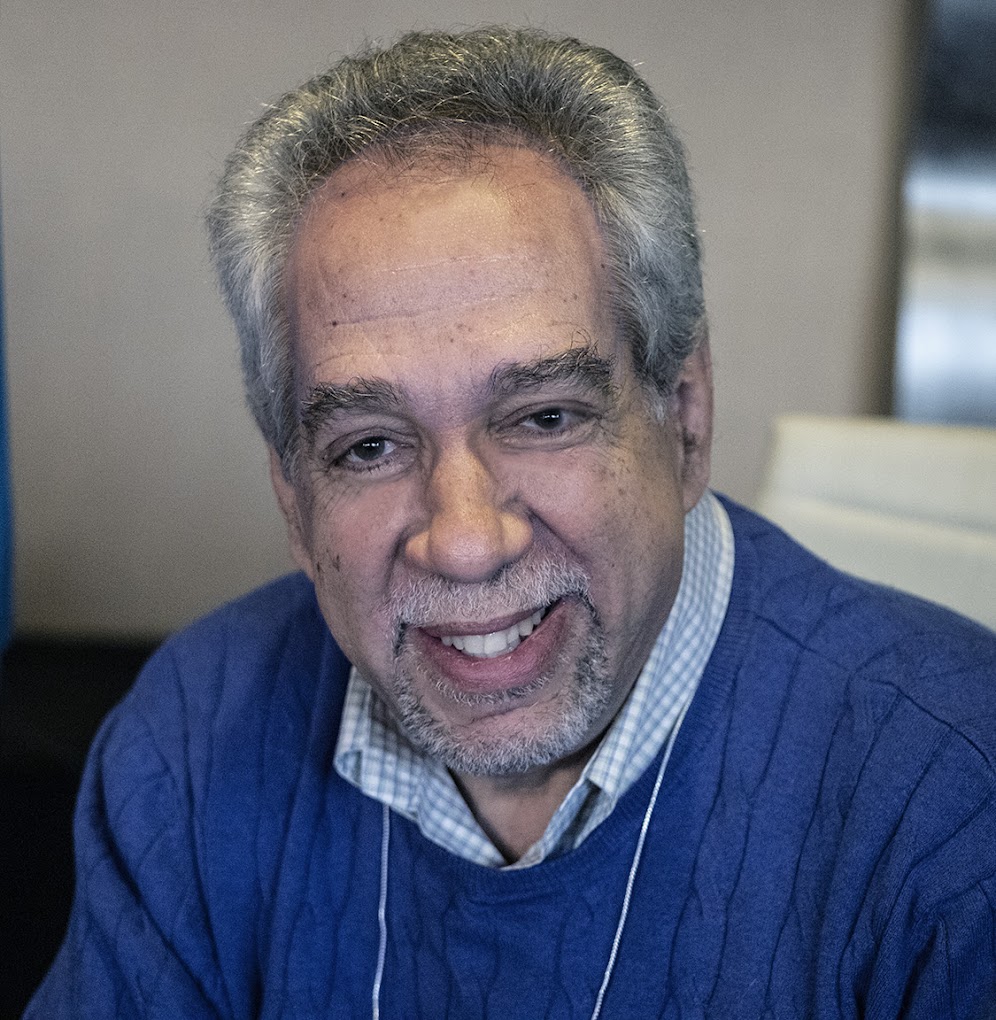
Paul S. Levine “wears two hats:” he is a lawyer (www.paulslevine.com) and a literary agent (www.paulslevinelit.com). Mr. Levine has practiced entertainment law for more than 40 years and established his first solo practice in 1992. Seeing an underserved niche on the West Coast, he decided early on to focus on serving book authors. This naturally evolved into his work as a literary agent. Seeking to expand the range of services he could offer his clients to include the representation of books, Levine opened The Paul S. Levine Literary Agency in 1996, which he has recently expanded. With a preference for politically and socially important works, he represents more than 200 book authors, the vast majority of whom are new, unpublished, or self-published writers. Levine presents extensively at writers’ conferences throughout the country and at entertainment law-related classes and seminars.

Your Mixer Host

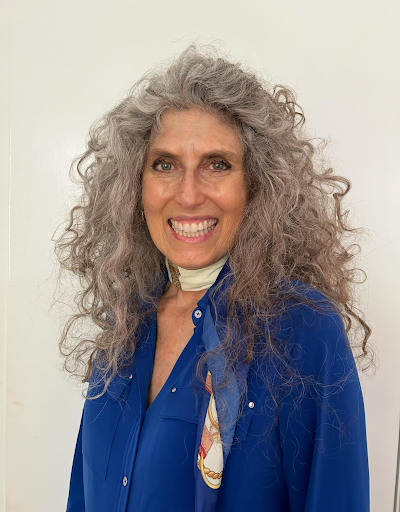
Debra Eckerling, aka WNBA-SF Networking Ambassador, is a goal strategist, book proposal specialist, and award-winning author of Your Goal Guide and 52 Secrets for Goal-Setting & Goal-Getting. Founder of  the D*E*B METHOD® for goal-setting simplified, she hosts GoalChat, Taste Buds with Deb, and the Book Proposal Podcast. Check out Debra’s articles on WritersDigest.com, subscribe to her Book Proposals Simplified Substack, and connect with Deb on LinkedIn. Learn more at TheDEBMethod.com.

To register, please fill out the form below: 

Registration is now closed. Visit our homepage to sign up for email notifications and never miss a WNBA-SF event!

October 16 – Free Lunch N Learn: Debunking Myths of Hybrid Publishing

By Admin

Debunking Myths of Hybrid Publishing

Thursday, October 16 at 12 – 1pm PDT

A FREE Virtual Event

Unable to attend? No worries. Register anyway and receive the replay!

You just finished writing your manuscript, now what?
 
Traditional publishing, self-publishing, vanity presses, hybrid publishing…the publishing world is complex and difficult to navigate, with hybrid publishing gaining traction in particular. But lack of knowledge and confusion about the term has led to many misconceptions and myths.
 
So what exactly is hybrid publishing, and what is not? Learn about the different methods of publishing and find out what might be your best option during this free Lunch N Learn presented by publisher Audrey Zurcher!
 
Meet the Presenter:
A business owner experienced in book publishing technologies and procedures, Audrey Zurcher launched Spring Cedars in 2019, a hybrid publishing solution that provides writers a publishing alternative, one that is integrated, affordable, personable, and fun.


To register, please fill out the form below: 

Registration is now closed. Visit our homepage to sign up for email notifications and never miss a WNBA-SF event!

Membership Discount for Pitch-O-Rama 2026!

By Admin


Saturday, April 25, 2026, 8:00 A.M. – 1:00 P.M. PT

23 Years of Pitch-O-Rama Success!

Are you developing a concept for a new book? Do you have a manuscript in progress? Have you always wanted to publish that book you’ve been working on for years? If this sounds like you, we would love to invite you to Pitch-O-Rama 2026! Everyone is welcome to participate!

We are happy to announce we will be hosting the next Pitch-O-Rama as a virtual event on April 25th, 2026, where writers will be given the opportunity to pitch their works to agents and editors for publication. 

New to Pitch-O-Rama? Pitch-O-Rama is an annual event where we bring in a set of publishing professionals to share their knowledge of the publishing industry. During the event, you will be able to practice your pitch with coaches and fellow writers, and then share that pitch with an expert who will provide advice on taking your writing project to the next level. A chance like this is an invaluable learning experience that could put you on the path to publication. We hope to see you there!


Stay tuned! We will reveal the list of attending agents and editors in early 2026. 

Testimonials from Past Participants

“Pitch-O-Rama was not only helpful, but fun, with lots of laughter, networking, and relevant information. As a newbie, I felt at home and am pitching the WNBA to my friends and colleagues. Go women writers! WNBA, you rock!” – Susan Allison

“I participated in the WNBA-SF Pitch-o-Rama in 2021. At the time, I’d almost completed my memoir, From Junkie to Judge: One Woman’s Triumph Over Trauma and Addiction. I worked hard on my pitch and three of the agents asked me to submit to them. Several months later, with the manuscript polished and ready to go, I did so. Even though other agents were interested, I signed with Anne Marie O’Farrell, whom I had met via the WNBA event. Working with both Anne Marie and Caroline Fanelli at her agency, I added an appendix to the manuscript, and they started submitting. Less than three months later, I signed with HCI (Health Communications Inc.), which specializes in recovery and self-help books.” – Mary Beth O’Connor

“I will always be incredibly grateful to WNBA for the Pitch-O-Rama. Several years ago, I was struggling to get an agent. I had a toddler at home, and I was sure I had missed the boat. Here in the Bay Area, there are many talented writers, but very little access to literary agents. There were big pitch conferences in New York and other parts of the US. But at the time, I couldn’t travel because I had such limited time and money as a new mom. I was pining away on my computer, querying agents and drowning in the isolation. I found out about the Pitch-O-Rama, and immediately registered.” – Aya De Leon

Special Pricing

Currently, registration will be $95 for WNBA-SF members and $145 for non-members so don’t wait to register! If you’d like to take advantage of member pricing, visit our website to learn more about the benefits of WNBA-SF membership and join the chapter’s community!

Your registration is fully refundable before midnight Wednesday, April 15th, 2026. Send your request for a refund to: registrar@wnba-sfchapter.org. 

While we eagerly prepare for Pitch-O-Rama 2026, don’t forget to read our tips on pitching your work!

Please register for POR 2026 using the form below:

Thank you for your interest in Pitch-O-Rama. The event is now closed.

September 18 – Free Lunch N Learn: Book Marketing with Dr. Judith Briles

By Admin

Book Marketing with Dr. Judith Briles

Thursday, September 18 at 12 – 1pm PDT

A FREE Virtual Event

Unable to attend? No worries. Register anyway and receive the replay!

When it comes to authors and book marketing, it may be an Apple Pie and Ice Cream experience … or Crème Brulé with a Dill Pickle Topping. Kinda … ugh. Whether marketing is fun or an overwhelming tsunami, there are tips, tricks, and tools that can calm your author resistance and get things moving once again. 

During this WNBA-SF Lunch N Learn, Dr. Judith Briles will open your eyes, ears, and get you moving forward on your book marketing endeavors.

About the Presenter 

Dr. Judith Briles is the award-winning and best-selling author of 48 books earning over 60 book awards and recently awarded the Author Laureate honor. To date, her books have been translated into 17 countries with over 1,000,000 copies sold! Judith’s books, and work, have been featured in over 1,500 radio and TV shows. She is the host of the AuthorU-Your Guide to Book Publishing podcast that has received over 21 million downloads, posts less than three minute “how to publish and market” videos daily on her YouTube channel Dr. Judith Briles-The Book Shepherd and is the founder of the Colorado’s Authors’ Hall of Fame. Today, she will explore the wide, wide world of book marketing that leads to author success … that is, if you do it.

Sorry. This form is no longer available.

September 4 – Free Lunch N Learn: Growing an Online Audience with TikTok

By Admin

Growing an Online Audience with TikTok

Thursday, September 4 at 12 – 1pm PDT

A FREE Virtual Event

Unable to attend? No worries. Register anyway and receive the replay!

TikTok is one of the most powerful tools authors have today to build visibility, grow a loyal readership, and connect directly with audiences…but it has its own issues too. Join author Kiri Callaghan and Ana Visneski as they talk about how Kiri built an audience of 390k, and the state of author engagement expectations online.

Whether you’re launching your debut novel or looking to breathe new life into your backlist, you’ll walk away with practical strategies, examples of what works (and what doesn’t), and the confidence to show up authentically on one of the world’s fastest-growing platforms.

Meet the Presenters

Kiri Callaghan

Born from Ink & Stardust, Kiri Callaghan is an author of fantastical fiction, performer and poet. Existing work consists of The Terra Mirum Chronicles (Alys, Changeling), The Seek Anomalie Podcast and a collection of original poems performed live at the Los Angeles Poetry Brothel. When Kiri is not telling stories or pretending to be other people, she is likely exploring the world, dancing under the moon, or crafting something with superglue, paint and sheer audacity.

Her debut into traditional publishing The Hearth Witch’s Guide to Magic and Murder will release in Fall 2025.


Ana Visneski

Ana Visneski is a member of the WNBA and the author of F*ck it, Watch This. When not writing, she runs a crisis management firm, Merewif, and teaches crisis communications at the University of Washington.


Sorry. This form is no longer available.

Featured Member Interview – Sheri McGuinn

By Admin

I write. I always excelled at writing. In a different version of my life, I stayed in the challenging school system where I started, was pushed to excel, and found a mentor who guided me into a writing career before I graduated. You already know my name.

In this version of my life, I spent the last three years of high school in a small town school where the guidance counselor apologized because they didn’t have a decent English teacher. I was fifteen and thought she was weird. I had fun and life took an entirely different path with many moves, careers, and relationships. Life’s been interesting – and it’s all material.

In 2005 I was paid to revise a screenplay. In 2007 I self-published my first novel and I’ve been editing and helping others self-publish since 2013. My short stories, novels, and screenplays have been finalists or honorable mentions in Kindle Book Awards, Emerging Screenwriters, Sacramento International Film Festival, Amazon Breakout Novel Awards, Writer’s Digest International Self-Publishing Book Awards, Writer’s Digest Short Story Writing Competition, and the Saturday Evening Post Great American Fiction Contest. An art book I edited and designed was runner up in the San Francisco Book Festival Photography/Art category.

With the book I’ve just launched, I’m focusing on doing a better, more sustained effort at marketing. That has included figuring out the unifying factors in my novels: They’re stories with strong, propulsive plots and engaging characters – with substance to fuel conversation.

What inspires your writing themes (either as a whole or for each book)?

(SM): While writing a gripping story with characters that stay with you is the structure, I do slide in themes that fuel conversation, too. The inspiration always comes from real life one way or another, and resilience is always a factor. My family and I have had a variety of experiences; I’ve worked with at-risk adults, children, and teens in different ways; and people talk to me. I’ve had a stranger give me their life story in a fifteen-minute bus ride. 

All for One: Love, War, & Ghosts – the first draft was completed in 1981, when Vietnam vets were experiencing a lot of problems and a lack of support. I didn’t recognize a positive rejection from an NYC agent as encouragement to work on it. When I got back to it decades later, I wanted to check on some details – and had trouble finding any Vietnam vets who wanted to talk. Knowing the problems didn’t just go away with time made me decide to have my characters age before the scary stuff begins. 

Running Away: Maggie’s Story – when I got my first check for writing in 2005 and decided to take writing seriously, her issues were more pressing. I’d worked with many girls who’d been molested but either didn’t think anyone would believe them or they’d misbehaved in anger so much that no one would believe them. The story is told in her voice and her mother’s to show how communication got broken and mends. 

Peg’s Story: Detours is her mother’s story. Readers asked for it because the mom mentioned she’d run away at the same age and her parents thought she was dead for ten years. I did some meandering in my twenties and thought her story would be like that, until the character took over at the bus station and shocked me. I put it away, embarrassed that someone might think it was about me. Then I saw an interview program with women who were putting their lives together after being trafficked, and I realized that was her story. 

Tough Times started life as Michael Dolan McCarthy, which was a terrible title for a book geared for teenage boys. Michael’s just a regular kid whose life falls apart one piece at a time, but he toughs it out and takes responsibility for his young white siblings – the kind of character my “tough” students would understand. Making race the reason they’ve never met his mom’s parents was just one more layer and brings in family communication issues again.

Alice is a quite short novel. A group in Vancouver puts on a 3-Day Novel Contest every year. I entered the weekend with an idea of a situation with the bank, because that sort of thing was common at that point, and the three main characters in mind. Once Jack, Alice’s father, showed up, the two of them started dictating the dialogue in the voices of Helen Hunt and Jeff Bridges. They had me laughing out loud and the initial draft was done by the end of the weekend. Sometimes the characters take over in a fun way. Yet it’s been described as a modern day ethics story.

What was your favorite part of writing All for One: Love, War & Ghosts?

(SM): That’s tough. I enjoy the whole process, even revisions on revisions, braiding the plots together. And the little bits where character show through – like when the bad guy flashes on a moment from his teen years. But overall? It’s a bit mean spirited, but I may have gotten the most satisfaction out of the gossip’s faint.

How would you compare your screenwriting process versus books?

(SM): I tend to be very sparing in my description when I’m writing books – I usually stick to details that are essential to understand something else. That makes converting one of my books into the screenplay relatively easy. You give the essential description before the dialogue and let the producer and director add the rest. In both cases, the characters and the story have got to work.

Your educational background covers a wide array of writing capabilities, from research and grant proposals to fiction and nonfiction. Which would you say is your preferred writing vice and why?

(SM): There is great satisfaction when a non-fiction project makes a substantial difference in lives. However, I’ve been making up stories since I was a little kid, so storytelling is me having fun. I grew up in a house full of adults – I was the oops seven years younger than the after-thought who was seven years younger than the family. The after thought’s train was set up in the attic. I was not allowed to run it, but he trusted me to play with all the little people and buildings. And that’s just one example. My mom and I made up my bedtime stories, I helped write our class plays in elementary school, and I researched my first novel the summer I turned ten…

What piece of advice would you give to women aspiring to become authors?

(SM): Love the process – write, share, revise, repeat. If you love the process, you will produce your best work. If you love the process, success doesn’t hinge on numbers.

Sheri McGuinn is an award-winning writer of fiction with strong, propulsive plots and engaging characters that provide substance to fuel conversation. With Master’s degrees in Education and Professional Writing, she also writes and edits for hire and helps people through the self-publishing process.

August 14 – Free Lunch N Learn: Share & Grow: Writers’ Favorites Mixer

By Admin

Share & Grow: Writers’ Favorites Mixer

Thursday, August 14 at 12 – 1pm PDT

A FREE Virtual Event

Unable to attend? No worries. Register anyway and receive the replay!

It’s time for another Share & Tell… with a twist! Join WNBA-San Francisco for a “Share & Grow” Mixer on August 14th at 12pm PDT.

This month’s networking event is all about the tools, tips, and treasures that help us on our writing journeys. Whether it’s a favorite book on craft, must-have app, writing event, motivating podcast, or a creative ritual that keeps you going, bring a resource to share—and get ready to discover something new.

During this event, everyone will have a few minutes to:

  • Share: Their favorite writing resource
  • Grow: Set a goal, based on a new discovery

You’ll walk away with fresh ideas, new connections, and maybe even a few game-changers. As Debra Eckerling, the WNBA-SF networking ambassador, says: “You can’t reach your goals on your own, you need your people: they are your ambassadors, resources, and cheerleaders.”

Whether you’re a seasoned author or just getting started, everyone has something valuable to contribute. Let’s come together, lift each other up, and grow stronger—one favorite at a time.

It’s a MIXER, so please share this event and bring a literary friend or two to join the virtual fun! There will be a virtual guest book so you can share your contact info – and favorite links – there too.

About the Host

Debra Eckerling is the award-winning author of Your Goal Guide and 52 Secrets for Goal-Setting & Goal-Getting. A goal strategist and the creator of the D*E*B METHOD® for Goal-Setting Simplified, Debra offers personal and professional planning, networking strategy, and book proposal development, for entrepreneurs, consultants, and creatives. The networking ambassador for WNBA – San Francisco, Debra has spoken on stages for TEDx, Innovation Women, SCORE LA, and more. She is the founder of the Write On Online community, as well as host of the GoalChat and Taste Buds with Deb podcasts. Learn more about Deb on our website.

Sorry. This form is no longer available.

Featured Member Interview – Anne Marina Pellicciotto

By Admin

Anne Marina Pellicciotto is a multi talented and multidisciplined individual. Not only a talented writer, but also the President of SeeChange Consulting, a woman-owned Certified Business Enterprise as well as a returned Peace Corps Volunteer in Mexico. Her diverse lived experiences fuel her life philosophies and methodologies. 

What inspired you to start writing your book, Strings Attached: A Memoir of Marriage, Music and Escape?

(AMP): Just freed, at 27, from the marriage to my music teacher predator, a relationship that began when I was 15, I started writing the secret scandalous story at as a novel. I suppose I was attempting, in those early years, to out myself – and him – but in a safe way. I got encouraging feedback from the continuing ed class at Georgetown: “Feels like you’re right there, inside that girl’s skin.” “Verisimilitude,” the teacher complimented. I was new to writing, so that felt good. But they also said my story was not too believable – the age difference, the fact that he was married and I (a girl named Eve) was the babysitter. I put the manuscript aside and got on with my career as a systems analyst – and the journey to discover who the heck, apart from my music teacher predator ex, I was. Those were some dangerous years of experimentation that also involved a lot of therapy and medication.

Two decades later, at 50, in the aftermath of my mother’s terrible cancer death, retriggered by ghosts of the past, I unearthed the novel manuscript – along with a shoebox of well-preserved memorabilia from those undercover teenage years. With Mom gone – she’s a key complex character in my transgressive coming-of-age story – I was free to write the book as truth. Over the intervening years – as if preparing for this moment – I had consumed memoirs – by Mary Karr and Joyce Meynard and Vivian Gornick, to name a few. I joined a Bethesda Writer’s Center program to complete your book project in a year. I had no idea what a journey I had ahead of me.

A neon posterboard of My Big Beautiful Book Goals stares me at the face each day from the wall above my desk. The first and foremost goal on the list: To write for the creative, cathartic joy of in hopes of touching and inspiring others. Now that I’ve completed the fifth, maybe sixth rewrite of my manuscript and I begin the harrowing process of birthing my book baby into the world, I try to remember: this book is no longer about me. We are all wounded in some way. The readers of Strings Attached are yearning for permission – an invitation – to release themselves from unearned shame and live their lives out of the shadows, fully, powerfully, joyfully.

As the President of SeeChange LLC, what advice can you give to both aspiring female authors and entrepreneurs alike?

(AMP): Haha, I started my own company because, well, I got fired from every job I’d ever been in. I was not one to take to rules and structures and restrictions – especially since I’d been confined in a box at such a young age by my predator music teacher.

The problem with the corporate world – especially the burgeoning IT world .com world of the 90s and 2000s – they could handle creativity – unconventionality – out-of-the box thinking – especially from a woman. Though they sure did pay it lip-service. I was tired of having my ideas received with a blank stare.

So, at 33 I took a MS in Organization and Human Development – with the aim to bring a more creative, humanistic perspective to the organizational improvement. My practicum project became the basis of holistic approach I would bring my clients. Upon graduation, in 2001, I launch SeeChange and have been going strong ever since. My advice? Never allow your creativity to be squelched. If you feel that constriction – be in work or in relationship – get out. It’s not always easy going it on your own – you must weather a lot of ups and downs and oftentimes on your own. What’s more, the independent life may not be quite as lucrative as working for the man. But your creative freedom is priceless.

How would you describe your writing process?

(AMP): I am pretty disciplined – as an indy for so many years, I have learned to be – and I believe it’s part of my nature. I begin my day (as early as I can – and I’m not a morning person) with a routine of yoga to get the energy and breath flowing. Then, with a cup of ginger turmeric tea, I sit down to my Morning Pages (a la Julia Cameron, The Right to Write and The Artist’s Way). In my journal, I let the muse go where she wants – oftentimes it’s meditative, like sights, sounds and smell entering my sense doors. Sometimes, it’s boring to-do lists or lists of accomplishments. But oftentimes the journaling becomes the writing and I find I’ve written passages or scenes from my current project into my composition notebook. I flag those with Postits and then, when I sit down to my computer, I merely need to transcribe. I have a note taped to my desk that says: “Just type – no conditions.” Because, sometimes. I put such pressure on myself to accomplish something – and my muse doesn’t like that. She freezes. And the writing day is a total struggle. So, I have to keep reminding myself – back to my #1 goal for my memoir – “to write for the creative, cathartic joy of it.” Oh, yeah, to protect my muse inside our creative bubble, I keep my phone and Internet powered off until I am done, around 1 or 2 pm. It’s blissful.

Your philosophy of head and heart, science and art is admirable! How do you incorporate those principles in both your life and writing?

(AMP): Great question. I do need to update my website because my philosophy has expanded to include the body: head, heart and body.

Creativity, I once read (Stephen Nachmanovitch, Freeplay) is an act of making decisions. As humans, as writers, we are constantly making choices about what’s in, what’s out – what characters motivations are – where we show in scene and where we tell in summary – and at a larger lever, where to direct our creative energy – into what project or essay or poem. Whether and when to take a pause.

These choices can’t be made solely from the head – using a tool I learned in business school called the Decision Matrix. Sure, logic has its place; we need good information to good make decisions. But the heart and gut must be involved. The answers come to these other two brains. From sitting in stillness, chanting mantra, moving the body in yoga. By planting seeds – asking questions – tapping into our intuition – that’s when the most creative answers and ideas arise.

Lately, I’ve struggling with some important life decision – feeling the effects of so much dis-harmony and uncertainty in our country and our world. I have a Postit note stuck to my mirror that stares me in the face each morning: What’s in harmony with the Divine Design for my life?

The answer has been emerging, little by little – by paying attention, I feel the answer either as tightness – for me in my lumbar spine, shoulders, or jaw. Or, when an idea finally resonates, a truth becomes clear, I feel relaxation, calmness, feet more grounded on the earth, and a little bit of excitement in my belly.

I use my journal to translate the sensations into words. Sometimes that works. As long as I don’t jump from the feeling to the page too quick. Developing this heart-mind-body intuition is a daily practice of making space for the truth to arise – and be there to witness it. This practice has been essential to my writing.

It seems you have lived many lives, from consulting, to the Peace Corps, and into your holistic healing journey. How have these experiences shaped your perspective as a writer?

(AMP): Yes, I love exploring new places, people and lives. I am an experiential learner. Living new experiences gives me both material about which to write – and the volition to do so.

For instance, I am embarking on a new book project based on my last four madcap years living the nomad life. Crooked Spine Chronicles is the story about how, practically crippled with severe scoliosis and in suicide-level pain, I defy doctors order to fuse my spine with rods and bolts and, instead, take to the road. I will not let them to immobilize me. Washington, DC to Santa FE, Durango to Escalante, Sedona, Joshua Tree, LA – I encounter shaman, yogis, PTs, body workers, psychotherapists, tarot readers, psychedelic guides and, lovers. Turns out the universe is conspiring to save me!

All along my journey, I posted stories to my blog of ups and downs, twists and turns and lessons-learned. Now, I am turning those stories into a book with the aim to help others discover their inner power to heal – and to live their most vital, adventurous and pain-free lives. Oh, yes, that Peace Corps memoir is stuffed in shoebox somewhere waiting for the harmony moment to be reworked. It even has a title: Dance the Huapango: Madcap Misadventures of a Mid-Career Volunteer South of the Border. 

Please connect with me via my blog at www.seechangeconsulting.com/blog or befriend me on social media and let’s dialogue. Writing needn’t be such an isolating process. Thanks to WNBA-SF, I feel part of a vibrant and creative community.

September 6 – Volunteer or Join Us at the Northern California Book Awards!

By Admin

Volunteer or Join WNBA-SF at the 44th Annual Northern California Book Awards!

Join us for an afternoon celebrating the best of Northern California literature! The Northern California Book Awards is looking for volunteers at the event on Saturday, September 6 and pre-event for the PR tasks listed below. This free public event honors books published in 2024 by local authors and California-based translators. Meet award-winning writers, get books signed, and mingle at the post-event reception!

WHEN:
📅 Saturday, September 6, 2025
🕑 2:00 PM

WHERE:
📍 Koret Auditorium, San Francisco Main Library (Civic Center)

WHY YOU SHOULD COME:
A must-attend for readers, writers, and literary aficionados. Special highlights include:
✨ The Fred Cody Award for Lifetime Achievement
🌍 California Translation Awards in Poetry and Prose
📖 Awards in Fiction, Poetry, Nonfiction, Children’s Literature & more

WHO:
Presented by Poetry Flash, Northern California Book Reviewers, and the San Francisco Public Library, with partners Mechanics’ Institute and WNBA–SF Chapter.

MORE INFO:
📣 Nominees announced in August at poetryflash.org

PRE- EVENT HELP:

Kim McMillon, PR for NorCal Book Awards needs a few awesome volunteers to help spread the word about the Northern California Book Awards!

Here are a few ways you can jump in:

  • Press Outreach: Help send out our updated press release (coming soon from Joyce!) to media lists.

  • Social Media Promotion: If you’re great at sharing events or would like to post about the awards, we have a one-minute video ready for TikTok/Instagram and a Save the Date graphic you can use.

  • Bay Area Media Connections: We’d love to book an interview with Rebecca Solnit on KQED’s Forum (if she’s willing), so if you have connections at Bay Area radio or TV shows—like KPIX’s Book Corner—we’d love your help.

  • Online Event Listings: I need to input info into local media/event sites—happy to do this solo, but if you’d like to help, I can send you links and email contacts.

If you’re interested in any of the above, please contact sanfrancisco@wnba-books.org—the NCBA would be thrilled to have your support!

Featured Member Interview – Mary Mackey

By Admin

Mary Mackey is a member of WNBA-San Francisco. She became a writer by running high fevers, tramping through tropical jungles, being swarmed by army ants, and reading. She is the author of 9 poetry collections, including In This Burning World: Poems of Love and Apocalypse (Marsh Hawk Press 2025);  Sugar Zone, winner of a PEN Award; and The Jaguars That Prowl Our Dreams, winner of the Eric Hoffer Award for Best Book Published by a Small Press. 

Where did the concept for your new poetry book,  In This Burning World: Poems of Love and Apocalypse” originate?

(MM): The poems in In This Burning World are not simply a collection of unrelated poems. They form a lyrical, poetic look at what I imagine what lies ahead of us as the climate of the Earth changes; and what we can do to preserve hope, joy, and compassion in the face of a slowly evolving catastrophe. They are poems that weave together the most accurate scientific predictions I could find with the emotions we experience when we think about the New Planet that is being created around us as the glaciers melt, the forests burn; and the seas and rivers rise.

In 1966, I saw the cloud forests of Costa Rica being turned into charcoal, and as I stood there on the unpaved gravel of the Pan-American Highway watching those tall trees—with their orchids and hummingbird nests and fog-wreathed branches—tumble to the ground, I became an environmentalist before I had ever heard of the word. This was the moment when I saw the destruction that was coming, the seed that lay in my mind for decades and grew at last into the poems in In This Burning World.

What do you hope readers take away from your new book?

(MM): I hope people who read these poems will find them beautiful, absorbing, and moving. I hope these poems will help bring the science behind the predictions about climate change to life and give emotional force to the unemotional logic of scientific studies; because I believe people must be moved as well as convinced. I hope too that those who read In This Burning World will come to believe—as I do—that mutual aid and kindness are vital in the face of what the future holds for us as the Earth warms; that, if we can’t undo the effects of climate change, we still can choose to love and care for another with passionate kindness and passionate devotion; burn with the determination to shelter and comfort those who have lost everything; reach out to one another and create places where grief cannot enter. And I hope that young people living now and the generations still to born will find in these poems a reason to go on hoping, loving, and living.

How would you describe the relationship between the two kinds of burning: the burning of apocalypse and the burning of love?

(MM): One drives the other—at least I hope it does. If we only concentrate on the apocalyptic changes going on in the Earth’s climate, we risk falling into despair, becoming depressed, frozen like deer in the headlights. When you feel powerless, you give up; you do nothing. But if you concentrate on love and the power of love to unify us, there is a great deal we can do to help one another Every human being on this planet is in the same situation right now or will be in it in fairly near future. I don’t think that there has ever been a time in human history when we have all had so much in common except perhaps during the two great ice ages that humans have lived through in the past 200,000 years.

I see that you wonderfully explain how and where writers get their inspiration from in your book “Creativity: Where Poems Begin.” Where does your inspiration to use poetry as your writing medium come from?

(MM): I write poetry, novels, and screenplays. Some of my novels—particularly The Year The Horses Came, The Horses at The Gate, and The Fires of Spring, which are set in Europe 6000 years ago—have environmental themes, but they also have plots, characters, action, adventures, not to mention love scenes. All these things tend to dilute the impact of observations about the environment, which fades into the background and becomes scenery.

I am inspired to use poetry as a writing medium, because it does some things no other form writing that I know of does with such ease: First, it’s short, concentrated, and has immediate impact. When I write a poem I cut ruthlessly until I arrive at the core. For example, the poem “Cold Snap” that appeared in my collection The Jaguars That Prowled Our Dreams started out as a four page poem and ended up as three lines:

                        Cold Snap

         dying is something you only do

         once

         you don’t have to get good at it

The second thing poetry can do is tolerate ambiguity. When you read a scientific paper, you expect a logical conclusion. But when you read a poem it can spread out in a myriad of different ways, take you to places where contradictions can exist together, even recreate itself and become a new poem in your mind. In other words, poetry is powerful, expansive, and unpredictable.

But perhaps the most important aspect of poetry—at least the kind of poetry I write–is that it can convey emotion better and more powerfully than most other forms of writing, and it does this in more than one way. Poetry can be beautiful and moving; powerful and life-changing; it can recreate touch, taste, and smell. A poem can not only describe what we see when we see a leaf, but what we feel when we see that particular leaf, what that leaf reminds us of, what it is to us or what it isn’t to us. Poetry can take an idea and illuminate it like a medieval manuscript. It can make unusual connections: see faces in tree trunks, messages in clouds, the penmanship of birds. Poetry is imagination set free with no boundaries.

How would you describe your writing process? Does it alter depending on which book you are working on?

(MM): All my writing starts with an idea, an image, or a few words that bubble up from some wordless space inside me. This is hard to express, but I’ve tried to describe where creative ideas come from—not just mine, but everyone’s—in a short book entitled Creativity: Where Poems Begin.

I usually write for about 5 hours a day, mostly in the mornings. I always write the first drafts of my poems in a large notebook. After I’ve revised the first draft four or five times, I enter the poem into a file in my laptop and do six or seven revisions, trying to find better words for what I want to say, encouraging and developing metaphors, playing with line breaks, and cutting ruthlessly. The finished poem—the one readers see—has usually gone through twelve or more revisions.

My process for writing novels is different. I always write novels on my laptop. I start by writing a rough plot summary (which I’m willing to change if I think of something better). I have created blank characters charts, which I fill in for all my main characters, asking myself questions like: “Age?” “Height?” “Friends?” “Enemies?” “Present Problem?” “How Will it Get Worse?” When all this preparation is done—and all the research is finished if this is a historical novel—I start writing. A novel takes me approximately two years to complete. Like poems, I put my novels through multiple revisions—usually at least half a dozen or more.

Except for the need to do historical research for historical novels, this process doesn’t change much depending on which book I’m working on. On the other hand, when I’m writing screenplays my writing process is different. If I’m adapting one of my own novels, I do a new, updated two page outline of the plot and then reconfigure it for film and turn it into a two-page, present tense treatment, which—as usual—I revise, often in collaboration with another screenwriter. The treatment becomes the basis for the screenplay. One thing I do that is a little unusual is to close my eyes and run the film in my mind from start to finish. I do this several times as I polish and revise the screenplay.

How did being a woman shape your experience as a writer?

(MM): When I was young, almost all editors and the majority of agents were male. Women writers were not taken seriously—particularly women poets who were often mocked and thought fit only to write greeting cards. In college I did manage to get a poem accepted by the editors of the undergraduate literary magazine by imitating a poem by Wallace Stevens, which was “male” enough to pass the test; but for the most part, it too was an almost-all-male publication.

At the time, this was frustrating and discouraging, but as the years passed it became clear to me that this lack of acceptance had been a good thing. If my poetry had been welcomed, I would probably have gone on imitating male writers. Instead, I was able to find my own voice—a female voice, individual, personal, not like anyone else’s. And when I began teaching, I was able to help other women find their voices.

More importantly, I became part of a community of women. The year I graduated from college, 1966, was a time when women and people of color were redefining what it meant to be a writer. Women were founding presses like Shameless Hussy Press, which published my first novel Immersion (which was quite probably the first Second Wave feminist novel in the world published by a Second Wave feminist press.). They were creating women’s bookstores and literary magazines like Velvet Glove and Yellow Silk Journal, which published my poetry. I will forever be grateful to the women writers, editors, agents, teachers, librarians, friends, and colleagues who helped, supported, and encouraged me over the years. Without them, I might never have become a writer.

Climate change continues to be a pressing issue for our world. How does your passion for ecology and history tie into your book concepts of the “New Planet” and “Old Planet”?

(MM): In In This Burning World, the “Old Planet” is the planet we’re living on right now, the one we have inhabited for nearly 12,000 years since the end of the last Ice Age. This Old Planet is changing all around us at an increasingly accelerating rate. The “New Planet” is whatever the Earth will be like in the future.

This concept of the Old and New Planet is a natural outgrowth of a lifelong interest.  I write historical novels and enjoy doing the research needed to make the history in them as accurate as possible. As for ecology, I’ve been passionate about it ever since I spent months living in remote tropical field stations in the jungles of Central America surrounded by ecologists who taught me about biodiversity, ecological niches, and why hummingbirds have mites in their noses.

A knowledge of ecology and an awareness of potential changes in the environment such as rising sea levels and rising global temperatures, suggests that the New Planet may be very different from the Old Planet. A knowledge of history tells us that radical changes in an environment eliminates entire species. The question that haunts me, the one that I think we all might want to ask ourselves, is: “Will there be a place for us on this New Planet that we’ve been helping create? No one knows for sure. But poets can imagine where scientists can only reason, and poems can bring what poets imagine to life.

What advice would you give to any aspiring female writers?

(MM): It’s the same advice I’d give to any aspiring writer: Write for fun. Play with your writing. Write freely without worrying about getting published. Write whatever you want. The truth is, there aren’t any rules when it comes to writing; so make up your own. Start a small in-person writing group and share your work with other writers who are at about the same stage in their careers as you are. In my first writing group, none of us had been published and it felt as if we never would be; but we helped and encouraged each other, and as of 2025, the three of us have had over thirty novels published by major publishers and small presses. So don’t get discouraged by rejection. Just keep writing. And revise, revise, and revise.

Mary Mackey’s poetry has been praised by Wendell Berry, Jane Hirshfield, D. Nurkse, Al Young, Daniel Lawless, Rafael Jesús González, and Maxine Hong Kingston for its beauty, precision, originality, and extraordinary range. She is also the author of 14 novels including The New York Times bestseller A Grand Passion.

« Previous Page
Next Page »

Get the latest blog posts and news. Sign up here.

Join or Renew


Mailing Address
WNBA-SF Chapter
4061 E. Castro Valley Blvd.
Castro Valley, Ca
94552-4840

Topics

Contact Us

Contact Us
Click Here 

Social Media

  • Facebook
  • Twitter

Copyright © 2026• WNBA-SF Chapter | AskMePc-Webdesign