
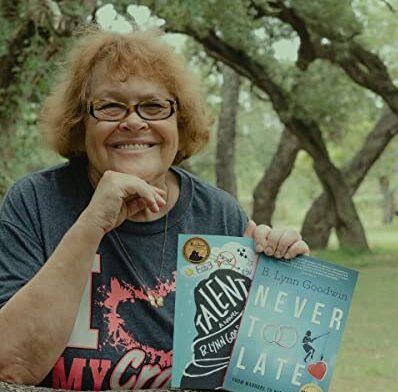
B. Lynn Goodwin is the owner of Writer Advice, www.writeradvice.com. She’s written You Want Me to Do WHAT? Journaling for Caregivers, Talent, Never Too Late: From Wannabe to Wife at 62, and her latest novel, Disrupted. Talent was short-listed for a Literary Lightbox Award, won a bronze medal in the Moonbeam Children’s Book Awards, and was a finalist for a Sarton Women’s Book Award, while Never Too Late: From Wannabe to Wife at 62 won a National Indie Excellence Award and was a finalist elsewhere. She is a reviewer and teacher at Story Circle Network, and she is a manuscript coach at Writer Advice.
I’d like to start by discussing your background in theater. Who or what sparked your passion for the stage? How does that background factor into your writing?
(BLG): My mother sparked my interest. She’d wanted to be an actress and I cast her in a couple of my shows when I was directing community theater. At that time there weren’t as many opportunities to explore what you wanted to be, or if there were, I didn’t know about them. I loved teaching high school and college theatre because I enjoyed coaching actors and watching them transform into the characters they were supposed to be. I also loved showing them ways to tap into their creativity and analytical skills. Little did I know it would lead to writing.
Here’s a key tip: Every character in a play or a piece of literature wants something. Identify what the character wants, what s/he can do to get it, and what is in her/his way. Whether you’re acting from a script, performing in a commercial, or writing fiction, memoir, or even self help, these principles will give you three-dimensional characters.
Tell me a little bit about the writing process and inspiration for your latest novel, Disrupted.
(BLG): Disrupted was inspired by the what ifs that lurk in my mind. What if the long-predicted earthquake on the Hayward Fault actually happened? What’s the aftermath of losing a sibling in the war? For that matter, what’s the aftermath of being displaced? And what can you pull off in terms of constructive contributions when you’re young, optimistic, and eager to make the world work as it should?
First drafts provide clay. They give you the material to sculpt. You can add clay, remove clay, and reshape it. Revision empowers writers. You get to see what you can do with the words on the page.
What do you do if you have no ideas? Write anyway. Make a list of what you need to do or the things you’ve already done this week. Let one idea lead to the next and don’t worry about structure. You’re just getting ideas on the page.
What do you do if your first draft is perfect and you need no revision? Check your ego. Read looking for what’s missing. Have a peer read it to you and notice where she hesitates and when his forehead crunches because he’s puzzled. Ask him what he likes and what trips him up. Listen to responses. Don’t hesitate to do one more draft, even if you’ve already revised it 9 times.
How will you know when it’s ready to submit? Put it away for a month or so. When you take it out, you may see places to improve. Trust the distance of time and space as well as your instincts.
On that note, let’s talk about your influences in general. What inspires you, as a reader and as a writer?
(BLG): Although I’m not a skilled marketer, I like helping other writers by acknowledging what’s right in their work. The desire to do that influences me. I’m inspired by authors who write character driven novels that share insights into the workings and motivations of people in clear, well-written prose. I love a psychological thriller, a well-written mystery, most memoirs, lots of book club selections, and almost every book sent to me for review. I’m a fan of good, character-driven, contemporary YA and coming of age as well.
You’ve mentioned that reviewing plays an important role in the writing community, connecting and empowering writers. Can you elaborate a little bit on that idea? Was Writer Advice born out of that desire to connect and empower writers?
(BLG): Nobody likes to feel stuck. A good, non-judgmental writing community can help a writer to move forward. I love it when I’m working with a writer who writes back to tell me how useful my ideas are. I like triggering new ideas in their mind as much as I like explaining the basics to those who’ve never learned them but have a passion for telling their story.
I originally created Writer Advice, www.writeradvice.com, because I wanted to learn the secrets of published authors and if they took the time to answer my questions, I thought I should share their ideas. The idea was to give them publicity and spread the word. Writer Advice has grown and changed and so have I. I hope it has something valuable to offer you, and I’m always open to your questions and suggestions as well as editing work.
Finally, as a published author yourself, is there any advice that you’d like to share with aspiring writers?
(BLG):
Write daily for at least 20 minutes.
Let one idea lead to another. You can edit later.
Read widely.
Review the books of others. You’re giving back to the community.
Edit carefully, asking yourself what you intended to convey.
Keep writing.
Find a writing community.
Don’t try to do it all in one day.
Look for the joys in life.
There are stories all around us, but no two people see them in the same way. What’s your version?

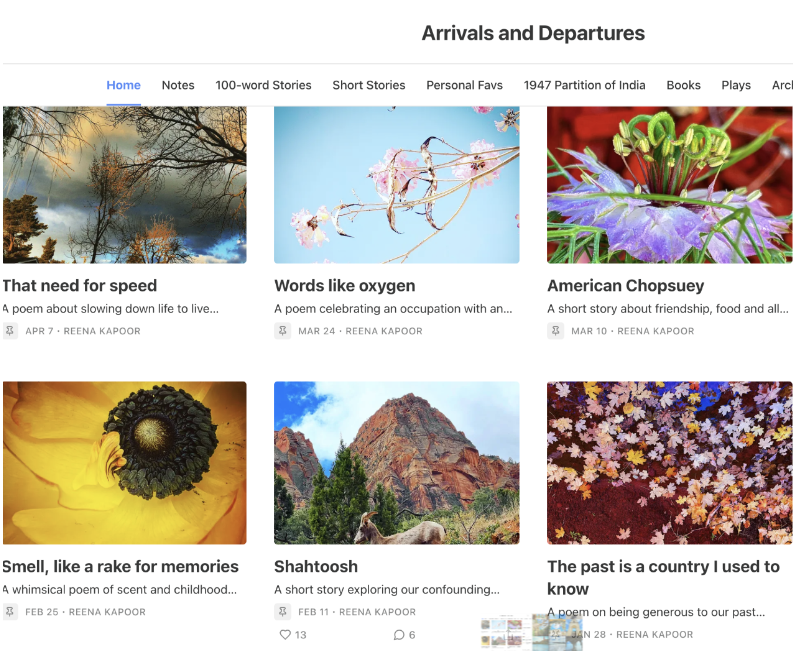
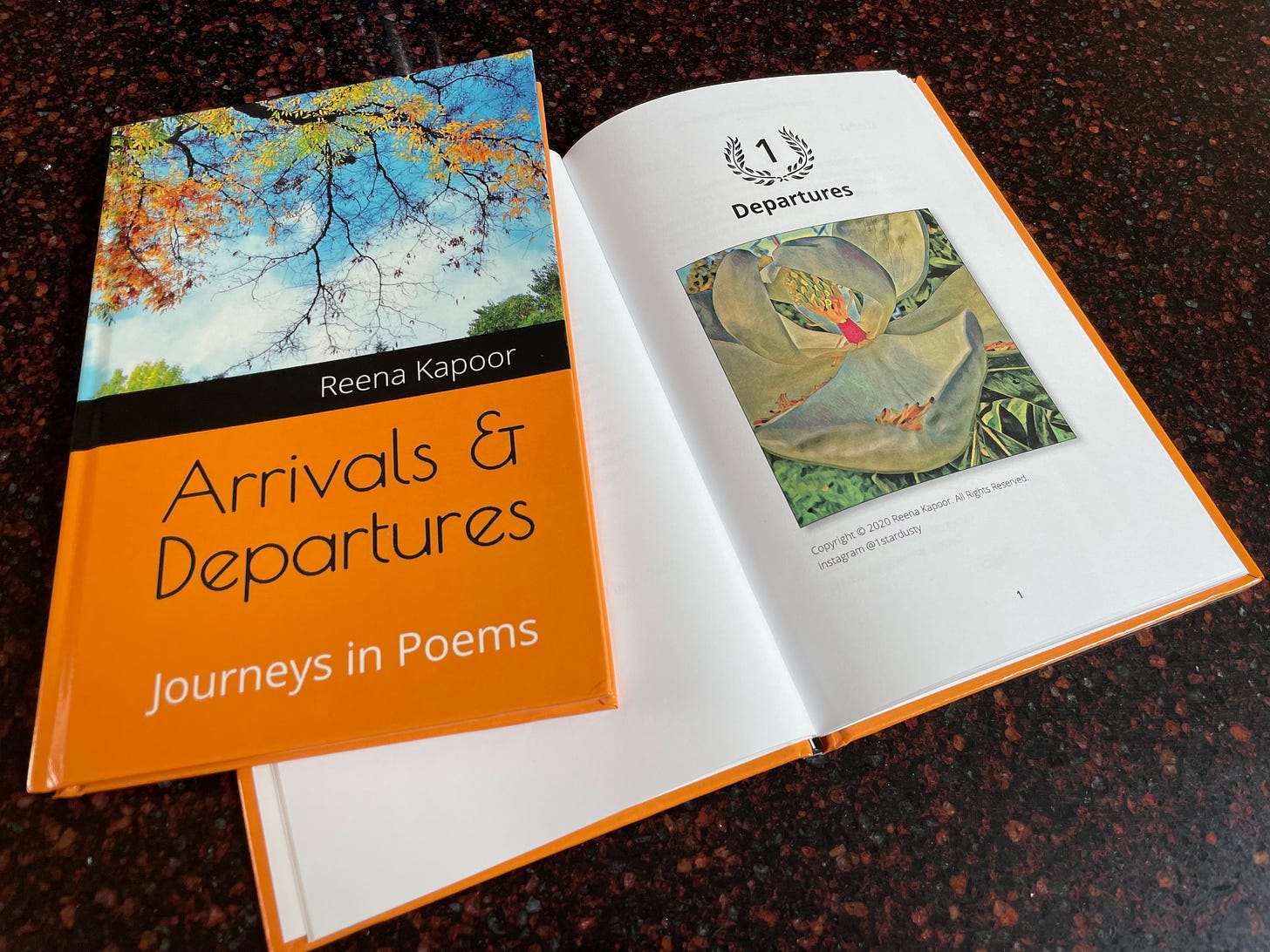 A lot of the poems are also from a unique personal history of my family’s origins which is tied to the history of India. India became independent from British colonial rule in 1947 and at the same time India was partitioned into two countries Pakistan, which became an Islamic Republic, and India, which continued on as a secular Republic. Unfortunately, this was not a peaceful split. A great upheaval, terrible violence and tragedy followed as both Hindus and Muslims who found themselves on the “wrong” side of the border (based on religion) were forced to flee their generational homes, their lives and the only homes they’d ever known. Both my parents were refugee children whose families had to leave everything in what now became Pakistan to move to the new India. Several of my poems are about this 1947 Partition of India, and the tragedy and traumatic aftermath of that event. In particular, my interest has been on the effect it had on women and injustice and tragedy that they suffered during Partition. Those poems are also part of my collection. I continue to write essays on that subject as well.

 Written by
  Fellow storyteller and WNBA-SF friend, Kate Farrell, attended Beatrice Bowles’ Memorial, November 23, 2021, at the Hall of Flowers in Golden Gate Park with hundreds in attendance. Farrell reports, “The champagne and tea reception was lavish with all the trappings of a British high tea, a tiered service of tea cakes and savory sandwiches. One of the large serving tables featured Bea’s latest book, Spider Grandmother’s Web of Wonders, fancifully decorated by a family member with table centerpiece decor inspired by the book, a blend of floral photographs, myths, and folktales.”

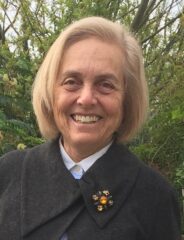


 LBM: Yes—in particular, why I find it problematic. It may seem like a strange subject, but to me, the issue remains a fascinating convergence of history, ethics, medicine, and sexuality. I wrote my first novel,
  LBM: Lots! The manuscript sat in a drawer, off and on, for over twenty years. I kept taking stabs at it, but somehow, I couldn’t get it right. I would pull it out, instantly see what was wrong with it, fix it, send it out to beta readers, spend weeks or months incorporating their feedback, send it out to agents, get rejected, and put it back in the drawer. This happened so many times that I wrote all my other books in between! So even though