Women's National Book Association, San Francisco Chapter

WNBA-SF Chapter

  • Home
  • About
    • WNBA SF Chapter Emphasizes Diversity in Bylaws
      • San Francisco Chapter Bylaws
    • Women’s National Book Association
    • WNBA Award 2023 Interview
  • Join or Renew
  • Benefits of Membership
    • WNBA SF Chapter Board Members
  • 2025 Calendar
  • Contact Us
You are here: Home / Archives for Featured Article Homepage

Join Us! Early Bird Special for Pitch-O-Rama 2025 & Upcoming November Events

By Admin

Virtual Pitch-O-Rama 2025
Saturday, April 5, 2025

8AM to 1 PM PDT
SIGN UP HERE

Zoom link provided upon registration

Are you developing a concept for a new book? Do you have a manuscript in progress? Have you always wanted to publish that book you’ve been working on for years? If this sounds like you, we would love to invite you to Pitch-O-Rama 2025!

We are happy to announce we will be hosting the next Pitch-O-Rama as a virtual event on April 5th, 2025, where writers will be given the opportunity to pitch their works to agents and editors for publication.

Everyone is welcome to participate!

Register below to pitch your book idea to agents and publishers!

New to Pitch-O-Rama? Pitch-O-Rama is an annual event where we bring in a set of publishing professionals to share their knowledge of the publishing industry. During the event, you will be able to practice your pitch with coaches and fellow writers, and then share that pitch with an expert who will provide advice on taking your writing project to the next level.

A chance like this is an invaluable learning experience that could put you on the path to publication. We hope to see you there!

To register, please visit the event page and fill out the form at the bottom of the page!

Social Justice Poetry Event
Thursday, November 14, 2024
12pm – 1pm PT
Zoom link provided upon registration

Poetry gets at the truth more so than any other form of the written and spoken word. And, of course, it is those poetic truth-tellers who help us see and hear what is so often hidden from us and what we must know. This event is timed and designed to be on the other side of the election, after what is likely to be a brutal political season, when we will need social justice poets and their vital truths, more than ever. Hope you can join us for this special night of community!

Featuring poetry by Zoë Flowers, Christopher Marmalejo, Granddaughter Crow (Dr. Joy Gray), and Joan Gelfand!

To register, please visit the event page!


Holiday Storytelling Fest: True Stories of Grace and Gratitude
Thursday, November 21, 2024
5pm – 6pm PT
Zoom link provided upon registration

All are welcome to the WNBA-SF Chapter’s virtual storytelling fest to celebrate the holidays as only book women writers can! Five brilliant, talented writers will share their personal stories of grace and gratitude to bring us cheer during this wonderful season of thanksgiving and joy.

After our five presenters tell their true stories, we’ll open it up to our virtual audience—that’s you! We want to encourage the sharing of stories during the holidays with friends and family in the spirit of deep gratitude this year.

Celebrate with us in sharing joy and gratitude with stories for the holidays. Bring a glass of wine or cup of tea and gather ‘round our virtual fire. Bring a friend!

Featured storytellers include Karen Wang Diggs, Kate Farrell, Mary Mackey, Ellen McBarnette, and Sheila Smith McKoy!

To register, please visit the event page!


TOMORROW: Sept 12 – Stranger Fiction: The Art of Crafting Speculative Fiction and World-Building With Words, 6PM

By Elise Collins

Mechanics Institute Library 2nd-floor (epic reads)

Happy Wednesday!   

REMINDER and CORRECTION-Stranger Fiction: The Art of Crafting Speculative Fiction will take place Thursday night, September 12, from 6-7:30PM NOT 12pm-1pm as previously announced!

Sign up HERE and use the code WNBA for free admission!

Author Panel, Mechanics’ Institute Library
Thursday, September 12, 2024, 6pm-7:30pm
57 Post Street, San Francisco, CA 94104
4th Floor, Chess Room
F
ree admission for Mechanics’ Institute and WNBA members, $10 tickets for the public

The Women’s National Book Association San Francisco Chapter is thrilled to present this exciting member panel at the Mechanics Institute Library! As our home planet Earth grows ever hotter, crowded, and more polluted, we look to other realms for new hope and relief from our terrain concerns. Thankfully, brilliant minds and bold thinkers have already created places and spaces to which we can journey in books and take armchair travels to new worlds beyond our wildest imagining. These creative writers will discuss their craft and the art of world-building through fiction.

Sign up HERE and use the code WNBA for free admission!
 

Ellen McBarnette is a lifelong writer whose nonfiction work has been published as testimony, fact sheets, and opinion pieces for organizations that include the Sierra Club and the American Bar Association. A professional storyteller, she is a recent transplant from Washington, DC where she ran the Arlington Creative Nonfiction Writers Group. She now runs the Beta Readers and Writers Group and is an active participant in critique groups in the Bay. She lives in Hayward with her partner Ben and their cat Java.


Mary MackeyMary Mackey is the New York Times bestselling author of fourteen novels, including The Earthsong Series—four novels which describe how the peaceful Goddess-worshiping people of Prehistoric Europe fought off patriarchal nomad invaders (The Village of Bones, The Year The Horses Came, The Horses at the Gate, and The Fires of Spring). They have made The New York Times and San Francisco Chronicle Bestseller Lists, been translated into twelve foreign languages, and sold over a million and a half copies. She has published several collections of poetry, including Sugar Zone and The Jaguars That Prowl Our Dreams. You can get the latest news about Mary’s books, public appearances, newsletter, and writing advice at marymackey.com.


Sheila Smith McKoy, PHD is an award-winning poet, fiction writer, and filmmaker. She is the recipient of the 2020 Muriel Craft Bailey Memorial Prize in poetry. Her poetry collections include The Bones Beneath (Black Lawrence Press, 2024) One Window’s Light: A Haiku Collection, a collaboration of five Black poets; the collection won the 2017 Haiku Society of America’s Merit Book Award for best haiku anthology. In addition to her poetry and fiction, Smith McKoy has authored and edited numerous scholarly works. She focuses on vital conversations about equity, inclusion and the Black speculative. A native of Raleigh, NC, she lives in the San Francisco Bay Area.


Vanessa MacLaren-Wray writes science fiction and fantasy about people—human and otherwise—connecting in our complex universe. She’s the author of the Patchwork Universe series: All That Was Asked, Shadows of Insurrection, and Flames of Attrition. She also writes for the Truck Stop at the Center of the Galaxy shared-world series and guest-hosts for the podcast Small Publishing in a Big Universe. She’s an active member of the Science Fiction and Fantasy Writers Association, the California Writers Club, and (of course) the WNBA. When not arguing with her cats, she works on new stories, her email journal, Messages from the Oort Cloud, and her website, Cometary Tales.

You’re Invited! Early Bird Discount for Pitch-O-Rama 2025 & Other Fabulous Fall Events

By Admin

Virtual Pitch-O-Rama 2025
Saturday, April 5, 2025

8AM to 1 PM PDT
SIGN UP HERE

Zoom link provided upon registration

Are you developing a concept for a new book? Do you have a manuscript in progress? Have you always wanted to publish that book you’ve been working on for years? If this sounds like you, we would love to invite you to Pitch-O-Rama 2025!

We are happy to announce we will be hosting the next Pitch-O-Rama as a virtual event on April 5th, 2025, where writers will be given the opportunity to pitch their works to agents and editors for publication.

Everyone is welcome to participate!

Register below to pitch your book idea to agents and publishers!

New to Pitch-O-Rama? Pitch-O-Rama is an annual event where we bring in a set of publishing professionals to share their knowledge of the publishing industry. During the event, you will be able to practice your pitch with coaches and fellow writers, and then share that pitch with an expert who will provide advice on taking your writing project to the next level.

A chance like this is an invaluable learning experience that could put you on the path to publication. We hope to see you there!

To register, please visit the event page and fill out the form at the bottom of the page!

Mechanics Institute Library 2nd-floor

Stranger Fiction: The Art of Crafting Speculative Fiction and World-Building With Words
Thursday, September 12, 2024
6-7:30PM PDT

Mechanics’ Institute Library
57 Post Street, San Francisco, CA 94104
4th Floor, Chess Room

The Women’s National Book Association San Francisco Chapter is thrilled to present this exciting member panel at the Mechanics Institute Library! As our home planet Earth grows ever hotter, crowded and more polluted, we look to other realms for new hope and relief from our terran concerns. Thankfully, brilliant minds and bold thinkers have already created places and spaces to which we can journey in books and take armchair travels to new worlds beyond our wildest imagining. These creative writers—Ellen McBarnette, Mary Mackey, Sheila Smith McKoy, and Vanessa MacLaren-Wray—will discuss their craft and the art of world-building through fiction.

To register, please visit the event page!

Cooking & Food Writing Panel
Thursday, September 19, 2024

12 to 1 PM PDT
Zoom link provided upon registration

Join WNBA-San Francisco for an upcoming food and cookbook writing panel, where writers/podcasters/food professionals will delve into the art of blending culinary expertise with captivating storytelling. This includes articles, cookbooks, and social media.

During this Lunch N Learn, you will:

  • Explore how to craft irresistible recipes that resonate with audiences online
  • Gain valuable tips on creating engaging content that goes beyond the plate
  • Make new food-loving friends

Whether you’re an aspiring writer, seasoned chef, or food enthusiast, this virtual event is your gateway to the intersection of food, writing, and social media. Join us and our panel—Katie Chin, Dianne Jacob, Faith Kramer, and Amy Kritzer Becker.

To register, please visit the event page and fill out the form at the bottom of the page!

How to Get a Book Deal
Thursday, September 26, 2024

12 to 1 PM PDT
Zoom link provided upon registration

GET A BOOK DEAL WITH A PUBLISHER
There’s the book you want to write and the book a publisher – and readers – will buy: Are they the same book?

Literary agents receive 1500+ manuscripts a month. Publishers receive 10,000+ manuscripts a year. If you want to get a publishing deal and more readers, you’ve got to know what publishers (and readers) buy and how to make your book stand out from the pack.

Publishing coach, Randy Peyser, pitches books to agents and publishers after her company edits or ghostwrites them through her company, Author One Stop, Inc.
(www.AuthorOneStop.com)

Randy will tell you exactly what you need to know to get an agent or publisher to offer you a contract.

You will find out:

  • What topics are hot and what’s not.
  • The most essential sales tool you need in order to sell a manuscript to a publisher.
  • The quickest way to get an agent or publisher to stop in their tracks.
  • The 1 thing to absolutely not do if you are serious about getting a publishing contract.
  • How to get cover endorsements when you don’t know anybody who’s famous.
  • The biggest mistakes authors make.
  • The things you absolutely must do to make your book stand out.
  • Details about your writing that publishers always look for.
  • The biggest questions publishers ask before they make a buying decision.
  • How to title your book to maximize your sales potential
  • The pros and cons of traditional publishing versus self-publishing
  • Converting a book to a screenplay that actually gets considered

To register, please visit the event page and fill out the form at the bottom of the page!


Writing Brings Comfort While Grieving: A Letter to My Mother

By Admin

by Emily Thiroux Threatt

My Parents were married on Mother’s Day 80 years ago, so my thoughts keep drifting toward them. I facilitate The Grief and Happiness Alliance gatherings every week where we get together on Zoom, do some writing and sharing and learn happiness practices, and one of their favorite exercises is to write letters, so I decided to write a letter to my Mother in celebration of her wedding and anniversary. I haven’t written a letter like this to my Mother before, and there are so many things I could say. I’ve been thinking about ideas to focus on. Here are a few:

  • I could pick out a few memories and reminisce with her, like the time when we were cleaning out her garage together, we found her mother’s love letters to her first husband who died young.
  • Or how when I was writing my book, she would sit in a chair behind me so she could watch me write over my shoulder. She was fascinated by my computer which was a new thing at that time.
  • Or how we shopped together to buy blue sotted Swiss fabric for my bridesmaid’s dresses, then we shopped together again to buy the ivory raw silk for my daughter’s wedding dress. And how I made all those dresses.
  • I could write to her about how I discovered how much she must have loved me as a baby when I was rocking my infant son in the middle of the night feeling overwhelmed by my love for him, She wasn’t one to express emotions, but at that moment, I knew how she must have felt when she held me.
  • I could thank her for what she did for me throughout my life remembering how hard she worked to help me get into college, and how hard it must have been to let her 18-year-old daughter to move so far away.
  • Or I could write about how she let my best friend move into my bedroom when her new husband was sent off to Vietnam.
  • And I would write for sure to tell her how grateful I am that she chose to come live with us during her last year and all the amazing adventures we had during that precious time.

I could write a whole book about her. I only wish I would have talked to her about so many things while I still could. We didn’t communicate well, and I am sure that’s one of the reasons I became a writer. I want to leave nothing left unsaid. In our writing group, after we write a letter to a loved one, we take a breath, then we write another letter from our loved ones back to us. When I wrote that letter to my Mom, I wrote a letter from her back to me. These letters aren’t planned. We just let whatever comes to us to flow out on to the page. We have received beautiful, meaningful answers.

I’m sure we could debate on where these answers come from; however, what matters most is the peace and joy those responses bring.

I encourage you today to write a letter to your mother, or maybe your grandmother. You may want to write it in your journal or find a special place to save what you write. Then you can go back and read it when you can use some mom time. And if your mom is still here, be sure to put that letter in the mail.
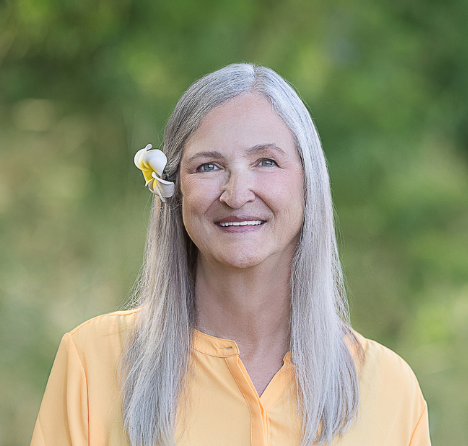

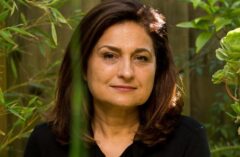
After the deaths of two husbands, as well as the many family members and friends, Emily Thiroux Threatt has much experience in the grieving process and has learned to face life with love, optimism, and joy.

Her books include Loving and Living Your Way Through Grief and The Grief and Happiness Handbook. She created The Grief and Happiness Cards and is the host of Grief and Happiness Podcast. She also hosts weekly online gatherings of the Grief and Happiness Alliance where people dealing with loss write together and learn happiness practices.
The Why Behind the Words: Discovering Purpose in Your Writing Journey

By Admin

by Christina Vo 

There are countless reasons why people write. Some individuals know from a very early age that they are destined to be writers. Others, like myself, might arrive at writing later in life, and not necessarily because we dreamed of becoming published authors. For me, writing was a way of understanding myself, the world around me, and my relationships with others. In my younger years, journaling in the morning became a method to grasp the thoughts and emotions swirling in my mind.

I believe it’s crucial for people to understand and reflect on why they write. If you’re determined to become a published author with one of the big five publishers, that’s an admirable and worthwhile goal. However, you might fall into another category where you enjoy writing but weren’t formally trained. Perhaps you used writing as a life tool and later decided to publish some of your works. Whatever your reason for writing, it’s important to remember that ‘why’ and let it be a guiding principle as you delve deeper into your craft.

For those like me, it’s also vital to understand that some of the rewards of writing are not solely external (e.g., publishing in a prestigious journal or securing a great book deal). Many rewards are internal, and these lessons are invaluable.

Let me share a personal example. Earlier this year, I published a book, My Vietnam, Your Vietnam, co-written with my father. It’s a dual-perspective memoir about Vietnam, with chapters alternating between my father’s story and mine. I crafted the book by pulling pieces from a book he published in 2000 and my earlier writings on Vietnam. Through this process, I gained a deeper understanding of my father’s story and the challenges he faced throughout his life. It brought me a newfound respect and compassion for his journey. While I was delighted to have the book published by Three Rooms Press, more importantly, I am pleased that it deepened my understanding of my father.

This is just one example of how writing has benefited me beyond publication. In many ways, writing can be an art of being present (and we know we could all use more presence in our lives). The benefits can simply lie in the process of writing, in getting your thoughts out on the page, and in developing a deeper understanding of the world around you.

It’s important to remember this so that we don’t get lost in the business of writing and publication. The joy of writing can be found in the moment, in the art and craft itself. And who knows — you might find that you do your best writing when there’s nothing at stake, and when you’re writing simply because you’re committed to it.

By keeping sight of your personal ‘why,’ you can maintain a balanced perspective on your writing journey, appreciating both the external achievements and the internal growth it brings. Remember to never lose sight of your ‘why’ and that ‘why’ might be different for all of us.


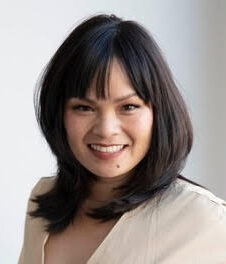
Christina Vo is a writer based in Santa Fe, New Mexico. Her work reflects her commitment to understanding and sharing the complexities of the human experience. Christina’s debut memoir, The Veil Between Two Worlds: A Memoir of Silence, Loss, and Finding Home, demonstrates her ability to weave personal experiences into broader narratives about identity, home, and belonging. Her second book, My Vietnam, Your Vietnam, an intergenerational memoir co-written with her father, was published in April 2024 and recently selected for the Ms. Magazine Most Anticipated Feminist Books of 2024. She has worked internationally for UNICEF in Vietnam, the World Economic Forum in Switzerland, as well as served as a consultant for nonprofits.
Sheryl J. Bize-Boutte

By Elise Collins

Interview by B Lynn Goodwin

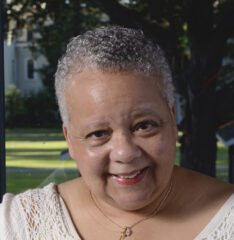
In honor of Black History Month, WNBA-SF proudly shares this author interview of Sheryl J. Bize-Boutte, author of Betrayal on the Bayou.

WNBA-SF Chapter engages in a continuous commitment and intentional practice of assuring the presence and meaningful participation and celebration of Black, Indigenous, and people of color, members of the LGBTQ+ community, historically marginalized identities, and people with disabilities, in its programming, membership and leadership. 

This interview first appeared on the website WriterAdvice.com and is reprinted with permission.

Cover or a book with words and an image of trees and a swamp

Betrayal on the Bayou

Sheryl J. Bize-Boutte’s Betrayal on the Bayou is a fascinating novel that delves into some heartbreaking issues around race, justice, and the noir code in the fictitious Louisiana town of Tassin.

In the midst of the Louisiana Bayou in the 1800s, there was a three-tiered culture: slaves, free people of color, and whites. When a young, white widower from Paris arrives with his daughter he marries a Tassin woman, who has money and power,  and then takes a Creole lover. After a while he builds his lover, Margot, a house identical to his wife, Marie’s, and sets them side by side. He encourages feuds, discord, and his personal superiority. As the story unfolds we learn about the injustices a white man could perpetrate without consequences in the 1800s. Readers will be left wondering how much has changed today in this fast-paced debut novel.

Bize-Boutte is an award-winning writer, poet, and Pushcart Nominee. In this interview she talks about her experiences.

BLG: Tell us when you knew you were a writer. Who encouraged you to tell your stories? 

SJBB: I am from a family of storytellers and voracious readers, so writing was a natural addition to that portfolio.  I knew I was a writer at 12 years old when my parents bought me a Smith Corona typewriter and I wrote my first story. I had imagined stories before then and wrote a few things down in pencil, but my passion was not solidified and off to the races until I was gifted that typewriter.  Incidentally, my first story was about pencils.  

BLG:  Are there real experiences you’ve observed or heard about woven into your novel? Can you give us a couple of examples? 

SJBB: As you know, fiction is always informed by lived reality and for Betrayal on the Bayou that is an embedded fact.  I tell people my imagination has always been my best friend and so, the combination and sometimes hybrid presentation of fact and imagination are present in the novel.   

As an example, one of the lead characters, Margot, is a mixture of the personalities, essences, physical attributes, occupations, and unfathomable heartbreak of several of the most important women in my life, the women who shaped me. In Margot, people who know me will see my mother who never completely overcame her tragedies and yet was a woman of incomparable substance and will, my aunt who made clothing, from the hats to the shoes, for Hollywood’s famous, my great-aunt who flourished in the Jim Crow south despite the restrictions on her very being, and me, a Black woman in America, and all that means. Those who don’t will discover my truths in this work of fiction.

Another example is the phrase, “the rain she come, the bsic pass on you,” from a story my father told us as children.  I took that phrase and re-imagined it as connected to my novel and gave it a new and different life with a more expansive meaning within the Creole and code noir culture I was describing and a commentary on how a myriad of things may have been in the fictional Louisiana town I built. In other words, I did what I do when I write fiction. I took a speck of something, added a dose of imagination, and blew it up into a story all its own. 

BLG: I’ve been fascinated by Creoles since I found a reference to them in a poem in my 7th grade reader. What inspired you to write about Creoles and their struggles in Louisiana? 

SJBB: My father was a Creole from Louisiana. I did not want to write a biography; I have already done many published stories and articles on my parents.  Yet, I was compelled to write something about the Creoles and one day, after ten years of procrastination, all the stories I had been told over the years, all the summer visits, all the food and the joy, and the deceptions came together with imagination and boom, it was all just there, fully formed, the words hitting the pages like magic.   

But the book is not just about the Creoles. Far from it. There are many human and structural characters woven into the novel. In addition to the people in the story, I explore aspects of colorism, elitism, gender bias, inequality, sexism, and what I consider other “betrayals” in the world I created inspired by a culture with which I am familiar.  I put it all in.  I let it all out. 

BLG: Which characters and events were hardest to write about? Why? 

SJBB: The hardest was Margot’s heartbreak.  It is a horrifying cruelty born of racial hatred.  It was the scene that took me 10 years to be able to write.  It was extremely difficult and written through a torrent of tears. Once I knew I could write the passage, I knew the rest of the book would just fall out.  And it did. Another difficult character was Marie.  Her torment was inspired by the life of a close relative, who floated on the surface to avoid destruction.   

BLG: How did writing poetry influence your process? 

SJBB: My penchant for the poetic often results in uniquely formed prose in my story writing.  In poetry, I believe that every line is a poem, and my stories are heavily influenced by that. It also means that in my story writing, I do not always adhere to traditional grammatical and phraseology conventions, which can be misunderstood or unaccepted by some and cause “editors” to pull out the red pen and provide “corrections.”  But it is my voice, and I will always be true to it. Because the ultimate gift to me as a writer is reaching those who can “see” my writing.

BLG: I admire your confidence. Has teaching improved your writing? How? 

SJBB: I don’t think teaching has improved my writing, but I do feel strongly that sharing what I have learned with others is a part of the circle of writing.  By that I mean, I am comfortable with the way I express myself with words and I teach to help others feel the same and to share what I know, what I have learned and what I am still discovering. 

BLG: What do you hope readers will take from  Betrayal on the Bayou? 

SJBB: That there are many stories of people, particularly Black people, that some may not know.  That we are complex beings.  That colorism and racism are cruel and not always visible. That just because you don’t know about something, doesn’t mean it did not happen.  That things that went on, pairings that occurred, are not new things, but existed long ago in different and sometimes, the same, settings. That there are some very bad people in this world.  That there are angels. That we must save and nourish the angels among us.

BLG: Was it always your intention to publish the book independently or did you submit to agents first? What advice can you give readers about independent publishing?  

SJBB: When an unplanned opportunity arose to “pitch” the story to a traditional publisher, I took advantage of it, but I knew there was no interest when their eyes glazed over and they said, “Well it sounds like a story worth telling.” Since I had always wanted to publish on my own to protect my “voice,” I took that route, and I am happy that I did.  I feel I told the story I wanted to tell in the ways that I wanted to tell it, without interference or lack of understanding by an outside party. 

My advice for independent publishing is twofold: 

Make sure you carve out adequate time to market your work. People need to see you and your writing in as many venues as you can reach. 

Invest in a good editor. I thought I had, but unfortunately, I had not.  The bad thing is copies got out with mostly punctuation errors.  The good thing is, since my independently published book is print on demand, I was able to get the mistakes corrected and have the book re-posted.  But I also have to say that some of the strongest and best reviews I received were on the early uncorrected copies, proving that for some, even the worst editing job can’t get in the way of a solid story.  Even now, I suspect we did not catch all the errors, but neither did Ernest Hemingway, Walter Mosley, or Sue Grafton, and many other famous, best-selling authors.  I consider myself to be in good company and am happy about the response to my book. 

BLG: What are you working on now and where can people learn more about you?  

SJBB: In a bit of a departure from Betrayal on the Bayou, which is, at times, dystopian, I am in the process of writing a sci-fi novel. The first chapter won an award in the 2021 San Francisco Writers Conference Writing Contest and is published in their 2021 anthology.   

You can read more about me and what I am up to at: www.sheryljbize-boutte.com. Thank you again for this interview opportunity. 

BLG: Thanks for taking the time to answer these questions. I agree that your voice comes through loudly and clearly. You’ve done a great job of sharing a part of the culture that many people would like to know more about.

Looking for a book that is both historical and timely? Looking for a fast-moving story that will grab and hold you? Get a copy of Sheryl J. Bize-Boutte’s Betrayal on the Bayou.

In Memory of Beatrice Bowles (1943-2021)

By Admin

Written by Gini Grossenbacher

With great sadness, we announce the passing of our luminous WNBA-San Francisco Chapter member, Beatrice Bowles, who died October 19, 2021. Though born of two influential San Francisco families, the Crowleys and the Bowles, she veered away from her high society roots in the 1970s to fulfill her literary dream. She characterized herself as “a storyteller, writer, and recording artist of wonder tales that connect children to nature’s deep joys and eternal wisdom.” 

Her love of the natural world encompassed the mythical and cultural underpinnings that connect all living things. Her readers and listeners encounter adventurous youngsters, bullies, and magical spiders in her Spider Grandmother’s Web of Wonders. The stories tantalize young listeners with questions about the origins of life on earth and our reasons for being. 

Her legacy continues in her book entitled Spider Secrets: Stories of Spiders that connect creatures and their cultures. Not only do her books and audios spark children’s imaginations, but they also connect listeners to the natural world we often neglect. Not satisfied to leave us only young children’s books, she was working on the YA novel, A Ring of Riddles, described as “vivid . . . pulsing with imagination . . . a mythical coming-of-age adventure.”  

On her website, she tells us of the earliest memories which sparked her sense of wonder. In addition to stories involving the natural world, she claimed to love stories featuring “goodness triumphing over evil and of kindness defeating greed,” which in her words, “gave me courage, hope, and faith in justice.”

Her children inspired her to practice the art of storytelling, and she cites the Spider Grandmother, the Hopi godmother of storytelling, as the inspiration behind her live performances, audio and print storybooks. She discovered a new kind of storytelling called the Adventures of The Garden Children involving the placement of toys and found objects in the garden, then weaving a story around each scene. 

She produced several audio storybooks that feature traditional cultural tales, including Heaven’s a Garden in the Heart and Cloudspinner and The Hungry Serpent for which Sara Buchanan MacLean wrote the original music. Beatrice’s three wishes for her listeners were fostering emotional connections, opening our hearts to nature, and making imaginative connections. She encouraged her audiences to activate their visual abilities, inhabit wonder tales, and find similarities among various cultures’ stories. She recorded five audio storybooks/CDs of world wonder tales with original musical settings and was a Voting Member of the Grammy’s Recording Academy.

Audiences appreciated Beatrice’s weaving of the garden theme throughout her work. She often referred to the family property on Russian Hill that she renamed “Harmony Hill.” She said, “I grew up in this magical garden, hated to leave at age nine, and missed the place ever after. What a joy to come home again, buy the house from my uncle for a song, and raise my two children here beneath a mighty cork oak that my grandmother had planted in her garden just uphill.

“After a party-loving bachelor-renter had let the garden go wild for thirty years, I faced three years of ripping out ivy! Then I began to learn from experts and to plant fragrant woodland perennials and ornamental trees. When the grand dame of English gardening, Rosemary Verey, came to visit, she asked me to write about growing up here. My essay, ‘A Child’s Inheritance,’ is the first chapter in her book, Secret Gardens (Ebury Press, London, 1992).

“When garden writer Joan Hockaday, my neighbor and friend, brought Frank Cabot, founder of The Garden Conservancy, to visit, his word for this garden was ‘luminous.’ On the spot, he enchanted me into joining the Garden Conservancy, and I now sit on its West Coast Council.

Joan featured my garden for March in her book, The Gardens of San Francisco. The garden inspires me every day.” 

Beatrice Bowles performed at Filoli, San Francisco Botanical Garden, Brooklyn Botanical Garden, Marin Art & Garden Center, and countless schools. She spoke at conferences on the arts from Washington, D.C., to Sintra, Portugal. 

Fellow storyteller and WNBA-SF friend, Kate Farrell, attended Beatrice Bowles’ Memorial, November 23, 2021, at the Hall of Flowers in Golden Gate Park with hundreds in attendance. Farrell reports, “The champagne and tea reception was lavish with all the trappings of a British high tea, a tiered service of tea cakes and savory sandwiches. One of the large serving tables featured Bea’s latest book, Spider Grandmother’s Web of Wonders, fancifully decorated by a family member with table centerpiece decor inspired by the book, a blend of floral photographs, myths, and folktales.” 


WNBA readers are encouraged to visit her vibrant website, which captures the spirit of Beatrice Bowles. We mourn her loss yet are grateful for her legacy.

https://www.beatricebowles.com/


December 10 – You NANO’d! Now What? Post-National Novel Writing Month Session

By Admin

Friday, December 10th, 2021
You NANO’d! Now What? Post-National Novel Writing Month Session
with Award-winning author and sixteen-time NaNoWriMo winner Nita Sweeney
Noon PT/3 pm ET


Whether you wrote 50,00 words or simply made it through the month, Congratulations! You’ve completed National Novel Writing Month (NaNoWriMo)! 

What’s next? 

In this fun lunch n’ learn, Nita Sweeney, award-winning author and sixteen-time NaNoWriMo winner will teach you how to carry the NaNoWriMo inspiration into the rest of the year.

No matter if it’s your first Nano or your sixteenth, this session will help you continue.

Nita’s first book, the running and mental health memoir, Depression Hates a Moving Target: How Running with My Dog Brought Me Back from the Brink was a multi-year NaNoWriMo project. Her second book, You Should Be Writing: A Journal of Inspiration & Instruction to Keep Your Pen Moving, coauthored with Brenda Knight, offers author wisdom to help you on your NaNoWriMo journey.

In this workshop Nita will discuss:

  • How to continue the NaNoWriMo momentum without burning out
  • How to finish the story if it’s not complete
  • How to think about (and do) revision and editing
  • How to continue building the community you found in November
  • Why you should NOT send your NaNo novel to agents and publishers YET
  • And much more!

About Nita:

Nita Sweeney is the award-winning wellness author of the running and mental health memoir, Depression Hates a Moving Target: How Running with My Dog Brought Me Back from the Brink and co-creator with Brenda Knight of the writing journal, You Should Be Writing: A Journal of Inspiration & Instruction to Keep Your Pen Moving. A certified meditation leader, mental health advocate, ultramarathoner, and former assistant to writing practice originator Natalie Goldberg, Nita founded the groups Mind, Mood, and Movement to support well-being through meditation, exercise, and writing practice, and The Writer’s Mind, to share using writing practice to produce publishable work. Nita also publishes the writing resource newsletter, Write Now Columbus. Nita lives in central Ohio with her husband, Ed, and their yellow Labrador retriever, Scarlet. Download your free copy of Nita’s eBook Three Ways to Heal Your Mind.


Join us for WNBA-SF’s Post-National Novel Writing Month Session!
Register below to receive the Zoom link:

How to Write About Grief and Loss | Emily Thiroux Threatt

By Admin

How to Write About Grief and Loss
by Emily Thiroux Threatt
Author of “Living and Loving Your Way Through Grief”
https://lovingandlivingyourwaythroughgrief.com/

Books and articles are being written at a faster rate than ever before. I am sure this is in part because of the pandemic. This increase also comes from more people seeking help to deal with their grief. Grief used to be something we experienced silently, not sharing thoughts or feelings with others, but now with many people seeking comfort, they are wanting to know if other people are having the same feelings they do, and they want to know what can help them feel better to help them emerge from their pain.

By working with people who are dealing with grief, I have found some common issues to consider when you want to write something about grief.

  1. Grievers want to know that who is writing about grief has experienced or is experiencing grief. The readers who are seeking something to read about grief want to know that the writer relates to grief in a way they can relate to. You can do this by writing from the perspective of someone speaking to directly to the one person who is reading what you say at that moment.
  2. As self-publishing has become easier to do and having a traditional publisher isn’t as essential as it used to be, lots of memoirs about the death of a loved one or grieving a loved one are showing up. If you are choosing to write a memoire in this area, be sure to have a great hook. What makes your story different and appealing? Why would someone choose to read your story as opposed to all the other memoirs out there?
  3. I have found the people who are grieving are wanting guidance. Instead of just reading a story, they want suggestions on what they can actively do to deal with their grief. They want to know that there are people they can share their experiences with. Grief can be a lonely place.
  4. Find a way to include the stories of other people who are grieving so that if the reader can’t relate specifically to you, they can relate to the experience of someone you include in the book. For instance, if you are writing about your experience of having a daughter who died, you may want to include the experience of a daughter who had a mother who died.
  5. Another approach is to write about is a specific kind of grief. I have been hearing from many people who are dealing with suicide, especially the suicide of a child.  This is a niche that could be filled if someone actually has a way to comfort people who are dealing with this kind of loss. The intensity of this kind of loss seems to last a long time, so things that could help over time would be much appreciated.
  6. Grief has surged with the surges of the pandemic. This is a different kind of grief than we are used to. People are tending to look for someone or something to blame from the people who won’t wear masks, to the people who don’t get vaccinated, to the hospitals that are over filled, to the politicians who they feel didn’t do enough or don’t things fast enough.  While blame seems inevitable, when you write about grief and the pandemic, it is better to focus on the people who are grieving than on the people who may be causing the grief. Give them the same love and solace as any other person grieving, and look at their situation independently instead of lumping together all the people affected by the pandemic. Their individual loss is what they are focusing on and they will appreciate you focusing on them, too.

Grief can be a tricky subject to write on. What I have seen in the reactions to all the writing I have been doing shows me that when I focus on providing support, comfort, and love in what I write as well as showing my readers how they can find happiness while they are dealing with grief, they are grateful that you care enough to lighten their burdens some and give them something positive to think about. Just show them that you care.

***

Emily Thiroux Threatt is the author of Loving and Living Your Way Through Grief: A Comprehensive Guide to Reclaiming and Cultivating Joy and Carrying on in the Face of Loss, winner of the Bookauthority Best New Grief Book and the Silver Medal for the Living Now Book Awards.

Emily has much experience in the grieving process and has learned to face life with love, optimism, and joy. Her mission is to comfort and support those dealing with grief and loss focusing on happiness.

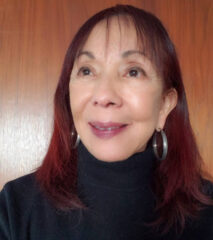
Featured Member Interview—Concha Delgado Gaitan

By Nita Sweeney

Scholarly Writing to General Nonfiction:
Author Drawn to Power of Community

Interview of Concha Delgado Gaitan, Ph. D. by Nita Sweeney

Nita Sweeney (NS): Before we dive into questions specific to writing, tell our members, with the world beginning to open but many still being cautious, how have you been taking care of yourself?

Concha Delgado Gaitan (CDG): From the beginning of the pandemic, I felt the need to stay as healthy as possible to work with my publisher and complete the last phase of publishing my 10th book. I couldn’t visit friends, museums, theaters, bookstores, or music venues. Protecting my physical as well as my mind and spirit became part of my daily routine.

Following a morning meditation, I did Yoga or QiGong. A healthy breakfast held me till early afternoon.  Walking the hills around our house gave me stamina.  I wore out two pairs of shoes during that period. Although we missed going out to eat at our favorite restaurants, cooking dinner every evening became a playful and creative discipline that both my husband and I looked forward to enjoying. When restaurants opened for take-out, we supported them frequently.

Additionally, the two most important ways that helped me keep my focus during this past year included daily talking or texting with a family member and friend.  And I also played more than ever before with my four cats. They create amusing distractions effortlessly. Their playfulness felt especially healing during part of my 2020 year as I recovered from (non-covid related) pneumonia.

NS: You’ve been a university professor in Anthropology & Education for much of your career. How does that interplay with your writing?

CDG: At Stanford University, I studied Anthropology and Education, emphasizing ethnographic research of culturally diverse communities in the US. My research expertise earned me invitations to research Latino, Hmong, Native Alaskan Athabaskan, Russian Refugee, and Laotian communities as a Professor at the University of California, Davis. Through face-to-face interaction, observations, and interviews, I understood the people’s lives and language and wrote books that represented their stories of empowerment in these underrepresented communities.

In an academic style, I began shaping my underlying premise, highlighting the importance of social justice in our educational system, our public policies, and the resources of the communities that I studied. I wrote over 70 scholarly essays. My first book, Literacy for Empowerment, described a community I researched. The book received great reviews and became very popular within the Anthropology and Education field. It was the first such story written about the importance and uses of literacy in a Latino community. 

My need for writing the book was to have a book for one of my research seminars. Although it was an academic book, it read like a story of a community finding its voice, which students and colleagues applauded. It seemed that I had found a voice. Other books followed as among some of the scholarly books I wrote during this period included, Protean Literacy, The Power of Community, and Crossing Cultural Borders. These books became the stories that led me to write stories applicable lessons for practicing educators.

After conducting ethnographic research in numerous communities, I felt it was essential to take the academic stories to a practical level. These different books reached a broader educational audience that works directly with students, families, and communities. Those titles include Involving Latino Parents in the Schools and Building Culturally Responsive Classrooms and Creating a College Culture for Latino Students. I felt that it was especially important to write the book about getting students to college when I learned that only 16% of Latino students who enter a 4-year college complete and graduate.

NS: What led you to the writing life?

CDG: I was a reader from the early years. Reading was something my mother always insisted on—that we have a book in hand. The only writing I did during those years was in English classes.

Teaching has been my mission throughout my life. After teaching elementary school, I became a school principal at the age of 26. I was the first woman principal in an Eastside San Jose school district. I was always interested in books throughout those years, and my writing effort consisted of daily journals and notebooks filled with my thoughts, disappointments, and successes. I wrote short magazine-length critiques and commentaries about children’s literature for culturally diverse students and the shortage of books that depicted these cultures in authentic ways.

My studies at Stanford pushed me into formal writing that professors evaluated. Reading opened many doors for me in my life. I’ve believed that writing about topics that inspired me would also reach those interested in the same issues. I treasure that connection with people—many of whom I know and even more that I meet through my writing.

NS: Tell us about your work in social justice and any role that played in your writing.

CDG: Social justice themes thread through many of my writings.  Discrimination has silenced the voices of many communities of color.  Through the people’s lives that I observed, I recognize my responsibility to make their stories known. 

When I wrote books about a community, I discussed it with them in a language they understood. It was part of my relationship with the communities I studied. They trusted me to write about them because they had a voice in the story about them.

In my books, I tell people’s stories of building community despite the discrimination and economic challenges.  Their stories depict the inequalities that people experience in culturally diverse communities.  I describe how people find justice by organizing themselves to change their living conditions and empower themselves. They break barriers and participate fully in the educational, social, and political institutions where they reside.  Parents work to ensure that their children obtain greater access to resources to improve their lives.

NS: You suffered a health crisis and subsequently wrote a memoir. Would you like to share something about that with us? What helped you with that writing process?

CDG: After years as a senior professor at the University of California Davis, my health took an unexpected downward turn. What I knew as my active life of being a professor and enjoying daily hour-long walks, belly dancing, salsa, and traveling around the country and overseas to lecture to work with my Anthropology and Education colleagues came to a screeching halt for a short time. One night I was awakened by severe full-body pain and high fever, the likes of which I’d never experienced. Initially, emergency rooms diagnosed me with flu-like symptoms and sent me home to rest. I spent weeks with my body weakening more each day. It would take weeks of additional visits to the specialist to diagnose me with Systemic Lupus.

Throughout the ten years that followed I continued my professorship while keeping copious notes that filled books of my health story as it unfolded. After I became stronger, I needed to change my profession and my life in general. In rethinking my career, I committed to putting my health first. I left the University and began my independent subcontract business doing community consulting, research, and writing, which I managed from my home office. Another commitment I made to myself was to end my relationship—not only with the man I was with but also with every other workaholic man that encouraged my workaholic pace.

As my new healthier life took shape, I wrote my memoir Prickly Cactus. The book took a few years to leave my desk because it was the first time writing such a personal account of my life. It was therapeutic since my life was unfolding as I wrote about the transformation that were occurring. Writing a memoir pushed me to write quite differently than my past professional books. One way I thought I could break some of my pattern of writing was to take fiction writing classes to stretch me out of my familiar writing format. In the process, I became good friends with my writing teacher. Since then, she has been a great coach; she influenced my style as I competed Prickly Cactus.  Writing my memoir taught me how to write to a general audience about a personal matter–my health.

By the time I completed Prickly Cactus, I had decided to try marriage for the second time. I married my dear partner, Dudley whom I met before I began writing Prickly Cactus. 

NS: You are a prolific writer. Can you share some tips with the WNBA-SF members as to how you produce such a large number and variety of works?

CDG: My enthusiasm for writing satisfies my appetite for learning about the topics that I write.  I also learn new techniques. My love for the people and their stories of resilience has been my joy and driving force in writing.

Where my work routine is concerned, I’m very disciplined.  However, in recent years, I find myself writing in spurts according to my inspiration rather than in defined blocks of time. It’s been productive and more satisfying at this point. I suppose it’s a form of discipline.

NS: Are you ever surprised in the writing process?  If so, how and when?

CDG: My surprises became major lessons. I’ll mention a couple of them. Moving from academic to professional books for practicing educators required me to write in a language that was accessible to educators without using the academic jargon commonly found in scholarly books.

Another new twist occurred when I wrote, Prickly Cactus called for still a different style of language used to tell a story. I wanted to describe my experience so that my younger family members would be able to read without oversimplifying the story. I fought the impulse to cite every date and new concept. And writing about my life included family members. I wanted to make sure that they felt comfortable with their names in the book. I maintained my writer’s integrity and ensured that I would not slight my story while remaining on speaking terms with family members.

NS: Is there something you wish you had been told or not told, earlier about writing?

CDG: Well into my doctoral studies, a professor at Stanford told me that I shouldn’t continue my doctoral studies because I didn’t know how to write and that I would never learn how to write academically well enough to earn a degree.  Her comments rattled me because I took it personally; I lost time and self-confidence, which took time to heal. I could have used that time more productively to work on my studies. After talking with a few professors whose teaching, I respected, I felt ready to continue my Stanford studies.

One-and-a-half years later, I graduated with a Ph.D., and I had published two scholarly articles. I am grateful that I did not devalue my work or stop writing because it was only the beginning of my rich and meaningful storytelling career in four different writing categories: academic for researchers, a memoir on health and healing, educational books for practicing educators, and aging for a general audience.

NS: In a conversation we had before this interview, we discussed aging. How has that impacted your writing?

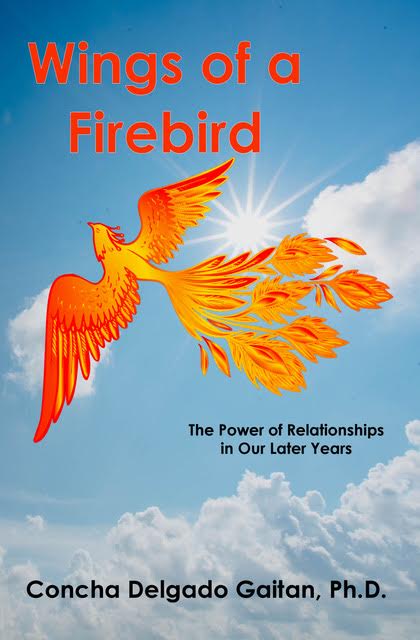
CDG: Generally, I feel that age does not define who I am or what I do. I don’t typically relate to people according to age. I feel comfortable in intergenerational groups. This might be because we have a large family representing three age levels. We’re a close family and relate to each other comfortably across age groups. However, more recent years, I have become more aware of being a senior baby boomer as my closest friends and colleagues talk about being at this stage of our lives. The prominent issues on people’s minds include discussions on health, work, traveling, caring for parents, and losing spouses. Our conversations piqued my interest enough to research and write my recent book, Wings of a Firebird—The Power of Relationships in our Later Years. I feel strongly that aging in this society needs to be discussed and written from as many perspectives as can lead us to more humanistic policies for this age group.

NS: What is next for you, writing-wise?

CDG: My book Wings of a Firebird gives us a window into the diversity of experiences of aging in our country and the need for policies and resources to support the largest growing demographic. The storytellers in my book spoke of their meaningful relationships. However, there was one type of relationship that did not appear in this book, which I feel merits attention as it plays out in the lives of older adults. The Pandemic exposed more areas for us to explore about seniors in our society. I’m vague about the specifics of my next topic because I read a great deal and interview many people to shape and clarify my topic. I’ve begun doing that type of research to see what story unfolds. Stay tuned. 

Concha Delgado Gaitan has written extensively in the field of Anthropology and Education. Her works emphasize social justice issues of unrepresented communities. The National American Anthropological Association/Council of Anthropology named the presidential Fellowship in her honor. She also received the Anthropology and Education Award from that organization for her lifetime contribution to the field. In her capacity as a professor and researcher, she has worked with communities including Latino, Russian Refugees, Alaskans Native students, Hmong, and transnational populations in Mexico and Spain, where she has also lectured on her books.

Delgado Gaitan’s wealth of experience as an elementary teacher, school principal, and university professor enriches her family-community-school research.

Her book Involving Latino Families in the Schools was a best seller in Corwin Press, and Prickly Cactus was a best seller in the category of “Women’s Health” when it was released by Cypress House Press on Amazon.

Other titles of Delgado Gaitan’s books include Literacy for Empowerment; Crossing Cultural Borders; The Power of Community; Protean Literacy; Crossing Cultural Borders; and School and Society; Building A College Culture for Latino Students.

Her recent book is Wings of a Firebird; the Power of Relationships in our Later Years. It marks the beginning of a new direction in her writing, a focus on issues of older adults in our society.

For more information, visit her website. 

Interview by Nita Sweeney, author of the running and mental health memoir, Depression Hates a Moving Target: How Running with My Dog Brought Me Back from the Brink and co-creator of You Should Be Writing: A Journal of Inspiration & Instruction to Keep Your Pen Moving

« Previous Page
Next Page »

Get the latest blog posts and news. Sign up here.

Join or Renew


Mailing Address
WNBA-SF Chapter
4061 E. Castro Valley Blvd.
Castro Valley, Ca
94552-4840

Topics

Contact Us

Contact Us
Click Here 

Social Media

  • Facebook
  • Twitter

Copyright © 2026• WNBA-SF Chapter | AskMePc-Webdesign