
Curiosity and love of people, travel, and food spurs retired family therapist to pen books about European food and culture.
by Nita Sweeney, author of the running and mental health memoir, Depression Hates a Moving Target: How Running with My Dog Brought Me Back from the Brink and co-creator of You Should Be Writing: A Journal of Inspiration & Instruction to Keep Your Pen Moving
Nita Sweeney (NS): Let’s start with a question tangential to writing. How are you taking care of yourself during these “interesting” times?
Carole Bumpus (CB): When the pandemic arrived on our doorsteps, I was completing Book Two of my Savoring the Olde Ways series for publication (August 2020). The book was called Searching for Family and Traditions at the French Table. On the 13th of March 2020—exactly when the shutdown came upon all of us—I was about to panic. I desperately needed to test the French recipes (can be found at the back of the book) and was now housebound without all the necessary ingredients. I decided to enlist help from readers of my monthly newsletter. Everyone, like me, was home and looking for something productive to do. The response was celebratory! Yes, they said. We’ll help! Some had access to more ingredients than others; some had plenty of ingredients on hand. And then the merriment began. It was such a fun endeavor as I received help from all over the U.S. plus England and France. All of the fellow ‘testers,’ eighty-three in all, submitted their comments about the recipes, along with photos, and those who completed the project were listed in the Acknowledgement section of my book. It became a gratitude gathering time for me, as we were all in this pandemic together, but we were feeling so creative.
Even before that book came out, the third book in my series, A September to Remember: Searching for Culinary Pleasures at the Italian Table was pushing into my purview. Fortunately, I was able to enlist many of the same recipe testers to ‘belly up to the stove’ once more but this time for Italian recipes. It turned out to once again be great fun—a lot of extra work—but it was a delightful way to stay connected with all these friends and to make some critical changes to the recipes I am putting forth. This book is due out April 27, 2021.
NS: After you retired, you traveled to Italy and France. Many people travel to Italy and France. They tour, eat, and go home. What made you want to write about it as well?
CB: After years of working as a family therapist, I retired but still carried with me my love and curiosity about families. What is the glue that keeps them together? Once I realized that European families gather most often around the dinner table, I began to ask questions about their favorite foods. “What favorite foods bring your people to the table?” I asked. “What were your favorite foods as a child? Your best-loved traditions? Your most-beloved family stories?” My interest exploded with the generous and thoughtful responses. Of course, everyone has a favorite recipe they want to share, so off we would head to the kitchen to check it out. So, what was not to love? It became a love affair of the heart—and stomach. A glass of homemade wine, a plate of pasta or steamed clams and mussels, and I was in heaven. But that was when the tales began to flow—along with more wine, of course—and plenty of laughter. Narratives of times past, wars fought and lost, hardship but love and tenacity that saw them through—all were woven into the stories surrounding the struggle to protect the familial bond.
This actually led me to write an historical novel based on the life of an elderly French woman, Marcelle Zabé, who was born on the last day of WWI and died shortly after our devastating 9-11. But her life as a single young mother of eighteen living in Paris during WWII was a story I heard and was compelled to tell. In order to research her background, I began to travel with her daughter, Josiane, throughout France (and twice along with her as translator to travel with WWII Army Veterans to gather history). This additional travel led to the Savoring the Olde Ways series in Books One and Two, Searching for Family and Traditions at the French Table.
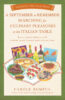
The third book in the series, A September to Remember: Searching for Culinary Pleasures at the Italian Table, which came out April 27, 2021, came about because of my initial trip to Italy with my husband and actually took place a year before the French trips but was my initial incentive to peek inside the geopolitical aspects of ‘family’.
NS: You began by writing a novel. How did the idea for the companion cookbooks arise?
As I mentioned above, when I did my research for the novel, I was investigating several things as I traveled throughout the regions of France. We were secretly investigating the mysterious life of Marcelle as well as capturing the stories of friends and family members of Marcelle along with their favorite recipes and traditions. With open arms they swept me into their lives and opened their homes and kitchens to all my questions. Traveling from one region to another also gave me the richness and variety of cultures and history found throughout France which led me to begin to dig deeper into the more traditional foods or ‘peasant foods’ which were more prevalent. Cuisine pauvre in French or cucina povera in Italian speaks deeply to the culture found in the hearts and souls of both countries.
NS: About you, one reviewer stated, “For Bumpus, appreciating food requires a strong sense of people and place; in fact, she regards food and culture as inseparable.” Please tell us more.
To understand who the French or the Italians are as a people is not to glibly prance through the country, eat at the Michelin-starred restaurants or laze along the touristed beaches. It is to communicate with the locals in the best way that you can. (It helps to travel with a companion translator.) You will find that each region—no, each village or town—has a specific way of preparing food and going through life; it becomes part of who they are. Their identity. This is not a small thing; it speaks to their culture, their history, their geography, their land (or sea) for gathering food. It is who they are. As was described to me in Italy by my dear friend, Lisa, in my upcoming book:
“This concept doesn’t come from what we consider as being poor or frugal, uncomfortable, undesirable, or from an inconvenient situation that people have fallen into, due to their ineptness. No, this is the idea of living in a world where gods are everywhere—where your interdependence is on the wellbeing of all of these forces, because for some reason the Mediterranean has this sense of interconnectedness.”
Now, doesn’t that very explanation make you want to know more? Me too! It drove me to write five books so far. And, it has been lovely.
NS: What’s the best thing you’ve ever eaten?
This is a difficult question as I am definitely an aficionado of all types of foods, but what first leaps to mind is a most exquisite lemon pasta my husband and I were served in Umbria. Gubbio, I think. Having spent the morning in search of middle-Renaissance artists in an ancient cathedral, we stumbled off the street into a little trattoria well after 1 p.m. hoping for a bit of lunch. Italians don’t just ‘do’ lunch; they grace your existence with the most flavorful extensions of their simplest ingredients. In this case, the grandfather of the family stood up from his own table and went into the kitchen. Twenty minutes later he came out with a small portion of freshly made, lemon-infused pasta, piping hot and gracing a bowl. We had hoped for two portions, but he had made only one, so he immediately returned to the kitchen to prepare more. I swoon at the memory of those light, yet delectable piquant flavors which caressed each strand of linguine before us. Oh, I have attempted to create this dish many times since, but I never meet muster to that memory. In fact, I don’t even recall what our next course even was. We were in ecstasy!
Another decadent lunch my husband and I enjoyed was when we were staying a week in Ménerbes, in Provençe, the south of France. After walking up the steep, winding road—too narrow for most cars—to the top of this medieval village, we found in an ancient castle the Maison de la Truffe et du Vin du Luberon which translates to the House of Truffles and Wine. Now, how can you possibly go wrong with delicate pillows of ricotta and spinach-filled tortellini topped with the musky flavors of summer truffles? And served with a cooling glass of Provençal rosé on a hot summer’s day, why it couldn’t get any better. Mais, oui!
NS: Does your former career as a family therapist inform your writing in any way?
I believe it was my interest and love of people, along with a fervent curiosity to know more about their stories, that led me to interview them in a way which was not all so dissimilar from my approach with clients in my family practice.
NS: We love learning about each writer’s process. Aside from the obvious (recipes) how did writing a novel differ from the cookbook writing?
The novel, A Cup of Redemption, came out of my curiosity and interest surrounding the war-torn life of Marcelle Zabé. She and her daughter originally came into my home to teach me how to cook in a ‘French’ fashion. I was interviewing both of them about their favorite French foods, as we were sitting at my kitchen table here in California drinking coffee and eating a lemon tart I had prepared. (I was trying to impress them.)
The stories began to flow about Marcelle’s childhood favorite foods, about the difficulty of having enough food during the war years and following, and of the traditional specialties of each region. We decided to take a trip together, all three of us, to discover more of these specialties throughout France when Marcelle suddenly died at eighty-three. So, in the novel, when I wrote about Marcelle’s life, I included all the places she lived or had visited across France. As I was writing about each place, I mentioned what we were eating. And the timeframe of that period. War time = war time rations. Lean times = stretching a few slices of bread spread with bacon grease and a slice of onion. Crêpes? A staple due to its economical ingredients – eggs, flour, and milk.
Six weeks after my novel came out, a friend of mine asked, “So, where are the recipes?” Within nine months, in the time it takes to birth a baby, my companion cookbook rolled out. It was called, Recipes for Redemption: A Companion Cookbook to A Cup of Redemption. It had never dawned on me before writing the novel that I would be writing recipes, but as I had been traveling around the country collecting these stories and recipes, it seemed an easy and happy coincidence. But little did I realize how difficult it would be to not only translate the recipes but change them from metric to our standard measurements and oven temperatures. Oh, my!
Also, I needed to come up with substitutions for ingredients that we, in the U.S. do not readily have available. But then I realized the beauty of the cuisine pauvre, the ‘poor kitchen.’ Traditional recipes come from the people and the land: they are simple, available according to the season and location, economical, and if you don’t have something on hand, make it up or change the recipe!
NS: Has anything about the writing process surprised you? If so, what, and how?
I started out by writing the novel, even though I had already completed over seventy-five interviews in both France and Italy. I had grown to love dear Marcelle and wanted her story and her memory to reach into the world. It took me twelve years of research. When I pulled all my notes together, I thought it would be one long book. I took my notes, interviews, and recipes and began to write. A writing teacher told me to write until I was finished. I wrote 950 pages. When I went to an editor or two with my tome, they each looked at me and said, ‘This is not one book, but maybe three or four.’ They were correct. So, I began again by using the principle of ‘How to carve an elephant.’ You simply remove what is not the elephant. In this case I removed all the stories that were not strictly about Marcelle and set them aside. After my novel was published, those ‘set-asides’ became the fodder for my next three French books. The Italian book, which should have been the first one of my Savoring the Olde Series, became my fifth book to write. Marcelle was the surprise who kicked off my writing career.
NS: What writing or publishing tips do you have for our WNBA-SF members? Is there one thing you wish someone had told you before you began?
I’m afraid if anyone had told me how difficult it could be to write a book and get published, I might have given up before starting. But ignorance is bliss, and it sent me off in so many lovely directions—researching, traveling more, taking writing classes of all kinds, learning the art and importance of a good editor, and being aware that writing and completing a book is only the beginning.
The process of marketing and publicity which follows is essential and expensive, but if your goal is to get your best work out in the world, it takes time, money, and perseverance. Am I writing books to make money? It would be a bonus, but that’s no longer my goal. And, who knew I would be giving readings in a cooking school or have my recipes offered in a French bistro? Who knew I would be asked to give talks on World War II about France and speak to U.S. veterans groups, as well as women’s groups on writing and the art of the novel? Who knew I would be asked to be on a panel of travel writers at SFWC 2020? Who knew I would be asked to read an excerpt from my book at the WNBA-SF in cooperation with LitQuake at Book Passage in San Francisco in 2019 before the pandemic? It could happen and it did.
NS: What’s next for you? A new writing project? More travel?
I was considering taking a little time off, since I launched three books in eighteen months. But I just received a review from someone indicating he couldn’t wait until my next book. What? Already? Be still my heart. I still have many more stories to share.
NS: Is there anything else you would like to add or wish I had asked?
Thank you for the opportunity to share my writing path, and for these questions. This was quite fun, and I enjoyed walking back in time and considering the paths I’ve chosen. Thanks again.

A retired family therapist, Carole Bumpus commenced writing about food and travel after she first began traveling through Italy and France. Having been introduced to the pleasures of the palate by spending time with local families in their homes, she also was introduced to their familial stories of love and war. She completed more than seventy-five interviews of families to date for her food and travel blogs. She published an historical novel, A Cup of Redemption, in 2014, followed by her unique companion cookbook, Recipes for Redemption: A Companion Cookbook to A Cup of Redemption, in August 2015. Searching for Family and Traditions at the French Table, Books One and Two in her multi-award-winning Savoring the Olde Ways series covered the first half of Carole’s culinary adventure in France. The third book in the series is A September to Remember: Searching for Culinary Pleasures at the Italian Table, due out in April 2021. The publisher for all five volumes is She Writes Press.
Selected praise for the Savoring the Olde Ways series includes a rave from Kirkus, which said, “delights at every turn…”; Foreword Reviews, which added, “[Her] exploration as an American abroad will draw in those who hunger for travel as much as they hunger for flavor. For Bumpus, appreciating food requires a strong sense of people and place; in fact, she regards food and culture as inseparable”; and French Book Worm, on Good Life France.com, which chimed in with “Mouth-wateringly delicious, evocative, and utterly charming.”







 Sharifah Hardie is a business consultant, talk show host and influencer. Sharifah was a Long Beach City Council Candidate in the 2020 March 3rd Primary Election and is a Diversity, Equity and Inclusion Expert. With over twenty five years of business experience, Sharifah Hardie has positioned herself to become one of the top executives in entertainment, business, politics and a person on the rise. Sharifah is the author of Signs You Might Be An Entrepreneur – How to Discover the Entrepreneur in You
 Lyzette Wanzer’s work appears in over twenty-five literary journals. She is a contributor to The Chalk Circle: Intercultural Prizewinning Essays (Wyatt-MacKenzie), The Naked Truth, Essay Daily, and San Francisco University High School Journal. A three-time San Francisco Arts Commission and Center for Cultural Innovation grant recipient, Lyzette serves as Judge for the Soul-making Keats Literary Competition Intercultural Essay category. She is currently helming an anthology entitled Trauma, Tresses, & Truth: Untangling Our Hair Through Personal Narrative.
 Sumbul Ali-Karamali, a former corporate attorney with an additional degree in Islamic law, is an award-winning writer and speaker. She grew up in California, answering questions about her religion, which is why her books engagingly introduce readers to Muslim beliefs and practices and include The Muslim Next Door: The Qur’an, the Media, and that Veil Thing and her just-released Demystifying Shariah: What It Is, How It Works, and Why It’s Not Taking Over Our Country.
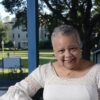 Pushcart Prize nominee Sheryl J. Bize-Boutte is an Oakland multidisciplinary writer. Her autobiographical and fictional short story collections, along with her lyrical and stunning poetry have been described as “rich in vivid imagery,” “incredible,” and “great contributions to literature.” Her first novel, Betrayal on the Bayou, was published in June 2020. She is also a popular literary reader, presenter, storyteller, curator and emcee for local events.
 Fourth-generation native San Franciscan, Kathleen Archambeau, is an award-winning writer and LGBTQ activist. She is author of four nonfiction works, Climbing the Corporate Ladder in High Heels (2006), “Seized,” an essay in The Other Woman (2007), edited by Victoria Zackheim, Pride & Joy (2017), and We Make It Better (2019), with gay dad, Eric Rosswood. Academy Award-winning screenwriter, Dustin Lance Black wrote the Foreword to Pride & Joy and endorsed We Make It Better. Archambeau’s work has been favorably reviewed in global and national literary publications and she has been a featured speaker at national and global Pride literary events. Her book was included as part of the Oakland Museum of California store’s Queer California Exhibit and she is a founding member of the James Hormel LGBT wing of the SF Public Library.
 Michael Larsen co-founded Larsen-Pomada Literary Agents in 1972. Over four decades, the agency sold hundreds of books to more than 100 publishers and imprints. The agency has stopped accepting new writers, but Mike loves helping all writers. He gives talks about writing and publishing, and does author coaching. He wrote How to Write a Book Proposal and How to Get a Literary Agent, and co-authored Guerrilla Marketing for Writers. Mike is co-director of the San Francisco Writers Conference and the San Francisco Writing for Change Conference.
 Rose Castillo Guilbault is the author of the highly acclaimed memoir Farmworker’s Daughter: Growing Up Mexican In America. Her essays have been published in dozens of textbooks and anthologies. She also wrote the book The Latina’s Guide to Success In the Workplace. Rose was the first Hispanic columnist for the San Francisco Chronicle; her column “Hispanic USA” was honored by a number of journalistic and community organizations. A longtime television journalist, she was awarded an EMMY for her work. Ms. Castillo Guilbault was featured in the award-winning book Latinas and Their Muses. Her community activities include Chair of the Commonwealth Club of California’s board of directors and serving as a judge on the Book Awards Committee for several years.
 Building a platform for promoting a book is vital to its success, but the most important element of your writer’s platform is
 Friday, April 23, 2021
 Debra Eckerling is the author of
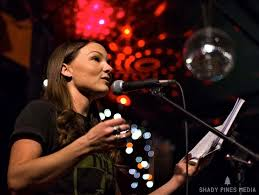
 Lucille Lang Day is the author of seven full-length poetry collections and four poetry chapbooks. Her most recent collection is Birds of San Pancho and Other Poems of Place (Blue Light Press, November 2020). She has also co-edited two anthologies, Fire and Rain: Ecopoetry of California and Red Indian Road West: Native American Poetry from California, and has published two children’s books and a memoir, Married at Fourteen: A True Story. Her many honors include the Blue Light Poetry Prize, two PEN Oakland/ Josephine Miles Literary Awards, the Joseph Henry Jackson Award, and eleven Pushcart Prize nominations. She is the founder and publisher of Scarlet Tanager Books.
  Award winning poet and Pushcart Prize nominee Sheryl J. Bize-Boutte is an Oakland multidisciplinary writer of prose/poetry, autobiographical and fictional short stories. Her writing has been variously described as “rich in vivid imagery,” “incredible,” and “great contributions to literature.” Her first novel, “Betrayal on the Bayou,” was published in June 2020 and a poetry collection she has written with her daughter Dr. Angela M. Boutte, titled “No Poetry No Peace,” was published in August 2020. She has served as a poetry judge for the Bay Area Poets Coalition, the long-term emcee and co-curator for the
 Dr. Jeanne Powell holds degrees from WSU in Michigan and USF in California. She is a published poet and essayist, with four books
 Athena Kashyap grew up in India and went to the U.S. for her higher education. She received her BA in Critical Social Thought and History from Mount Holyoke College, her MA in English from the University of California at Davis, and her MFA in Poetry from San Francisco State University. She currently lives in San Francisco where she teaches English at City College of San Francisco. Athena has written two collections of poetry, Sita’s Choice (2019) and Crossing Black Waters (2012), both published by Stephen F. Austin State University Press in Texas. Her poems have appeared in Exquisite Corpse, All Roads Lead You Home, The Missing Slate, Forum, The Fourth River among other journals. Her work has also been anthologized both in the U.S. and India and has been translated into other languages.
 Iris Jamahl Dunkle is an award-winning poet, literary biographer, and essayist. She has published four poetry books, including West: Fire: Archive, The Center for Literary Publishing, 2021 and the biography Charmian Kittredge London: Trailblazer, Author, Adventurer. Dunkle teaches at Napa Valley College and is Poetry Director at the Napa Valley Writers’ Conference.
 The author of three poetry collections, a chapbook of short fiction and You Can Be a Winning Writer, a book for writers, Joan Gelfand’s work appears in national and international journals including Rattle, PANK! The Los Angeles Review of Books, Prairie Schooner, Kalliope, California Quarterly, the Toronto Review, Marsh Hawk Review and Levure Litteraire. Her chapbook of short fiction won the Cervena Barva Fiction Award. President Emeritus of the Women’s National Book Association, a member of the National Book Critics Circle and California Writers Club, Joan coaches writers. Joan’s novel, Extreme, set in a Silicon Valley startup, was published by Blue Light Press in July, 2020.
 Anniqua Rana, who lives in the Bay Area, is the author of
  About the Book: One of the biggest reasons goals fail is that people often don’t put enough thought into what they really want before diving in. Your Goal Guide by Debra
 Wednesday, April 7
 Brenda Knight, author of Women of the Beat Generation, will read new work and a tribute to “Beat Goddess” ruth weiss. Brenda began her publishing career at HarperCollins. An author of ten books, she won the American Book Award for “Women of the Beat Generation.” In 2015, she was named Indiefab Publisher of the Year. She is Editorial Director at Mango Publishing and is President of WNBA-SF Chapter.



 Friday, March 12, 2021
 Marlena Fiol, PhD
 The author of three poetry collections, a chapbook of short fiction and