Women's National Book Association, San Francisco Chapter

WNBA-SF Chapter

  • Home
  • About
    • WNBA SF Chapter Emphasizes Diversity in Bylaws
      • San Francisco Chapter Bylaws
    • Women’s National Book Association
    • WNBA Award 2023 Interview
  • Join or Renew
  • Benefits of Membership
    • WNBA SF Chapter Board Members
  • 2025 Calendar
  • Contact Us
You are here: Home / 2021 / Archives for July 2021

Archives for July 2021

Interview – Ruth Weiss

By Admin

WNBA-SF Past President Brenda Knight interviewed Ruth Weiss in 2017. Now that we near the first anniversary of her passing, we wanted to bring you this interview of hope and writing…


ruth weiss Can't Stop the BeatBeat poet and jazz spoken word innovator Ruth Weiss started writing as a teen and, at the age of 88, has not stopped. A contemporary of Jack Kerouac, Neal Cassady, and Allen Ginsberg, Weiss is one of the most important voices of the Beat Generation whose work remains fresh, relevant and more modern than ever. A holocaust survivor, she urges writers to “be truth tellers in your work and in your words.” Below is an interview of Weiss with WNBA-SF President Brenda Knight, author of Women of the Beat Generation, and includes a discussion of Weiss’s advice to young writers and scribes of all ages.

BK: How did you come to America?
RW: My family was on the last train out of Vienna before the Nazis put the Jews in the camp. Most of our family died in the concentration camps. We knew we had to get out of Europe if we were to survive. We were silenced. I will not be silenced.

BK: When did you know you were a writer?
RW: I think I always knew it; Vienna was a center for the arts before the war. Inspiration was everywhere. In America, everything was wide open. You could do anything, be anything.

BK: Is it fair to say you hit the road way before Jack Kerouac?
RW: Yes, and he and I talked about that. He liked the idea of a girl with green hair hitchhiking back and forth across America. I’ve been dying my hair different colors almost as long as I’ve been writing poetry. Jack and I really connected over haiku and would spend hours talking about the beauty of that form and would read and write haiku together.

BK: Are you particular about your writing desk you tools and environment for composing?
RW: I still use an Underwood typewriter and make sure my writing space is in good order. I never know when inspiration might strike and can sit down, put in a sheet of paper and write a new poem.

BK: Did you experience any problems as a young woman in the San Francisco poetry scene?
RW: Oh, yes. Most of the other poets were very accepting and encouraging, but a few wanted control. Allen Ginsberg was very competitive and even tried to keep me from reading sometimes and physically blocked me from the stage once. I know that will shock some people but it is the simple truth. For the most part, all the poets on the scene over time have been beautiful, peaceful, loving people. I have gotten a lot of support over the years and count these poets as my friends.

BK: What is the story behind your decision to keep your name lower case?
RW: Every time I sign my name, it is a revolutionary act, my way of standing up to the control of the “law and order” Germans in the ’30’s whose demand for control led to WWII and Nazis murdering millions of people, including my family. My name is a form of resistance.

BK: We have a so-called “law and order” president of the United States now; what do think about that?
RW: I take it as a warning and I have also noted that writers, artists and poets are sounding the calls to action.

BK: What is your best advice for writers, particularly women and young people?
RW: Many writers suggest you write every day at a certain time and I know that works for a lot of people. My advice is “less is more.” Never overwrite or just keep writing. Spare use of language, only using the right words will lead to better work, get you closer to greatness. Tell the truth in your truest voice and your work will be pure and beautiful.

Following in an excerpt from one of Ruth’s poems upon moving to San Francisco:

i’m 22.
don’t think i’ll make it to 30. don’t think. write.
words are my friends. words are wings. protect.
i have a room of my own. i shall always have a room of my own. that i will. this cancer girl gotta have a room of her own.
one by one the ones who must play—enter.
the search for that note—that only one. it’s a jam for the
heartbeat. no feet tapping. no hands clapping.
i walk slow through daybreak-blue. back to north beach.
my lids fold around my whole being.

7 Ways Authors Can Support Their Author Friends: Kindled Spirits

By Admin

By Debra Eckerling, author of Your Goal Guide: A Roadmap for Setting, Planning and Achieving Your Goals 

As authors, we have an advantage in the online world, whether we realize it or not. Fiction. Nonfiction. Screenwriting. Poetry. Essays. Articles. It applies to all. 

In order to connect with our audience, authors must be active on multiple platforms – websites and social media – as well as on live and virtual stages. This leads to a plethora of opportunities to collaborate, support, and highlight our author friends. 

When Dr. Meg Haworth (author of Get Well Now; Healing Yourself with Food and The Power of The Mind) interviewed me for her YouTube series in June, I noted how in three months, we will have collaborated five times. 

  • We met when we were interviewed for Ladies Take the Lead: Meet the Authors
  • We both spoke at Alina Fridman’s Finding Fabulous Summit
  • Meg was a guest on my live show in May 
  • I will be a guest on her YouTube series in July
  • We are speaking on a self-care goals panel for the Women’s National Book Association – San Francisco Chapter Lunch N Learn on July 23 

As “Kindled Spirits,” as Dr Meg calls it, we know there is more to come.

Here are 7 easy ways authors can support each other through collaboration: 

  1. Create a Joint Blog. Writers on the Move is a great example of authors coming together to share their knowledge.
  2. Trade Book Reviews. On Amazon, Goodreads, or write one on your blog.
  3. Do Interview Swaps.This can take place on a blog, live show, video, or podcast.
  4. Spread Social Media Love. Make a point to tweet or post about an author-friend at least once a week … once a day is even better. Share their books, an article, or a photo. You can also take the time to comment on their posts.  
  5. Curate Panels and Events.Create events with author friends in mind, so you can ask them to participate.
  6. Send Ideas. Do you receive a newsletter that shares podcast interview opportunities? Are you part of a cool networking group or meetup? Share the deets with author friends who would get the most out of it! 
  7. Refer and Recommend. When someone asks for a referral – whether it’s a speaker for an event, a book for a book club, or an author interview – think of who you know who would be a good fit and make an intro. Keep a list of author friends, along with their specialties. Don’t know what they focus on? Just ask.

* * *

As an author, getting out there is a lot about the power of relationships. Authors’ relationships with other authors: priceless!

* * *
How do you support your author friends? What collaboration opportunities get the best results? Please share in the comments.


This article was originally posted on the Writers On the Move Blog: https://www.writersonthemove.com/2021/06/7-ways-authors-can-support-their-author.html

* * *


Goal-Setting expert Debra Eckerling is the award-winning author of Your Goal Guide: A Roadmap for Setting, Planning & Achieving Your Goals (IPPY 2021, Silver Medalist, Self-Help) and founder of The D*E*B Method, which is her system for Goal-Setting Simplified. A professional writer, project catalyst, and corporate wellness consultant, Debra helps entrepreneurs, executives, and creatives figure out what they want and how to get it through one-on-one coaching, workshops, and online support. She is also the founder of the Write On Online community; host of the #GoalChat Twitter chat, the #GoalChatLive show, and The DEB Show podcast; and VP of the WNBA-LA Chapter.

Connect on LinkedIn and learn about Debra’s #SummerGoalChallenge.

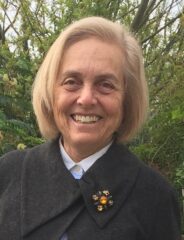
Featured Member Interview – Gail Newman

By Nita Sweeney

Poet’s latest book captures stories of the Holocaust, is a tribute to the living and the dead.

by Nita Sweeney, author of the running and mental health memoir, Depression Hates a Moving Target: How Running with My Dog Brought Me Back from the Brink and co-creator of You Should Be Writing: A Journal of Inspiration & Instruction to Keep Your Pen Moving


Nita Sweeney (NS): Before we dive into questions specific to writing, tell our members, with the world beginning to open ever-so-slightly, but still somewhat suspended, how are you taking care of yourself?

(GN): I divide my time between San Francisco and Sebastopol, and now that it’s spring I’m mostly in Sebastopol—gardening, cooking, reading, writing. The garden is blooming, the flowers raising their heads, opening buds, beaming with self-adoration. I’m with my husband, and our son is with us, so I am not alone. I don’t need a multitude, and solitude has always been my companion, but it feels wonderful to get together with friends again, unmasked, with some sense of renewed freedom.

NS: What led you to the writing life?

Gail Newman (GN): Before I was a writer, I was a reader. When I was a child, my mother often took me to the library. My ambition was to read through the shelves alphabetically. I found the world—adventure, friendship, travel, excitement—between the pages. I wanted to be a writer like Jo in Little Women, eating apples up in the attic with ink stained fingers. My grandfather was a journalist and although I never knew him, I like to think that writing is in my blood.

NS: Have you always preferred to write poetry? If so, what drew you to it and what keeps you there?

GN: I loved poetry, but I didn’t know I could write it until, in my mid 20’s, I joined a women’s workshop suggested by a friend. This was during the height of the women’s movement, a time when feminist presses began to emerge and publish women’s poetry in anthologies and collections. Once I began to write poetry, I felt a depth of perception and form of expression that absorbed me. Robert Frost said, “A poem begins as a lump in the throat, a sense of wrong, a homesickness, a lovesickness.” I think that is an apt description. 

NS: Your most recent poetry collection, Blood Memory, “traces the path of Holocaust survivors from Poland to America during and after World War II.” What brought you to write about the Holocaust at this time in your life and at this time in history?

GN: These poems have been in me all my life. I tried to write about the Holocaust and my family when I was younger, but I think I needed more experience as a writer and more distance as a child of survivors. 

When my father died, I started writing more poems about him and my mother. I decided then, in a conscious way, to write a book of poems about my parents’ lives. 

The book is a narrative that tells a story based on what my parents told me as well as my own experience and research. I think the book is a tribute to the living and the dead, and my own realization of the importance of memory and heritage. 

I didn’t know that the book would be released at this particular moment in history when antisemitism and racism-against blacks, Asian, Muslims, immigrants-has come again into our public consciousness. 

NS: If there is one key message that you want readers to get from your book, what would it be?

GN: I think of the poem, Try to Praise the Mutilated World by Adam Zagajewski. People can withstand the most horrific experiences and build meaningful and even joyful lives. We remember the Holocaust to honor the living and the dead. And we remember so that we will be vigilant and compassionate, so that we don’t stand idle when others, of any religion, culture or race, experience bigotry, hatred, or genocide. 

We remember the Holocaust in the hope that it will never happen again in any nation, to any people. We want to remember the past, those who died, our heritage and our people. We want to remember so we can live with compassion. We remember so we will not stand as silent witness to others’ suffering.

NS: You were born in Germany, raised in Los Angeles, and have lived many years in the Bay Area. What impact, if any, do these places have on your work?

GN: Though I don’t remember Germany, or the war, my parents’ lives is part of my inherited memory. The title of my book, Blood Memory, refers to what we carry with us from our parent’s past, from the places we came from and the events that brought us to the present. 

Los Angeles enters my poems in a kind of reverie of childhood and growing up. Moments flicker into my mind in the form of images, snapshots, and evoke feelings that inspire poems.

The Bay Area had a big impact on my work. It was there that I discovered poetry. I was drawn to City Lights [bookstore] in North Beach. I felt the history of the city, writers’ breath in the air and in the streets.

NS: Writers love to hear how other writers work. What is your process? Is it the same from book to book? 

GN: I would say, looking back on my life, that my writing is erratic. I don’t have a set routine. I don’t get up and go to my desk at a specific time. I love to sit by a window, gazing out, drinking coffee, daydreaming. Some nights, when I wake with the lines of a poem in my head, I get up and go to the computer. I don’t have to turn the light on, but type by the Apple’s glow. 

When I write I enter a kind of meditative state, but I think it’s just natural to my writing process and doesn’t come from training or conscious effort. I might go back later to make the details more precise. That is the editor stepping in to perfect the craft. I see images in my mind. Some are memories, some imagination. I remember once bemoaning to another writer about my poor memory and she said, “You’re a poet. Make it up.” That gave me a lot of freedom.

NS: Are you ever surprised in the writing process? If so, how and when?

GN: Writing poetry is a process of discovery, so I’m always surprised. I love poems with a turn, when a thought or images pivots into unknown territory or makes a surprising connection. It’s like walking around a corner in an unfamiliar neighborhood. 

NS: Tell us about the publishing journey of Blood Memory. 

GN: I entered a number of contests, about twenty, sponsored by small press poetry book publishers. Then I began to wait. I expected to wait a long time. I expected rejections. I thought I would continue to submit the following year. One morning I received an email from Marsh Hawk Press asking for a hard copy of my manuscript. Because I was among the finalists, my book would be read by the judge, Marge Piercy. This alone was an honor. I was surprised and thrilled to receive an email a few weeks later saying that I was the first-place winner and that Marge Piercy had chosen my book.

NS: Please share a favorite writing or publishing tip with our WNBA-SF members? Is there one thing you return to again and again, or something you wish you had known or realized much earlier?

GN: Aim high. Try and try again. If your work is rejected, don’t feel rejected. When you submit to publications — journals, magazines, contests — acceptance may be dependent on many factors. Have faith in yourself.

NS: What’s next for you writing-wise?

GN: When I finished Blood Memory, I thought, what will I write about now, without a specific idea? The answer is: everything. Small moments, the most ordinary objects can become the subject of a poem. I’m writing about time, the way it changes, slows down, speeds up, the past coming closer, the present fading away. I may remember a feeling, a sensation, and the memory grows into a poem.

I’m still writing about my parents. So maybe it’s a story that has no end. Some teachers have asked about using the book to teach Holocaust Studies, and since I’m an educator, I could help or become involved in that. I would love to share my book with readers in other countries, especially Eastern Europe, and to use it as a message of hope, resilience, and resistance.


Gail Newman was born after WW II in a displaced persons camp in Lansberg, Germany. The daughter of Polish Holocaust survivors, she was raised in a community of Jewish immigrants in Los Angeles where her mother, who recently celebrated her 100th birthday, still lives. 

Gail has worked as an educator at the San Francisco Contemporary Jewish Museum, and as a poet-teacher for California Poets in the Schools. Co-founder and editor of Room, a Women’s Literary Journal, Gail also edited Inside Out, a book of poetry lessons for teachers, and two collections of children’s poems, C is for California and Dear Earth. 

Her poems have appeared in journals including Canary, Prairie Schooner, Calyx, Nimrod International, The Bellingham Review, and in anthologies including Ghosts of the Holocaust, The Doll Collection, and Fog and Light. A book of poetry, One World, was published by Moon Tide Press. 

Blood Memory, chosen by Marge Piercy for the Marsh Hawk Press Poetry Prize was published in 2020. Piercy writes: 

Writing about the Holocaust can be difficult now, not that it was ever easy….those who know, who went through it, are dying off. Those who deny what happened multiply. To make fresh powerful poems rooted in Shoah is amazing.

www.gailnewmanpoet.com

 For signed copies of Blood Memory, please contact Gail through her website.

Facebook: Gail Newman


Get the latest blog posts and news. Sign up here.

Join or Renew


Mailing Address
WNBA-SF Chapter
4061 E. Castro Valley Blvd.
Castro Valley, Ca
94552-4840

Topics

Contact Us

Contact Us
Click Here 

Social Media

  • Facebook
  • Twitter

Copyright © 2026• WNBA-SF Chapter | AskMePc-Webdesign