Women's National Book Association, San Francisco Chapter

WNBA-SF Chapter

  • Home
  • About
    • WNBA SF Chapter Emphasizes Diversity in Bylaws
      • San Francisco Chapter Bylaws
    • Women’s National Book Association
    • WNBA Award 2023 Interview
  • Join or Renew
  • Benefits of Membership
    • WNBA SF Chapter Board Members
  • 2025 Calendar
  • Contact Us
You are here: Home / 2020 / Archives for October 2020

Archives for October 2020

Saturday, December 12- Comfort and Joy: WNBA-SF Holiday Mixer

By Admin

Saturday, December 12
5:00-7:00 PM
Zoom link provided upon registration

The holidays are right around the corner and our most fervent wish for you is a very healthy and happy season. This year has been one for the record books but we have been gladdened that, in many ways, 2020 knit us closer together as a community.

We have enjoyed excellent Zoom events with our talented members and publishing pros in our circle as well as pulling off our first-ever virtual Pitch-O-Rama which was complicated but thrilling in that it brought so many writers closer to their book publishing dreams and even resulted in a few deals! 

We are grateful for all of you and hope you can join us for some comfort and joy and a good deal of relaxing fun. We will have holiday games, and also create breakout rooms for conversations with fellow members and friends. 

It’s a MIXER, so share this post to bring a literary friend or two to join the virtual fun. We appreciate our members! We’d love for you to join us so we can hear your about how this most challenging of years went for you, and your hopes for the new year to come. 

Holiday Donation: We are organizing a donation to children and family who lost all their books
in the fire. Contact us to receive an address to send your book donations. We especially welcome children’s books for underserved kids.

UPDATE! Contest Prizes: We will have a contest for the most literary libation you can sip in style at the mixer. The top three cocktails will win $100. Merry mixology!

Cheer: While I think we can all agree that this is the strangest year ever, we still have each other! Let’s toast each other, the holidays, our chapter, and a brighter future in the coming New Year!


November 11 – National Novel Writing Month – Now that You’ve Begun, How Do You Keep Going?

By Admin

WNBA-SF Lunch n’ Learn

Wednesday, November 11, 2020 at Noon PT

National Novel Writing Month – Now that You’ve Begun, How Do You Keep Going?

Congratulations! You’ve taken the huge step of signing up for National Novel Writing Month (NaNoWriMo) and you’re in the throes of writing your novel.

But what happens if (when?) the exuberant exhilaration wears off? How do you keep going? 

Don’t panic! Whether it’s your first Nano or your fifteenth, time-tested methods will help you keep going once that initial excitement wanes. 

Join award-winning author, writing and meditation coach, and fourteen-time NaNoWriMo winner Nita Sweeney for a lunch n’ learn full of tips to carry you through November and across the NaNoWriMo finish line. Nita’s first book, the running and mental health memoir, Depression Hates a Moving Target: How Running with My Dog Brought Me Back from the Brink was a multi-year NaNoWriMo project. Her second book, You Should Be Writing: A Journal of Inspiration & Instruction to Keep Your Pen Moving, coauthored with Brenda Knight, offers author wisdom to help you on your NaNoWriMo journey.

In this workshop Nita will discuss:

  • Using candy-bar scenes to stay motivated
  • How community can help (or hinder) your progress
  • The role of writing “fuel”
  • The importance of maintaining your writing “machine”
  • Structures to manage time and emotion
  • And much more!

Title: National Novel Writing Month – Now that You’ve Begun, How Do You Keep Going?

When: Wednesday, November 11, 12pm PT

Where: Zoom (Zoom link provided via email when you RSVP)

Click the button below to RSVP; we are limited to 100 total attendees, so please let us know early!

Nita Sweeney is the award-winning author of the running and mental health memoir, Depression Hates a Moving Target: How Running with My Dog Brought Me Back from the Brink and coauthor of the writing journal, You Should Be Writing. Nita coaches creatives in writing and meditation, blogs at Bum Glue, and publishes the monthly email newsletter, Write Now Columbus. She lives in central Ohio with her husband, Ed, and their yellow Labrador retriever, Scarlet.


Featured Member Interview – Melissa Kirk

By Nita Sweeney

Editor “Grows” Food and Authors

by Nita Sweeney, author of the running and mental health memoir, Depression Hates a Moving Target: How Running with My Dog Brought Me Back from the Brink. 

Mental health is close to my heart…


Nita Sweeney (NS):  I must dive right in and ask what drew you to work with psychology and wellness professionals and what keeps you leaning toward people in that field?

Melissa Kirk (MK): It was kind of fate, actually. I had always been interested in mental health. I’d struggled with depression as a kid (still sometimes do) and had always felt drawn to understanding psychology and writing about wellness. I used to write zines and blog posts about my personal experiences with mental health issues.

After college I got a job as an editorial assistant at Jossey-Bass (now Wiley, in San Francisco), but after I made Assistant Editor, there was nowhere for me to go, so I started looking for a new job. I saw an editor position listed at New Harbinger Publications, a self-help and psychology publisher in Oakland, and applied. I was shocked when they asked me for an interview! It was just a lark to even apply.

But I (obviously) got it and it was the perfect job for me for at least a decade: I spent most of my 13 years there reading and researching psychology topics and working with psychology professionals. I learned a lot; I sometimes joke that, considering all the self-help books I’ve read, I should be much saner than I am!

So, when I started my own business, it made sense to make that my niche.

I see so much emotional struggle in the world, and not a lot of effective support for those of us who need to work with our brains every day to stay on an even keel. People who can be honest about themselves, who are self-aware, and who want to keep growing emotionally are my people. I feel safest with them because I know they’re less likely to judge or criticize me for my mistakes (and vice-versa, I hope!) I enjoy working with people in this field; psychology professionals, by and large, really care for others and want to help people create better lives for themselves.

NS: You bring a long history of writing world experience and strong interest in the wellness and psychology field to your clients. What other je ne sais quoi, secret sauce, or distinction have your clients come to love about you?

MK:  My clients seem to really appreciate that I offer constructive criticism with honesty but also kindness, and that I make concrete suggestions for next steps. Because I’ve been in this business for a while, I can usually help a client find a way to pivot if necessary, in order to meet their goals for their project. And because I know how things really work (the good and the bad), I can lead my clients on the path to meeting their goals, but I can also tell them if a goal is unrealistic and what a more realistic path might be. I really strive for honesty, even when it’s challenging to tell someone I’m not sure their book idea is going to work out as they’ve conceptualized it. I’d want someone to be that honest with me. 

NS: Let’s hop back a decade. In 2010, you co-authored a book titled Depression 101: A Practical Guide to Treatments, Self-Help Strategies, and Preventing Relapse. How did that come about and what role has it played, if any, in your professional journey?

MK:  I was working at New Harbinger as an acquisitions and developmental editor, and we had come up with an idea for a series of small introductory books on common mental health diagnoses.  John Preston was one of our most valued authors–he has since passed–and we had the idea of having his name on the book. At the time, or maybe we found out after we pitched the book idea to him, he was struggling with some major health issues, so when the team talked about possibly finding someone to co-write the book (and having John vet it), I signed up. I loved working with John, and I had personal experience with depression, so it was an easy project. The book sold “just OK” (I think I make about $23/year), but it’s definitely helped my credibility. It’s a good book on understanding depression, if I do say so myself!

NS: Switching gears again, tell us about your vegetables. Growing food has found a resurgence. What’s your favorite crop and when did you realize it was something you loved?

MK: I’ve been growing vegetables since I was a kid. My mom always had veggies growing in the yard and at a young age I took to the natural world like a duck to water. I was very shy and didn’t have a ton of friends, so I spent a lot of my childhood alone, and played in our garden a LOT…. building fairy villages in among the plants, paying attention to the plants as they grew, plucking tomatoes and beans from the vine for my lunch. Nurturing plants is just like breathing to me. It’s in my DNA, literally.

I take comfort in the resurgence of kitchen gardens. We should develop the ability to support ourselves, at least somewhat. I think nurturing plants helps us develop empathy for all of life and facing gardening frustrations helps us with problem-solving. I hope this “trend” becomes more than just a trend; gardening is one of my major passions. I would love to work in some kind of plant or gardening aspect, even if it doesn’t have anything to do with writing or editing!

I really love growing tomatoes. I adore them–I love the taste, the smell of the plants, and how they grow. This summer was the worst tomato year I’ve had in a decade. It’s been depressing on top of everything else 2020 has wrought! I’m trying to take it as a message that I need to pay more attention to nurturing my plants.

NS: I’ll hazard a guess that there are parallels between gardening and “cultivating” authors and other business pros. Any you care to share?

MK: Oh, yes, definitely! Also, with friendships. I think once I realized that parallel, I got better at cultivating my relationships, both professionally and personally.

Basically, successful gardening is about paying attention to a lot of factors: soil, water, climate, protecting plants from pests, encouraging beneficial animals and insects, reading the plant in order to understand what it needs. Working with clients, in any capacity, demands the same: you pay attention to multiple factors, and each client has different needs. Clients will only thrive in their work with me if they’re getting what they need. I try to help with that as much as possible. Same with our relationships: we need to pay attention to them and give them what they need in order to thrive.

NS: Has California always been home? Is there anywhere else you would rather live?

MK: I moved to Berkeley when I was 4 and have never lived in any other state for more than a month. My family and friends are here; I have no real desire to leave the state. I do want to leave the Bay Area, though: I’m actively looking for more rural land where I can have more room to grow plants, have more animals, and have the physical space I crave.

In the current climate, I have considered leaving the country, but I honestly can’t think of a place that has more to offer than California. I mean, we can drive 2 hours in any direction and be in a new ecosystem and terrain! I just wish the state didn’t burn down every late summer. I live in a city, so I haven’t been personally threatened by fires, but many friends have.

NS: What about writing or publishing tips to share with our WNBA-SF members? Any “must do” things you recommend?

MK: Generally speaking, for writing:

  • Write to your intended audience, not to yourself, your peers, or colleagues. 
  • For most genres of books: avoid passive voice. This probably in the list of the top 3 things I spend a lot of time fixing in manuscripts.
  • Even in nonfiction, information needs to flow in a way that feels intuitive for the reader and is easy to integrate into their brains. I suspect fiction writers tend to think more about this than nonfiction writers. But it’s always important. 

For publishing, so much depends on how you’re publishing–self-publishing, traditional publishing, or publishing with a hybrid publisher. But in general:

  • Do your research and deeply understand your target audience, the comparative books, how successful authors in comparable genres are marketing themselves, and how your book fits into the niche. 
  • If you want to be successful in any sense, you’ll need to do much of your own marketing. Nobody can talk about and write about their book like the author. If you’re writing a book, take the time to learn basic marketing strategies FAR before the book is due to be published. If you wait until the book is published, it may be too late for many marketing strategies to work. 
  • And remember that marketing is really all about community-building. 
  • If you end up hiring any professional to do work on your book (such as developmental editors, copyeditors, proofreaders, cover designers, and page designers): be ready to pay what those professionals are worth. If you pay $2 for a cover, you’ll get a $2 cover. Many publishing professionals have been doing this work for many, many years and can heighten your book’s quality. I see this conversation often in author communities where people resist paying real money to their editors or cover designers. Some even question why they can’t just do it themselves, and I can tell you: even editors don’t edit their own books. And most author-designed covers (unless the author is a graphic designer) are not good. Don’t think of publishing professionals as afterthoughts; we’re vital collaborators who will help your book’s success. 

NS: Your bio hints about a new book. Would you care to tell us more about that?

MK: Well, let’s just say it’s still mostly just an idea. Even though I’m in publishing and I make my living helping other people get their books published, that doesn’t mean I have the discipline to write a book! I do have most of the intro written.

It’s about relationships, particularly how women can get into patterns of unhealthy relationships and how to get out of that pattern. The book really encourages those who are in that pattern to do some hard soul-searching about their own assumptions and expectations about relationships. It comes from my personal experience with this pattern and with leaving it behind, but as a self-help editor, I’ll obviously include lots of research and possibly even seek a co-author with a professional psychology background.

NS: Do you have anything else on the horizon?

MK: So, so much on the horizon! Professionally I want to do much more video content and also produce some courses and some group coaching opportunities. And I want to write more useful content to offer authors on their various publishing journeys (how to write a book proposal, how to organize a nonfiction book, etc). Funnily enough, with my work with clients, I just never seem to have the time or energy. I’m going to take some time off in October to try to get some of this stuff done.

Personally, I’m looking for rural land in the Sierra foothills where I can expand my gardening and live closer to nature. Typical “city girl goes to the country” stuff. But I feel happier surrounded by trees than surrounded by cars.

NS: And is there anything else you would like to add, anything you wish I had asked?

MK: Your questions have been great!

One thing I see very often in publishing and author communities is that people use the word ‘editor’ without specifying what kind of editor they mean. I’ve seen this in social media postings, job listings, even books about editing. I always point out that there are at least two different kinds of editor, three if you include proofreaders (four if you include video editors, who are becoming more involved in the book industry these days, but I won’t include them in this list).

The types of editors are: 

  • Developmental Editors – They typically take a more birds-eye view of the manuscript and look at the book concept, the organization, whether the writing and elements in the book help the author meet their stated goals, and whether those elements are going to effectively reach the target audience. 
  • Copyeditors – They usually focus on line-level and paragraph-level edits: fixing the writing, correcting grammar and syntax errors, making sure the logic is sound in each sentence, etc. They may also query the author on organizational and thematic questions. 
  • Proofreaders – They focus specifically on fixing errors in the pages, which by then have usually been typeset. Proofreading is usually the last stage before the book goes to the printer (or is uploaded to the e-book service). 

Many editors offer more than one service. I offer developmental editing and copyediting, but not proofreading. I just don’t have the patience. I really value and respect good proofreaders.

I have a goal to educate publishers and authors about the importance of identifying what kind of editing they’re talking about. Probably that’s partly because people typically use the term ‘editing’ to mean copyediting and I always think, “Hey! What about me??”

Melissa Kirk is a developmental editor, writer, book coach, publishing consultant, and agent in the psychology, health, and wellness genre. She works with wellness entrepreneurs who are ready to level up their businesses by creating engaging writing and video about how to live better and healthier lives. She has been working in publishing for 20 years in editorial and acquisitions, including 13 years at New Harbinger Publications where she grew to love the wisdom that comes from studying human psychology. She has been running her own business, Words to Honey Content Services, for 4 years, working with psychology and wellness professionals to get their messages out to the people who need to hear them. In her leisure time, she grows vegetables and is working on a book about her own quantum leap towards mental wellness. Her website is: https://wordstohoney.com/

October 23 – Virtual Networking Goals for Writers

By Admin

Networking is essential for business and personal growth. And there are so many choices of mixers, workshops, readings, and conferences these days.

So, how do you find the right virtual events, as well as the time for everything you want to do? Set virtual networking goals.

To navigate networking 2020-style, join Deb Eckerling, the founder of the D*E*B METHOD® and author of Your Goal Guide: A Roadmap for Setting, Planning, and Achieving Your Goals, for this Master Class for the Women’s National Book Association – San Francisco Chapter.

During this workshop, Deb will discuss:

  • Setting goals for virtual-networking
  • Finding your “people” online
  • Following up with new contacts
  • Networking best practices for writers
  • And much more!

Title: Virtual Networking Goals for Writers

When: Friday October 23, 12pm PT

Where: Zoom –Zoom (link provided via email when you register)

About the Book: One of the biggest reasons goals fail is that people often don’t put enough thought into what they really want before diving in. Your Goal Guide by Debra Eckerling starts with that first, crucial step: figuring out your goals and putting a plan in place. Eckerling presents readers with her own tested and proven method: the D*E*B METHOD®, a brainstorming and task-based system, which stands for: Determine Your Mission, Explore Your Options, Brainstorm Your Path. Through a combination of writing exercises and systems, Eckerling provides readers with a process for making and setting goals that is stress-free, easy-to-manage, and even fun.


Debra Eckerling is the author of Your Goal Guide: A Roadmap for Setting, Planning, and Achieving Your Goals (Mango Publishing, January 2020), as well as the self-published Write On Blogging: 51 Tips to Create, Write & Promote Your Blog and Purple Pencil Adventures: Writing Prompts for Kids of All Ages.
A goal coach, project catalyst, and founder of the D*E*B METHOD®, Debra works with individuals and businesses to set goals and manage their projects through one-on one coaching, workshops, and online support. Note: DEB stands for Determine Your Mission, Explore Your Options, Brainstorm Your Path. She is the founder of Write On Online, a live and online community for writers, creatives, and entrepreneurs, as well as host of the #GoalChat Twitter Chat (Sundays at 7pm PT) and the Guided Goals Podcast.

Effie Lee Morris Writing Contest – Meet the Judges!

By Admin

2021 Effie Lee Morris Literary Contest – get set! GO!

We honor and celebrate women authors and diverse writers and hope to include YOU with our 2021 Effie Lee Morris WNBA-SF Literary Contest, launching October 1st and running through August 31, 2021. 

Effie Lee Morris

The Women’s National Book Association San Francisco Chapter is pleased and proud to continue the Effie Lee Morris WNBA Literary Awards in honor of our founder. Ms. Morris was a pioneering Black librarian and the founder of this chapter of the Women’s National Book Association in 1968. She became the first female chairperson of the Library of Congress and was the president of the National Braille Association for two terms. She was dedicated to literacy for children as well as children in underserved communities, and those who learn differently.

For full information, rules, and to submit your work starting October 1, 2020, please go here:

2021 Effie Lee Morris Literary Contest – get ready!


And now, meet the distinguished judges!

Sharifah Hardie is a business consultant, talk show host and influencer. Sharifah was a Long Beach City Council Candidate in the 2020 March 3rd Primary Election and is a Diversity, Equity and Inclusion Expert. With over twenty five years of business experience, Sharifah Hardie has positioned herself to become one of the top executives in entertainment, business, politics and a person on the rise. Sharifah is the author of  Signs You Might Be An Entrepreneur – How to Discover the Entrepreneur in You

Lyzette Wanzer’s work appears in over twenty-five literary journals. She is a contributor to The Chalk Circle: Intercultural Prizewinning Essays (Wyatt-MacKenzie), The Naked Truth, Essay Daily, and San Francisco University High School Journal. A three-time San Francisco Arts Commission and Center for Cultural Innovation grant recipient, Lyzette serves as Judge for the Soul-making Keats Literary Competition Intercultural Essay category. She is currently helming an anthology entitled Trauma, Tresses, & Truth: Untangling Our Hair Through Personal Narrative.

Sumbul Ali-Karamali, a former corporate attorney with an additional degree in Islamic law, is an award-winning writer and speaker. She grew up in California, answering questions about her religion, which is why her books engagingly introduce readers to Muslim beliefs and practices and include The Muslim Next Door: The Qur’an, the Media, and that Veil Thing and her just-released Demystifying Shariah: What It Is, How It Works, and Why It’s Not Taking Over Our Country.
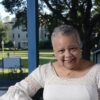
Pushcart Prize nominee Sheryl J. Bize-Boutte is an Oakland multidisciplinary writer. Her autobiographical and fictional short story collections, along with her lyrical and stunning poetry have been described as “rich in vivid imagery,” “incredible,” and “great contributions to literature.” Her first novel, Betrayal on the Bayou, was published in June 2020. She is also a popular literary reader, presenter, storyteller, curator and emcee for local events.

Fourth-generation native San Franciscan, Kathleen Archambeau, is an award-winning writer and LGBTQ activist. She is author of four nonfiction works, Climbing the Corporate Ladder in High Heels (2006), “Seized,” an essay in The Other Woman (2007), edited by Victoria Zackheim, Pride & Joy (2017), and We Make It Better (2019), with gay dad, Eric Rosswood. Academy Award-winning screenwriter, Dustin Lance Black wrote the Foreword to Pride & Joy and endorsed We Make It Better. Archambeau’s work has been favorably reviewed in global and national literary publications and she has been a featured speaker at national and global Pride literary events. Her book was included as part of the Oakland Museum of California store’s Queer California Exhibit and she is a founding member of the James Hormel LGBT wing of the SF Public Library.

Michael Larsen co-founded  Larsen-Pomada Literary Agents in 1972. Over four decades, the agency sold hundreds of books to more than 100 publishers and imprints. The agency has stopped accepting new writers, but Mike loves helping  all writers. He gives talks about writing and publishing, and does author coaching. He wrote  How to Write a Book Proposal and  How to Get a Literary Agent, and co-authored  Guerrilla Marketing for Writers. Mike is co-director of the San Francisco Writers Conference and the San Francisco Writing for Change Conference.
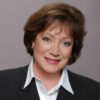
Rose Castillo Guilbault is the author of the highly acclaimed memoir Farmworker’s Daughter: Growing Up Mexican In America. Her essays have been published in dozens of textbooks and anthologies. She also wrote the book The Latina’s Guide to Success In the Workplace. Rose was the first Hispanic columnist for the San Francisco Chronicle; her column “Hispanic USA” was honored by a number of journalistic and community organizations. A longtime television journalist, she was awarded an EMMY for her work. Ms. Castillo Guilbault was featured in the award-winning book Latinas and Their Muses. Her community activities include Chair of the Commonwealth Club of California’s board of directors and serving as a judge on the Book Awards Committee for several years.

Get the latest blog posts and news. Sign up here.

Join or Renew


Mailing Address
WNBA-SF Chapter
4061 E. Castro Valley Blvd.
Castro Valley, Ca
94552-4840

Topics

Contact Us

Contact Us
Click Here 

Social Media

  • Facebook
  • Twitter

Copyright © 2026• WNBA-SF Chapter | AskMePc-Webdesign